by hbmadero | Nov 2, 2026 | Technology
A shocking headline travels faster than a correct one. Before you share, react or repeat it, a few seconds of checking can save you and your contacts from passing along something false. Media-literacy educators teach a simple routine known as SIFT: Stop, Investigate the source, Find better coverage, and Trace claims to their origin.
1. Am I reacting emotionally?
Stop first. If a headline makes you angry, afraid or triumphant, that is exactly the moment to slow down. Strong emotion is the most common hook of misleading content.
2. Who is behind this?
Investigate the source. Open a new tab and search for the name of the outlet or author. Is it a known newsroom with a correction policy, or a page that appeared last month? Judge the source by what others say about it, not by how it describes itself.
3. What are other outlets saying?
Find better coverage. If a story is real and important, several reliable sources will report it. If only one site carries it, treat it with caution.
4. Where did the claim come from?
Trace the claim. Many articles quote a study, a document or a photo. Follow the link back to the original and check that it really says what the article claims, and that it is not an old item presented as new.
5. Is this the whole picture?
Check the date, the context and the full text. Screenshots, cropped quotes and recycled photos are favorites of misinformation.
None of these steps takes more than a minute or two, and together they turn a reflex into a habit. At the Mandatum Herald we ask ourselves the same questions before publishing: our motto, Vox Populi, Vox Dei, only works if the voice of the people is built on accurate information.
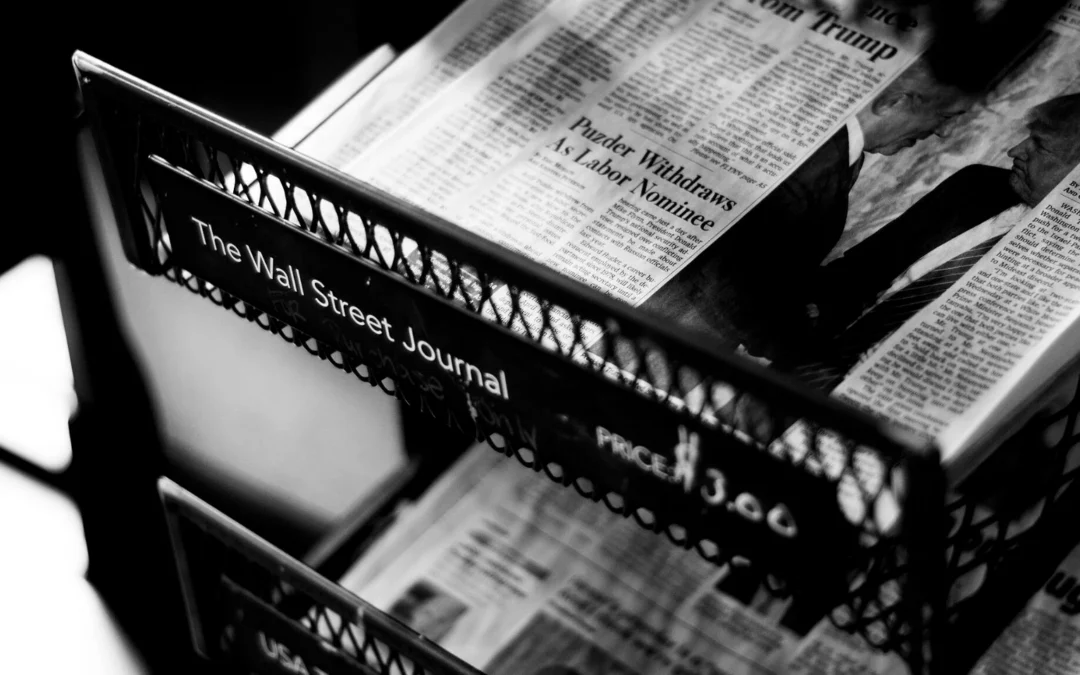
Method: SIFT, developed by digital-literacy researcher Mike Caulfield. Photo: Unsplash via Wikimedia Commons (CC0).
by hbmadero | Nov 2, 2026 | Culture
Suriname is the smallest sovereign country in South America, with about 613,000 people in a territory of roughly 166,000 square kilometers. It is also one of the most varied. On November 25 it marks 51 years of independence, a good moment to look at the country behind our reports on Donders City and the work of Mandatum there.
Independence in 1975
Suriname became independent from the Netherlands on November 25, 1975, after negotiations with the Dutch government. It had been a constituent country of the Kingdom of the Netherlands since 1954.
Many languages, one country
Dutch is the only official language and is used in schools, government, business and the media. The language most heard in the street is Sranan Tongo, the widely used vernacular, and English is also widely spoken. That mix says a lot about the country’s history.
A country without a majority
No single ethnic group forms a majority in Suriname. The population includes people of Asian, African and Maroon descent, along with many who are of mixed origin. Religion is just as varied: according to the 2012 census, Christians are 48.4 percent of the population, Hindus 22.3 percent and Muslims 13.9 percent.
The greenest country on Earth
About 90 percent of Suriname is covered by rainforest, the highest share of any nation. About half of the population lives in the capital, Paramaribo, and most of the interior is forest.
A capital of wooden houses
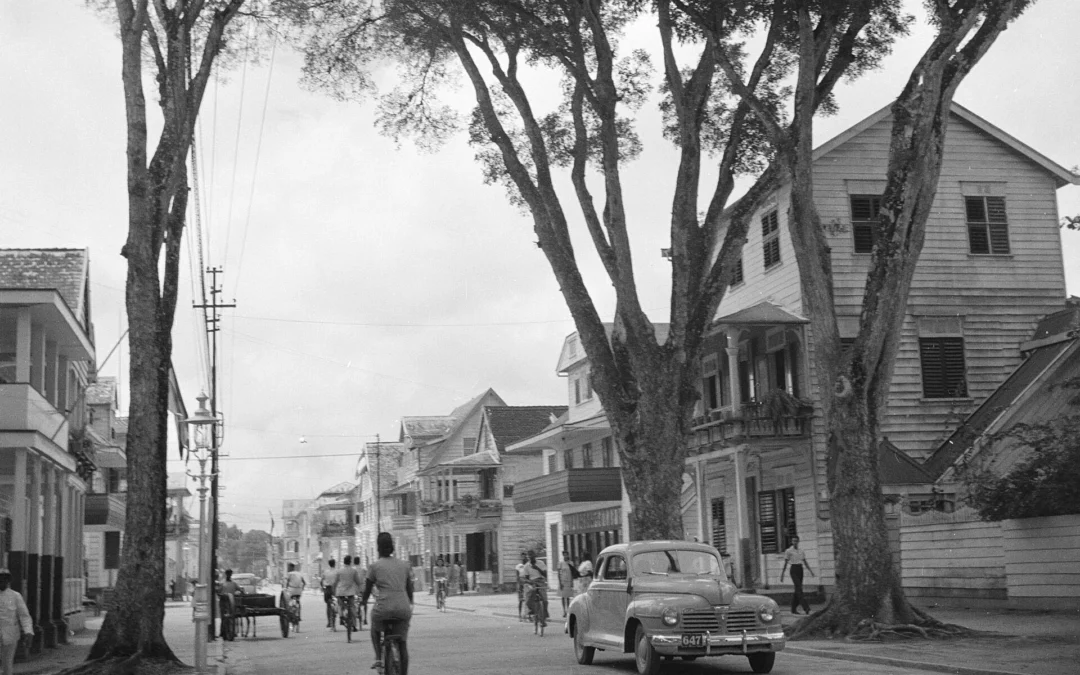
The historic inner city of Paramaribo, with its tree-lined streets and wooden buildings, was inscribed as a UNESCO World Heritage Site in 2002. The photograph above, taken by Willem van de Poll, shows one of its streets in the last century.
Why it matters to the Herald
Our readers know Suriname from the housing agreement, the Donders City project and the story of Blessed Peter Donders, the apostle of the country. Understanding the place helps to understand the work.
Sources: Wikipedia, “Suriname.” Image: Gravenstraat in Paramaribo, photo by Willem van de Poll, Dutch National Archives, via Wikimedia Commons (CC0).

by hbmadero | Nov 1, 2026 | Education
4Books
4Role capsules
7/10To pass each exam
ES · ENLanguages
Every humanitarian order lives or dies by how it handles money. The Academy of Finance prepares those who will hold a financial role in Mandatum, whether at headquarters or as a regional comptroller.
Enroll in the course →
The prerequisite is the General Magisterium. The academy then runs as four books studied in sequence; each ends with an exam, and passing it with at least 7 out of 10 unlocks the next one.
Four books
Book I · Institutional Financial ArchitectureHow the Order’s finances are built.
Book II · Donations Management and FundraisingReceiving and managing the gifts that sustain the work.
Book III · Financial Audit and ComplianceControl, auditing and rules.
Book IV · Investment and Asset ManagementHow resources are protected and put to work.
Role capsules
Once the four books are completed, four role capsules add the operational detail of each financial position.
Grand TreasurerThe central financial office of the Order.
Donations OfficerThe role that receives and records donations.
Institutional ComptrollerOversight, control and reconciliation.
Investment AnalystAnalysis of the Order’s investments.
Why it matters: a clear financial architecture protects donors, members and the people the Order serves. It is the base of trust.
Take the Finance course
Build the skills to manage the Order’s resources with confidence. Enroll now.
Enroll in the course →Image: AI-generated.
by hbmadero | Nov 1, 2026 | Religion
On November 1, Western Christians celebrate All Saints’ Day, a feast for all the saints, known and unknown. The day after, November 2, the Church prays for all the faithful departed on All Souls’ Day. Together they form a short season in which the Church thinks about holiness and about death.
From the martyrs to all the saints
From the fourth century, local churches honored their martyrs on different dates, often close to Easter or Pentecost. By the sixth or seventh century the commemoration had widened to include all the saints, not only martyrs. In 609 or 610 Pope Boniface IV consecrated the Pantheon in Rome to the Virgin Mary and all the martyrs and ordered an annual anniversary, celebrated on May 13.
How it reached November 1
Accounts differ on how the feast moved to November. Pope Gregory III, who led the Church from 731 to 741, dedicated an oratory in the old basilica of St. Peter to all the saints, and some sources say the date was November 1. By the year 800, churches in Ireland and Northumbria were already celebrating on that day, and Alcuin of York promoted the feast in the Frankish Empire. In 835 Emperor Louis the Pious, at the request of Pope Gregory IV, made November 1 a holy day of obligation throughout his empire.
All Souls on November 2
The prayer for the dead is much older than the date. It appears in the inscriptions of the catacombs and in the writings of Tertullian and Cyprian. It was the abbot Odilo of Cluny who set November 2 for his monasteries, uniting prayer for the dead with almsgiving. From Cluny the custom spread through the Western Church. Catholic teaching holds that prayer, almsgiving and, above all, the Mass can help the souls in purgatory.
A call to everyone
The feast is not only a memory of heroes. It reminds believers that baptism gives everyone the call to holiness. In many communities people visit cemeteries on these days to leave flowers and candles on the graves and to pray for those who have died, and in Latin America the day is joined by older customs, as we explained in our note on how the region remembers its dead.
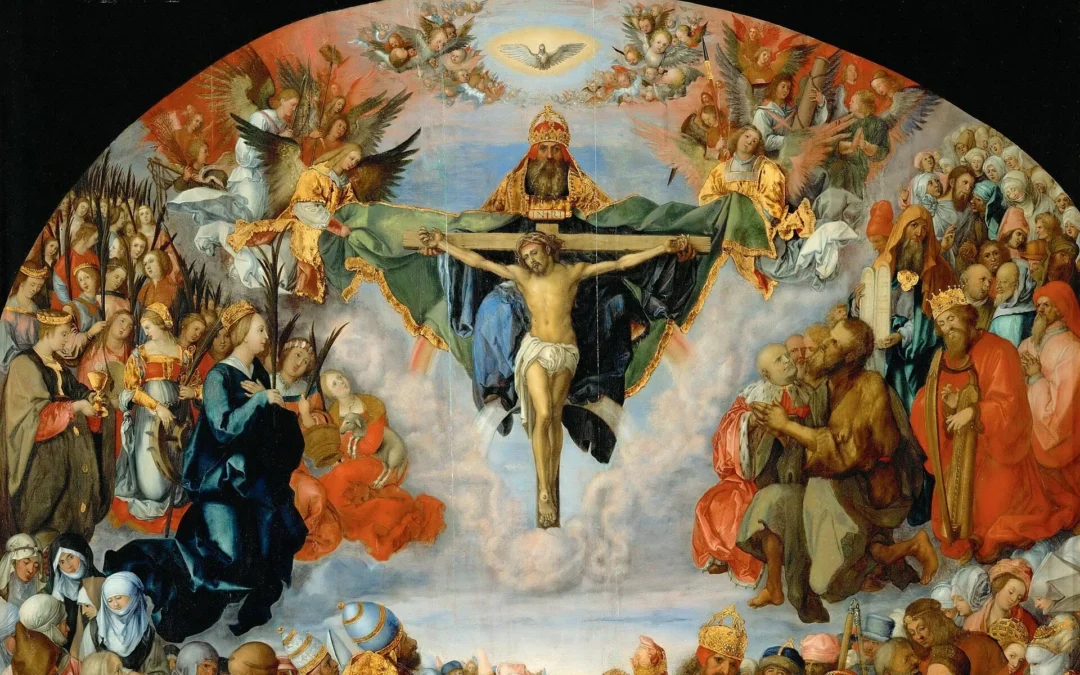
Sources: Wikipedia, “All Saints’ Day” and “All Souls’ Day”; Diocese of Raleigh. Image: Albrecht Dürer, “Adoration of the Trinity” (1511), public domain, via Wikimedia Commons.
by hbmadero | Oct 31, 2026 | Technology
November 5 is World Tsunami Awareness Day, established by the United Nations. It is a good reminder that disasters of every kind – earthquakes, storms, floods, fires – give little warning, and that preparing in advance is far easier than improvising.
What a basic kit includes
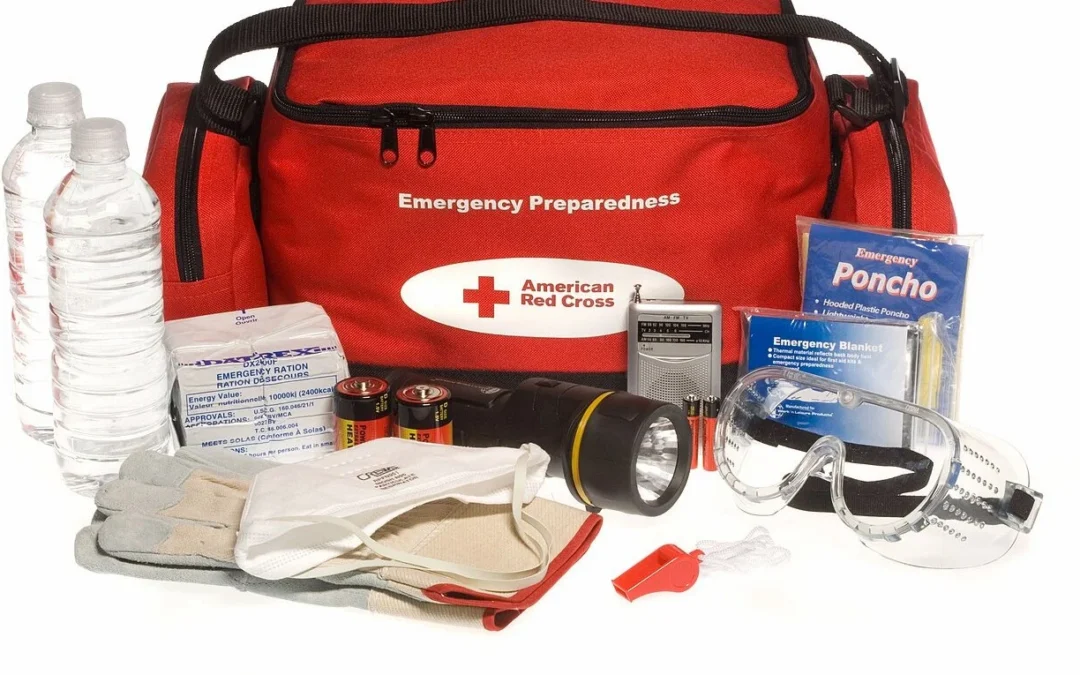
The US government’s Ready.gov campaign recommends gathering essentials in an easy-to-carry container. A typical list includes:
- About one gallon of water per person per day, for several days
- Non-perishable food and a manual can opener
- A battery-powered or hand-crank radio and a flashlight, with extra batteries
- A first aid kit and any needed medications
- A whistle to signal for help
- Dust masks, plastic sheeting and duct tape
- Moist towelettes, garbage bags and plastic ties for sanitation
- A wrench or pliers to turn off utilities
- Local maps
- Phone chargers and a backup battery
Keep it ready
Review the kit once a year: replace expired food and water, update medications and check batteries. Consider keeping a kit at home, at work and in the car, and agree on a meeting point with your family.
A few hours of preparation can give you and your family the supplies you need while you wait for help.
Source: Ready.gov. Photo: FEMA emergency preparedness kit, Wikimedia Commons (public domain).
 Barça
 Peñarol
 Inter Miami