
 Barça
 Peñarol
 Inter Miami
Suriname is the smallest sovereign country in South America, with about 613,000 people in a territory of roughly 166,000 square kilometers. It is also one of the most varied. On November 25 it marks 51 years of independence, a good moment to look at the country behind our reports on Donders City and the work of Mandatum there.
Independence in 1975
Suriname became independent from the Netherlands on November 25, 1975, after negotiations with the Dutch government. It had been a constituent country of the Kingdom of the Netherlands since 1954.
Many languages, one country
Dutch is the only official language and is used in schools, government, business and the media. The language most heard in the street is Sranan Tongo, the widely used vernacular, and English is also widely spoken. That mix says a lot about the country’s history.
A country without a majority
No single ethnic group forms a majority in Suriname. The population includes people of Asian, African and Maroon descent, along with many who are of mixed origin. Religion is just as varied: according to the 2012 census, Christians are 48.4 percent of the population, Hindus 22.3 percent and Muslims 13.9 percent.
The greenest country on Earth
About 90 percent of Suriname is covered by rainforest, the highest share of any nation. About half of the population lives in the capital, Paramaribo, and most of the interior is forest.
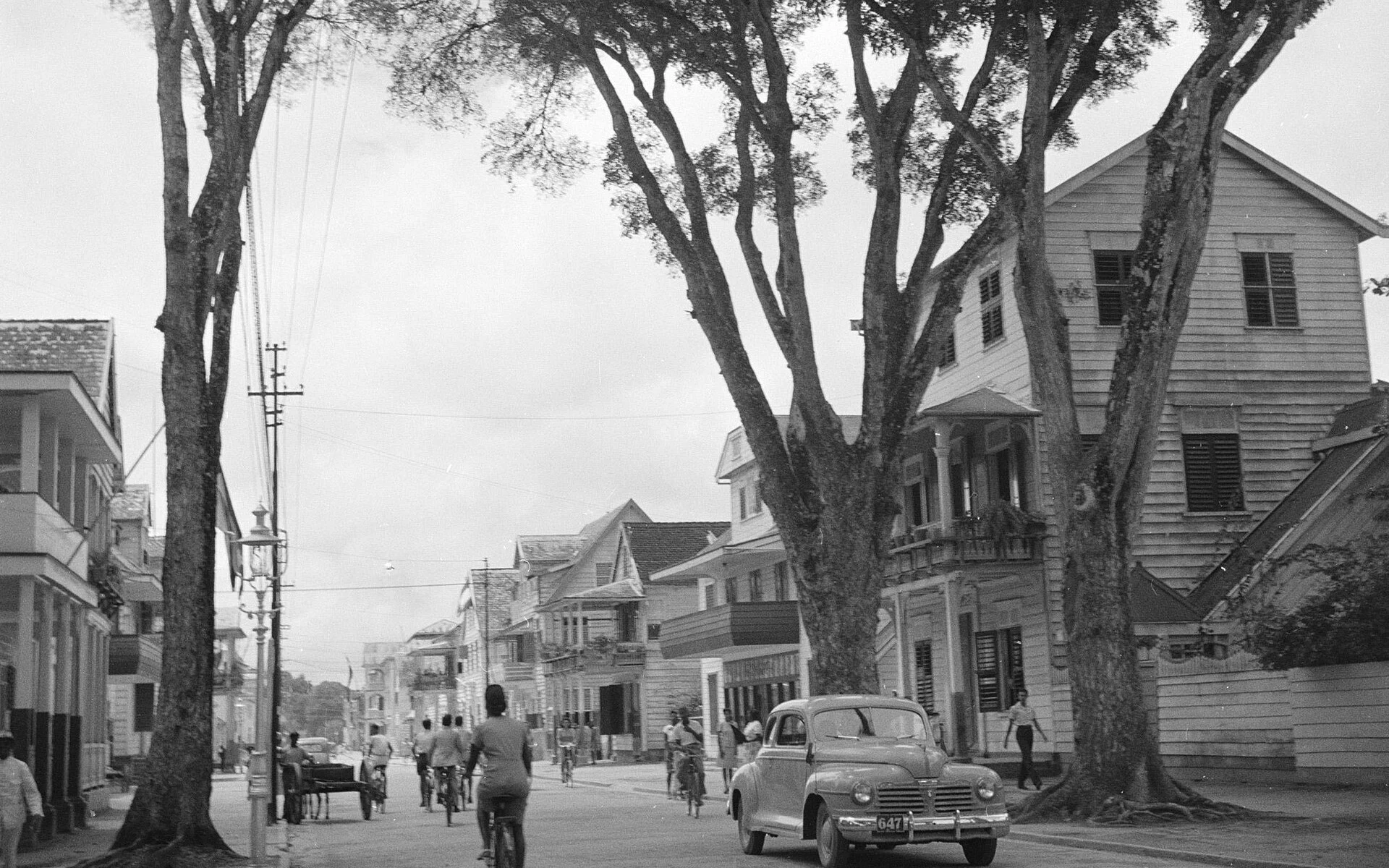
A capital of wooden houses
The historic inner city of Paramaribo, with its tree-lined streets and wooden buildings, was inscribed as a UNESCO World Heritage Site in 2002. The photograph above, taken by Willem van de Poll, shows one of its streets in the last century.
Why it matters to the Herald
Our readers know Suriname from the housing agreement, the Donders City project and the story of Blessed Peter Donders, the apostle of the country. Understanding the place helps to understand the work.
Sources: Wikipedia, “Suriname.” Image: Gravenstraat in Paramaribo, photo by Willem van de Poll, Dutch National Archives, via Wikimedia Commons (CC0).