
by hbmadero | Nov 4, 2026 | Technology
Many apps ask for your location and track your activity even when you are not using them. A short review of your settings can limit that, and it takes about ten minutes. The following tips follow guidance from the Associated Press’s “One Tech Tip” series.
On an iPhone
- Open Settings, then Privacy, then Location Services. For each app choose “While Using” or “Never” instead of “Always.”
- Turn off Precise Location for apps that do not need your exact position, such as news or shopping apps.
- Limit tracking: turn off “Allow Apps to Request to Track” and review personalized ads settings.
On an Android phone
- Open Settings, then Location, and check which apps can access it. Choose “Allow only while using the app” where possible.
- Use Location Accuracy settings to reduce precision for apps that do not need it.
- Delete your advertising ID so apps cannot use it to build an ad profile.
- Review and pause Google Location History if you do not want your movements stored.
A good habit
Go through your apps one by one and ask: does it really need this permission to do its job? A flashlight app does not need your contacts, and a game does not need your location. Remove the apps you no longer use.
Settings vary by phone model and system version, so the menu names may differ slightly. The principle is the same: share only what is necessary.
Source: Associated Press, One Tech Tip. Photo: Unsplash via Wikimedia Commons (CC0).

by hbmadero | Nov 4, 2026 | Order
The Order Mandatum presenta la Intercancillería, el órgano que coordina a los Cancilleres de país y los conecta entre sí, con la sede en Hollywood y con el Consejo Supremo.
HOLLYWOOD, Florida. Cada Canciller sigue siendo el representante de la Orden en su país.
“ La Intercancillería no sustituye esa representación: aporta una línea común de coordinación, criterio institucional y memoria de lo tratado con cada gobierno. ”
Qué hace y qué no hace
Qué hace
Entre sus funciones, la Intercancillería:
- ✓coordina a los Cancilleres
- ✓mantiene el protocolo y la coherencia de las comunicaciones
- ✓apoya la relación con los gobiernos
- ✓canaliza la información de cada país hacia el equipo de anteproyectos
- ✓registra los límites de diálogo de cada país
- ✓archiva lo institucional
- ✓escala al Consejo Supremo lo que requiera decisión
Qué no hace
Igualmente importante es lo que no hace:
- ✕no firma ni compromete a la Orden
- ✕no negocia financiamiento
- ✕no reemplaza al Canciller ante el gobierno de su país
- ✕no habla por entidades locales que aún no existen
Jenny Campos: por qué su experiencia importa

La señora Campos cuenta con experiencia en la Procuraduría de las Comunicaciones de la Orden y se ha desempeñado como enlace entre la sede de Mandatum y los anteproyectos de Panamá y Colombia, conocimiento que resulta fundamental para articular el trabajo de las representaciones de la Orden en cada país.
Experiencia 1
Procuraduría de las Comunicaciones
Su paso por la Procuraduría le da dominio del manejo institucional de las comunicaciones, base del protocolo y de la coherencia entre países.
Experiencia 2
Enlace con Panamá y Colombia
Su labor de enlace le permite conocer cómo lo conversado con los gobiernos se traduce en anteproyectos, así como a los equipos y gobiernos de ambos países.
Coordinación con la Procuraduría de Williams
Acercamientos a gobiernos
Los acercamientos a gobiernos corresponden a la Procuraduría que está a cargo del Procurador Alfred Michael Glenn Williams, quien acompaña a los Cancilleres en su diálogo con los gobiernos y construye vínculos allí donde aún no hay Canciller. La señora Campos coordinará con esa Procuraduría, a cargo del Procurador Williams, cada acercamiento a gobiernos, de modo que la labor de ambos se complemente sin superponerse.
Sus funciones
En la Intercancillería, Jenny Campos tendrá a su cargo:
1
Ser el punto único de contacto de los Cancilleres con la sede.
2
Convocar y llevar las reuniones de coordinación, con agenda y actas.
3
Mantener el tablero de estado por país.
4
Canalizar los resúmenes de reuniones hacia anteproyectos, como ya lo hizo con Panamá y Colombia.
5
Velar por la coherencia y el protocolo de las comunicaciones institucionales.
6
Coordinar con la Procuraduría a cargo del Procurador Alfred Michael Glenn Williams los acercamientos a gobiernos.
7
Recordar los límites de diálogo de cada país.
8
Llevar el archivo institucional por país.
9
Escalar al Consejo Supremo lo que requiera decisión, firma o dinero.
Con esta designación, Mandatum fortalece la coherencia de su presencia internacional: cada país conserva a su Canciller, y todos cuentan con una línea común que conecta su trabajo con la sede y con el Consejo Supremo.
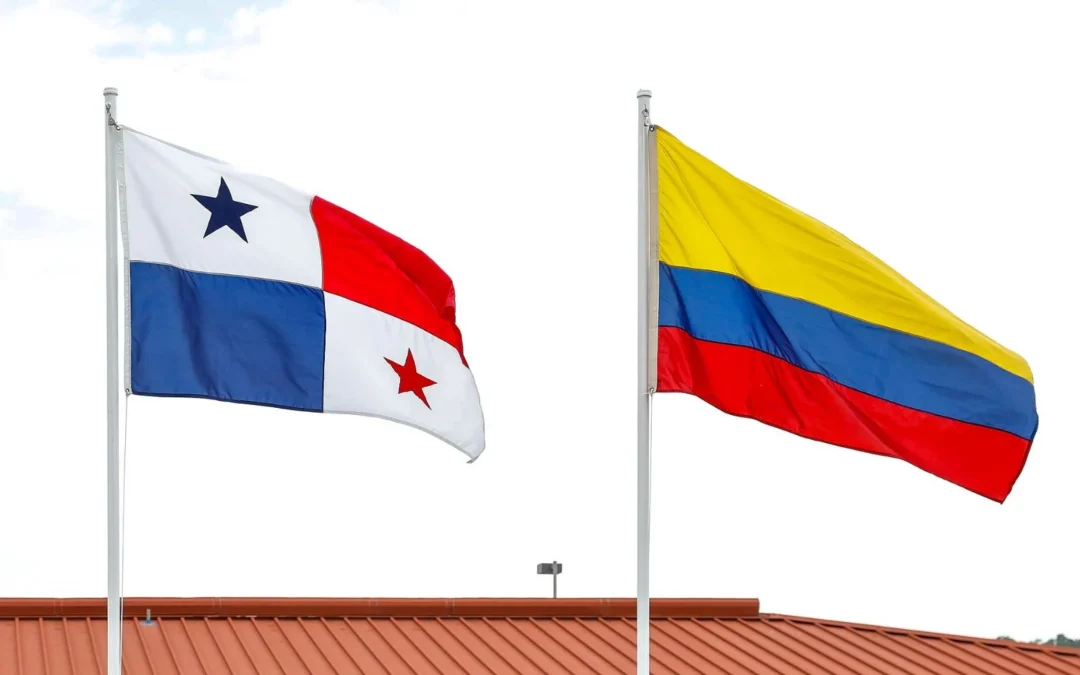
by hbmadero | Nov 4, 2026 | Culture
November is the great patriotic month in Panama. Within a few weeks the country marks the events that shaped its history as an independent nation.
- November 3 – Separation Day. Panama celebrates its separation from Colombia in 1903.
- November 4 – Flag Day. The national flag is honored in schools and public events.
- November 5 – Colón Day. The people of Colón commemorate their role in the events of 1903.
- November 10 – First Cry of Independence. Remembered in the Villa de Los Santos, where Rufina Alfaro is recalled for her part in the 1821 uprising.
- November 28 – Independence from Spain. Panama declared its independence from Spain in 1821, before joining Colombia.
The month is a time of parades, school bands and flags in every neighborhood. It also reminds Panamanians that their nation has two key dates: independence from Spain in 1821 and separation from Colombia in 1903.
The Mandatum Herald has reported on the work of the Order in Panama, and we send our greetings to our readers there during this national month.
Photo: Flags of Panama and Colombia, Wikimedia Commons (public domain).
by hbmadero | Nov 3, 2026 | Education
6Books
2Practice booklets
7/10To pass each exam
ES · ENLanguages
When Mandatum speaks to a government or an international body, it does so through its diplomats. The Diplomatic Academy trains those who serve, or aspire to serve, as Chancellor, Vice-Chancellor, Ambassador or Diplomat of the Order.
Enroll in the course →
The General Magisterium is the prerequisite. The academy is then organized as six books and two practice booklets, studied in sequence, each with its own exam.
Six books
Book I · Foundations of Diplomacy and the Foreign ServiceWhat diplomacy is and how a foreign service works.
Book II · Diplomatic Protocol and CeremonialThe rules of precedence, ceremony and courtesy.
Book III · Etiquette and Conduct of the DiplomatHow a representative behaves in public and in private.
Book IV · Negotiation and Diplomatic DraftingNegotiating and writing in a diplomatic register.
Book V · Diplomatic and Consular LawThe legal framework of diplomatic and consular relations.
Book VI · Crisis Management and Institutional CommunicationWhat to do, and what to say, when things go wrong.
Two practice booklets
Booklet I · Diplomatic Drafting PracticeExercises in writing diplomatic documents, with its own exam.
Booklet II · AI Prompts for Diplomatic DraftingHow to use artificial intelligence as an assistant in drafting, with its own exam.
A representative’s craft: protocol, law, negotiation and writing are learned in the same course, because a diplomat needs all four on the same day.
Take the Diplomatic course
Learn how the Order represents itself in the world. Start your diplomatic training today.
Enroll in the course →Image: AI-generated.
by hbmadero | Nov 3, 2026 | Religion
Every year on November 3 the Church remembers St. Martin de Porres, one of the best-loved saints of Latin America. He was born in Lima, Peru, on December 9, 1579, and died there on November 3, 1639.
A childhood on the margins
Martin was the son of a Spanish nobleman and a freed woman of African and Native descent. In a society that ranked people by origin, his mixed ancestry closed many doors. As a young man he trained as a barber-surgeon, a trade that combined haircutting with basic medical care.
A Dominican brother
In 1603 he made his vows as a lay brother of the Dominican Order in Lima. He worked in the infirmary, caring for the sick of every background, and helped found an orphanage for abandoned children. He was also known for his love of animals, and many images show him with a dog, a cat and a mouse eating from the same dish.
Recognized by the Church
Pope Gregory XVI beatified him on October 29, 1837, and Pope John XXIII canonized him on May 6, 1962. His feast day is November 3. He is considered a patron of people of mixed race, public health workers, social justice, race relations and animals.
His life offers a message that still speaks today: dignity does not depend on birth, and service to the sick and the poor is the best way to live the Gospel.
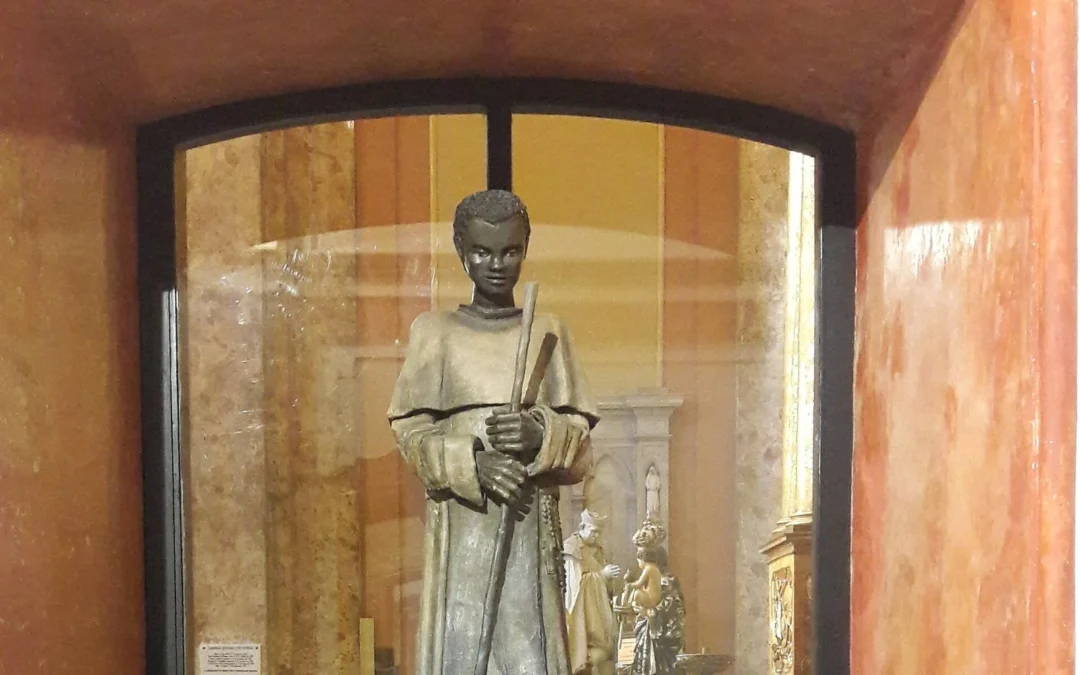
Photo: Sculpture of St. Martin de Porres, Wikimedia Commons (CC0).

 Barça
 Peñarol
 Inter Miami