
 Barça
 Peñarol
 Inter Miami
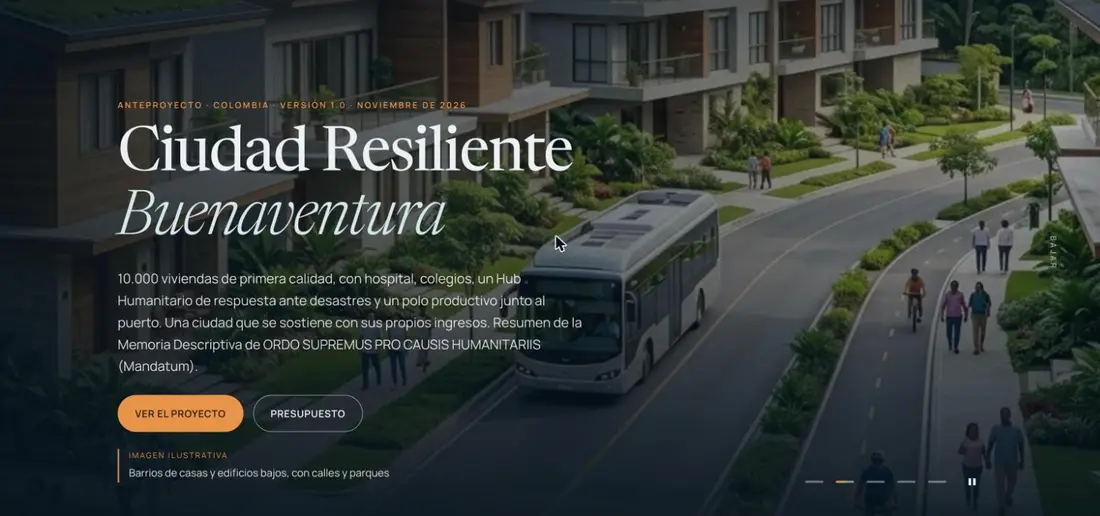
The Ciudad Resiliente Buenaventura (Resilient City of Buenaventura) now has its own website, bv.emandatum.com. It presents the Ordo Supremus Pro Causis Humanitariis preliminary project for a proposed new city of 10,000 homes on Colombia's Pacific coast, with a hospital, schools, a Humanitarian Hub and a productive hub by the port. This is a tour of what it shows.
The need
A quake, and thousands of families without housing
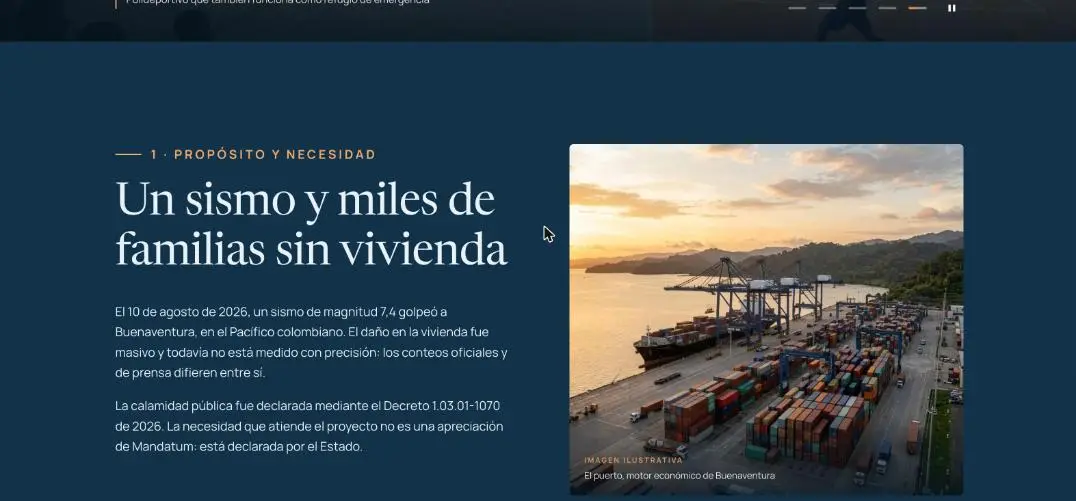
The site starts from an event: a magnitude 7.4 earthquake that struck Buenaventura on August 10, 2026. Damage to housing is large but not yet precisely measured, and official and press counts differ. The public calamity was declared under Decree 1.03.01-1070 of 2026, and the final number of families will be set by the RUFE registry.
The proposal is a complete new city, with no debt, no guarantee and no fiscal cost to Colombia. It sets five goals: 10,000 homes in two phases of 5,000; health, education and disaster-response services open to the wider population; jobs through a port-linked productive hub; operations that fund themselves; and payments tied to certified works.
The land
The most important port, with little land available
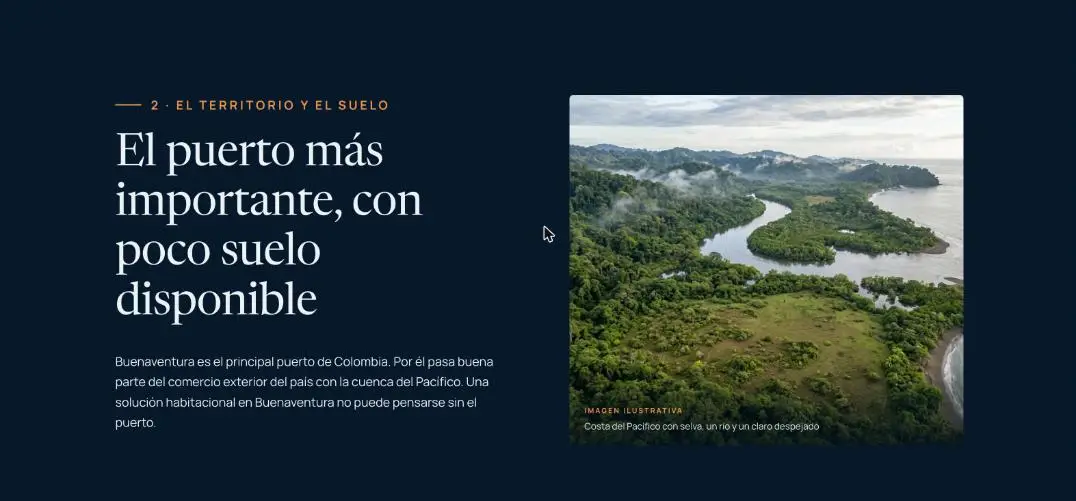
Buenaventura is Colombia's main port, yet most of its land is legally protected, the city depends on a single road to the interior, and it faces earthquake, tsunami and flood threats. That is why the project looks for new land outside the coastal strip, in Valle del Cauca.
The concept
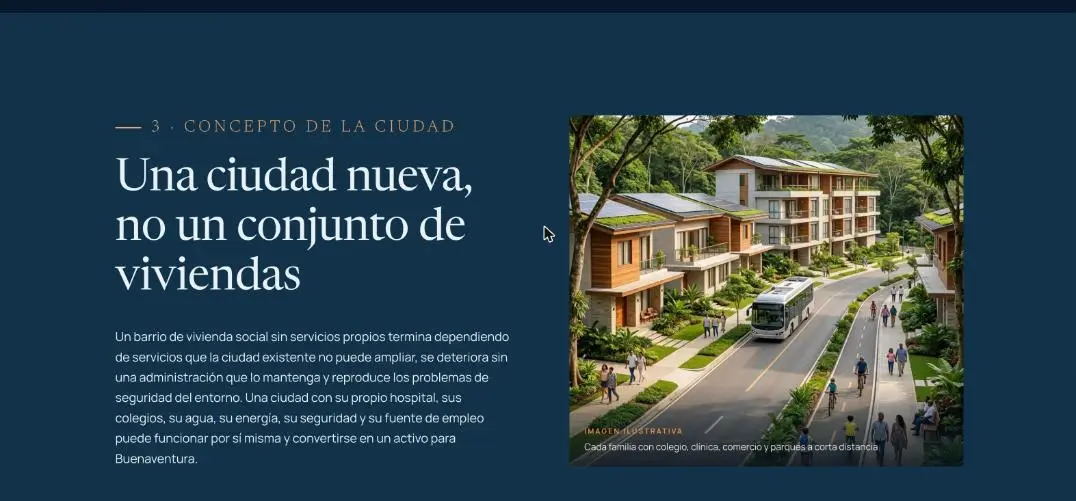
A new city, not a housing estate
The city is designed, contracted and run as one: a single master plan, a single General Contractor and a single administration. It is built in four neighborhoods of 2,500 homes each, with phase 1 covering neighborhoods 1 and 2 and phase 2 covering 3 and 4.
“A city with its own hospital, schools, water, energy and jobs can stand on its own.”
The components
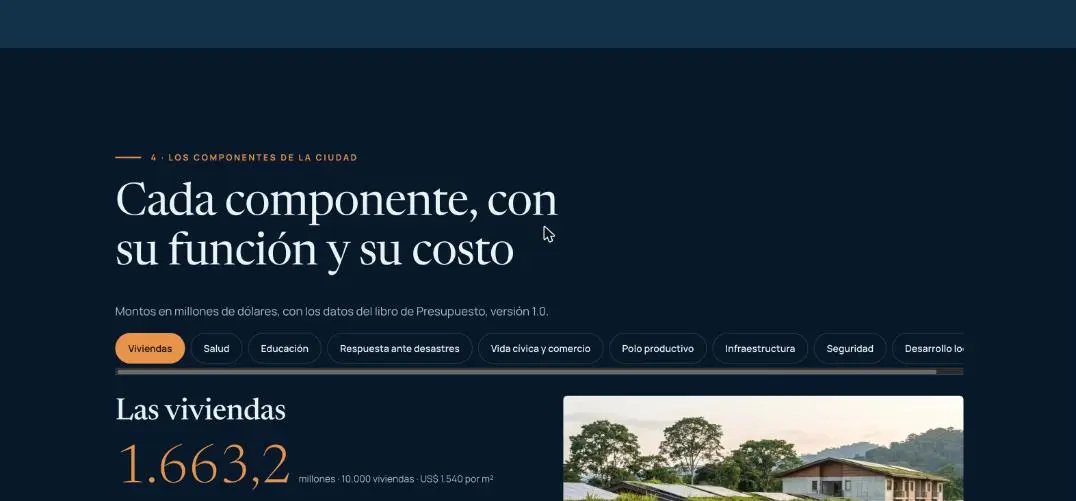
Each component, with its function and its cost
The site walks through the pieces one by one, with amounts in US$ millions. Housing is the largest: US$1,663.2 million for 10,000 homes at US$1,540 per square meter, built to the NSR-10 seismic code. The homes are not sold, and rent is capped at 33% of household income.
The families
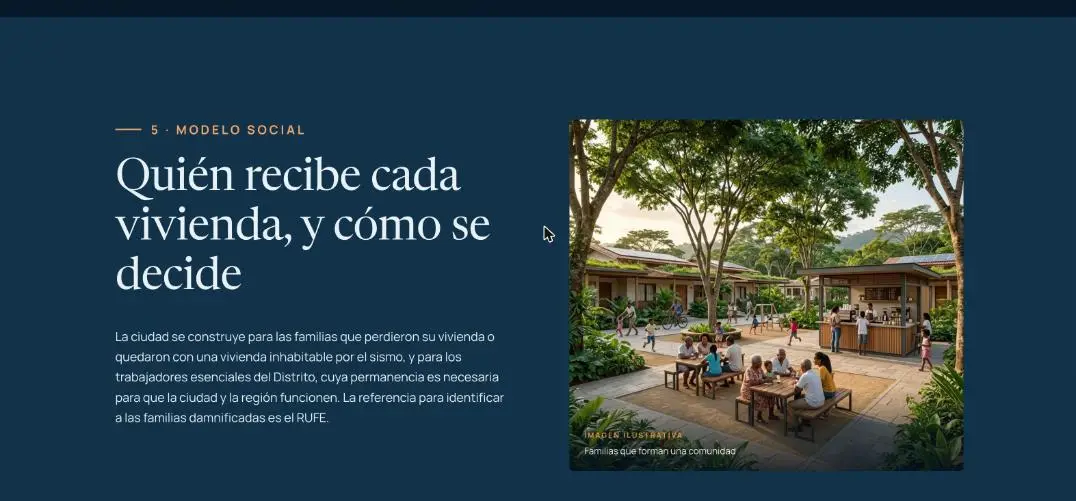
Who receives each home, and how it is decided
Homes go to families who lost theirs or were left with an uninhabitable one, and to essential workers of the District. Allocation follows a regulated, public process run by an Adjudication Commission, whose composition and criteria are fixed in regulations approved before the first handovers.
Operation and environment
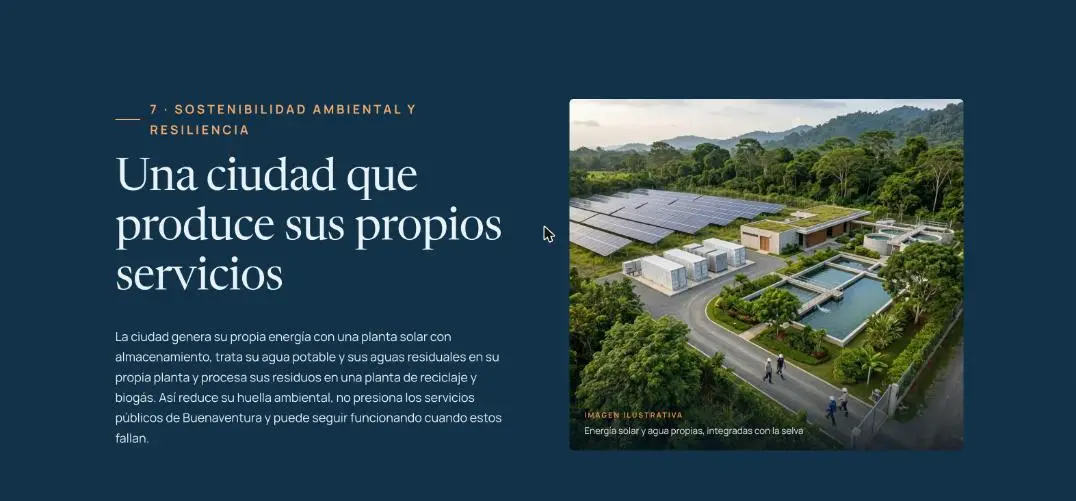
A city that pays for itself
After construction, at Gate D, Mandatum's local entity owns and runs the city permanently. Revenue comes from rents, company rents, water and energy sales and services, and any surplus is reinvested in the city.
The fund covers early deficits. It is released quarterly against certified reports and paid directly to providers until the city breaks even. Environmentally, the city treats its own water and processes its own waste in a recycling and biogas plant.
Financial integrity
The money never passes through the hands of those who manage it
Funds stay in custody accounts, split by Gate, and are paid directly to registered, verified suppliers. Neither the Order, its local entity nor the General Contractor receives funds to administer. Each payment follows seven steps, and no Gate is paid before the previous one closes.
The site names the independent actors: the technical certifier, the contractor, the custodian bank, the external auditor and the public counterparts. It acknowledges that the certifier is institutionally linked to Mandatum and lists five safeguards to offset that.
The budget
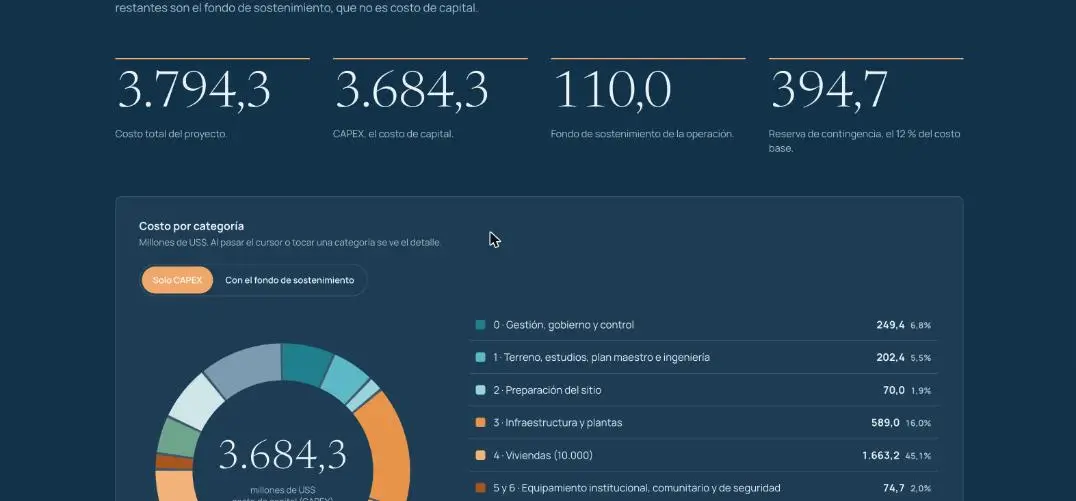
Total project cost: US$3,794.3 million
Of the total, US$3,684.3 million is capital cost and US$110.0 million is the sustainment fund, which is not capital cost. The contingency reserve is US$394.7 million, 12% of the base cost.
The site is candid that the figure could change before Gate C, for example if the General Contractor's costs turn out not to include overhead, contingencies and profit.
The schedule
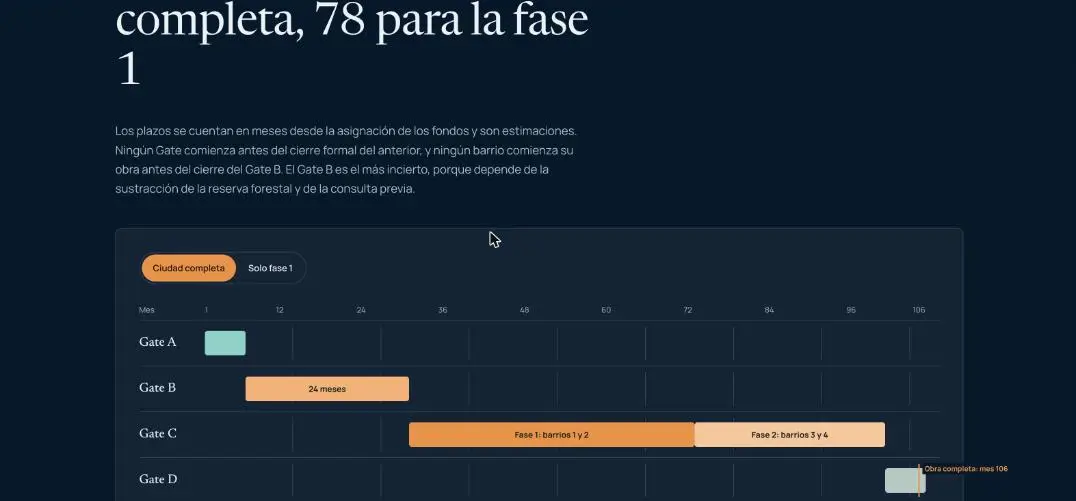
106 months for the full city, 78 for phase 1
Durations are estimates counted from the allocation of funds. Gate B is the most uncertain, since it depends on forest-reserve removal and prior consultation.
The page also lists ten main risks, each with probability, impact and response.
The impact
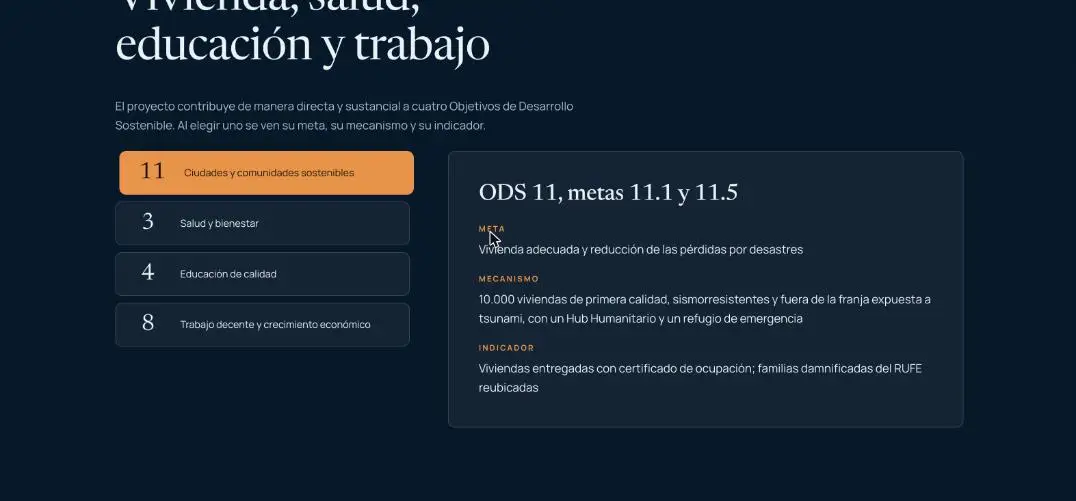
Housing, health, education and work
The site ties the project to four of the Sustainable Development Goals, each with a target, a mechanism and an indicator.
It cites an estimated 35,000 residents, still to be confirmed, 4,000 people trained and about 1,000 entrepreneur loans. Direct jobs are not yet quantified in this version.
A note on the images. The photographs on the site are concept illustrations, not final designs or real works, and the summary is informational: the technical documents govern.
This project also has a detailed technical document (investment costs, break-even point, maintenance, financing and ownership) available to members of the Order, who may request it from the Chancellery of the Order in their country.