 Barça
 Peñarol
 Inter Miami
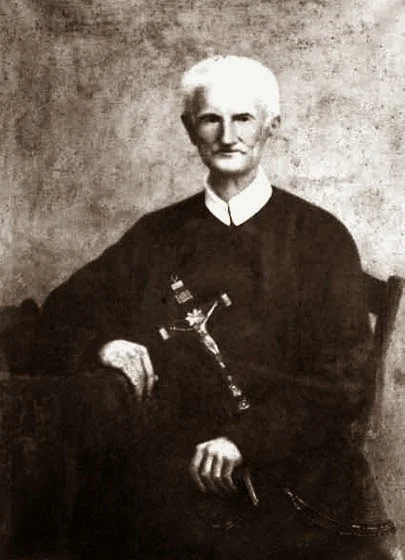
Peter Donders (1809–1887) was a Dutch priest who devoted his life to the enslaved, the Indigenous peoples and the lepers of Suriname. John Paul II beatified him on May 23, 1982.
He was not a martyr and did not suffer violent persecution. What he faced was the resistance of the colonists, the slowness of the authorities, and his own poverty and poor health, which is why his story is above all one of quiet perseverance.
A poor childhood and a late vocation
Peter Donders was born on October 27, 1809, in Tilburg, the Netherlands, the son of Arnold Denis Donders and Petronella van den Brekel. His family was poor: he could barely attend school and worked from childhood to help at home.
He had wanted to be a priest since he was a boy, but only at age 22, with the help of his parish clergy, was he able to enter the minor seminary. He was ordained a priest on June 5, 1841. While still studying theology, his superiors steered him toward the Dutch colony of Suriname.
A life in three missions
Arrived in Paramaribo on September 16, 1842. He spent his first years traveling by boat along the rivers to the plantations, preaching and administering the sacraments, mostly to enslaved people. In a letter of 1846 he defended them and condemned the owners and administrators who profited from them: “Woe, woe to Suriname on the great day of judgment!” Slavery was abolished in 1863.
Sent to the leprosarium at Batavia, he worked there for the rest of his life with few interruptions. He gave the patients religious care and tended them himself until the authorities agreed to provide an adequate nursing service, and he pressed them to attend to the needs of the sick.
When the Redemptorists took over the mission in 1866, Donders and another priest asked to join. After the novitiate under vicar apostolic Johan Baptist Swinkels, he professed his vows on June 24, 1867 and returned to Batavia. He also devoted himself to the Indigenous peoples, learning their languages and teaching the faith until his health forced him to leave that work to others.
Opposition and hardship: what he did face
The historical records speak of no formal persecution, imprisonment or martyrdom. What they describe are real obstacles:
He often met resistance from “Christian” colonizers who barred him from the plantations, even to administer the sacraments.
He had to press the colonial government to attend to the lepers; its response was slow, and for years he cared for them personally.
He worked with the Arawaks, Warraus and Guaranis, battered by alcohol and by diseases such as smallpox brought by the Europeans, and had difficulties with the Caribs.
He grew up without resources, began his studies late, and his health kept worsening until it forced him to give up some of his work.
Death, beatification and legacy
In 1883 the vicar apostolic transferred him to Paramaribo and then to Coronie to ease his burden; in November 1885 he returned to Batavia and resumed his work. Illness left him bedridden in December 1886, and he died on January 14, 1887, surrounded by the sick whom he had served.
Remembered as the “apostle of the Indigenous peoples” and the priest of the lepers. His reputation for holiness spread beyond Suriname and Holland, his cause reached Rome, and Pope John Paul II beatified him on May 23, 1982.
Sources
- Blessed Peter Donders (1809–1887), Redemptorists of Canada
- Blessed Peter Donders: Prophet of Justice and Liberation, CSSR
Image: photograph of Peter Donders from the 1880s, author unknown, public domain, via Wikimedia Commons.