
 Barça
 Peñarol
 Inter Miami
Most account break-ins do not involve clever hacking. They start with a reused password, an old app or a convincing message. The US Cybersecurity and Infrastructure Security Agency (CISA) summarizes good digital hygiene in four actions, and all of them are free.
1. Use more than one way to prove who you are
Turn on multi-factor authentication on every account that offers it. After your password, the service asks for a second proof: a code sent by text, an authenticator app, a fingerprint or face scan, or a physical security key. If someone steals your password, they still cannot get in.
2. Keep your software updated
Install updates for your phone, computer, apps and browser. Updates often close security holes that criminals already know about. The easiest way is to switch on automatic updates.
3. Think before you click
Be careful with unfamiliar links, especially in email and messages. Phishing pages can look exactly like the real thing and are built to steal passwords, card numbers and other sensitive data. If a message creates urgency, go to the website yourself instead of using the link.
4. Use strong, unique passwords
Each account should have its own password, never reused. Mix letters, numbers and symbols, and make passwords long. Because nobody can remember dozens of them, consider a password manager, which creates and stores them for you.
One more rule
Never share a verification code that arrives by text or in a messaging app, even with someone who seems to be a friend or a company. A code is meant for you alone.
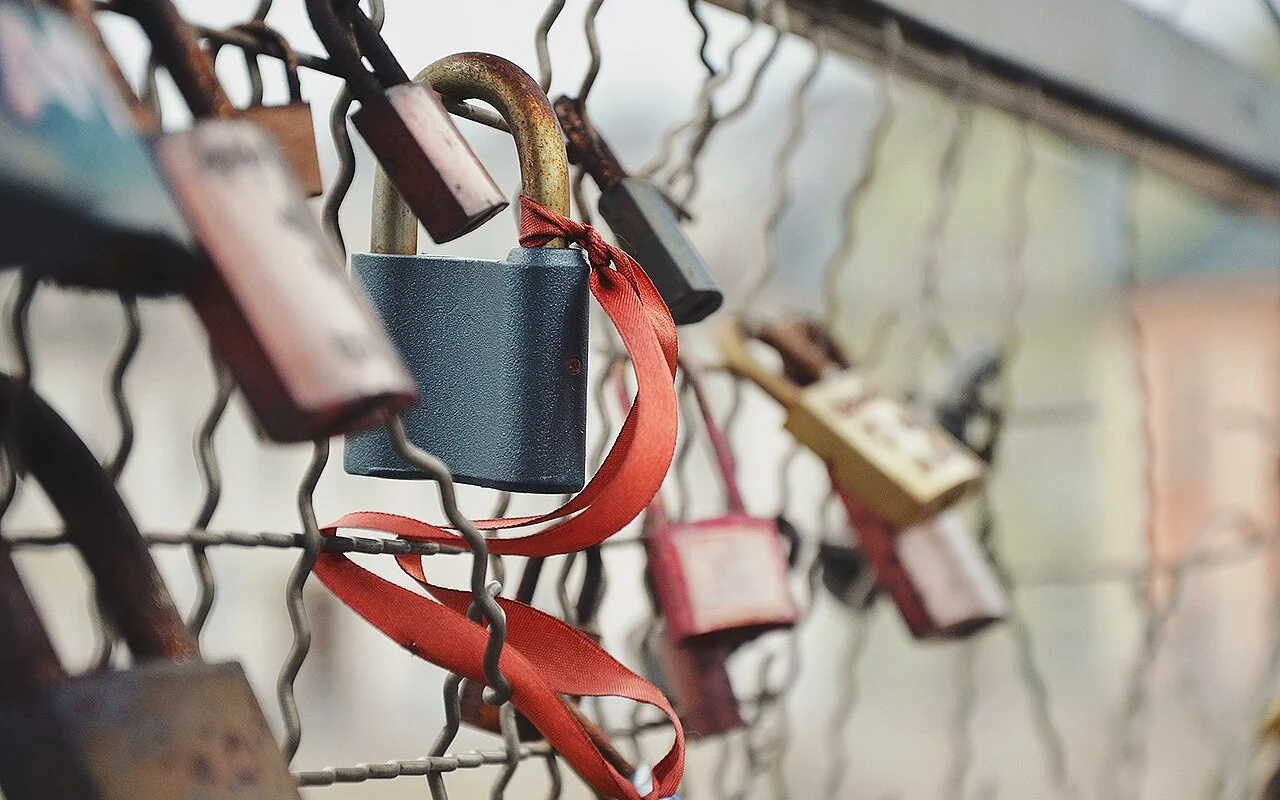
Source: CISA, “Four Things You Can Do To Keep Yourself Cyber Safe.” Image: padlocks on a fence, via Wikimedia Commons (CC0).