English - Español - Català - Français - Nederlands
Weather

–°

Hollywood, FL

Mandatum HeraldVox Populi, Vox Dei
Barça…
Peñarol…
Inter Miami…


Bocas del Toro Project Goes Online

Bocas del Toro Project Goes Online

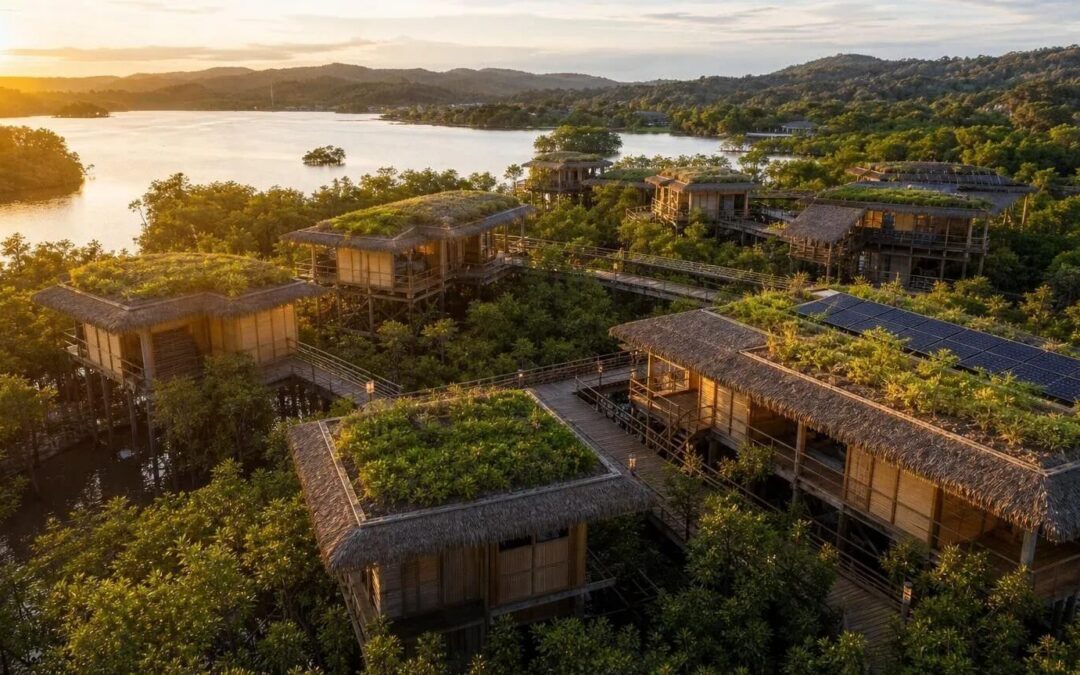
Mandatum has published the website of its preliminary project for Bocas del Toro, on Panama’s Caribbean coast: a phased ecological and economic complex that sustains itself, is built only on unprotected land, and leaves behind jobs, training and recovered mangrove.

Version 0.2 of the proposal brings together, in a single project, five ecological hotels, eco-villas, affordable homes, a commercial district for small traders, a port, a university, business incubators and a fund for local businesses, with the clean infrastructure that supports them and the recovery of the mangrove.

Explore the project website ↗

The project in numbers

One large project, made of small ones

5ecological hotels
750hotel rooms
300eco-villas
1,500affordable homes
40,000m² of Pueblo Azul
~250micro-businesses
~95,000visitors a year
~3,150direct jobs
~200hectares
108months, three phases

Hotels of about 150 rooms each. The 750 new rooms are 46% more than the 1,644 rooms the district has today.

If there is no consensus with the Government, the local government and the communities, the project does not go ahead.
Purpose and need

A priority destination that lacks services

Bocas del Toro is a priority destination in Panama’s Master Plan for Sustainable Tourism Development 2020–2025 and appears in its 2025–2030 update. The plan calls for water and sewerage on Bastimentos, wastewater treatment on Isla Carenero, water intakes and a treatment plant on Isla Colón, solid-waste management and alternative energy for rural communities.

Today the district receives about 100,000 visitors a year and close to US$50 million in tourism income. The proposal’s model is the opposite of mass tourism: few visitors per hectare, high spending, and as much income as possible staying in the community.

Hotel rooms today1,644
New rooms from the project+750
Visitors a year today~100,000
New visitors a year from the project+95,000
Hotel occupancy, Bocas del Toro 202670.4%
National average, 202451.0%

Occupancy: CoStar sample reported by PROMTUR.

Components

Each piece, with its cost

Ecological hotels

Ecological hotels

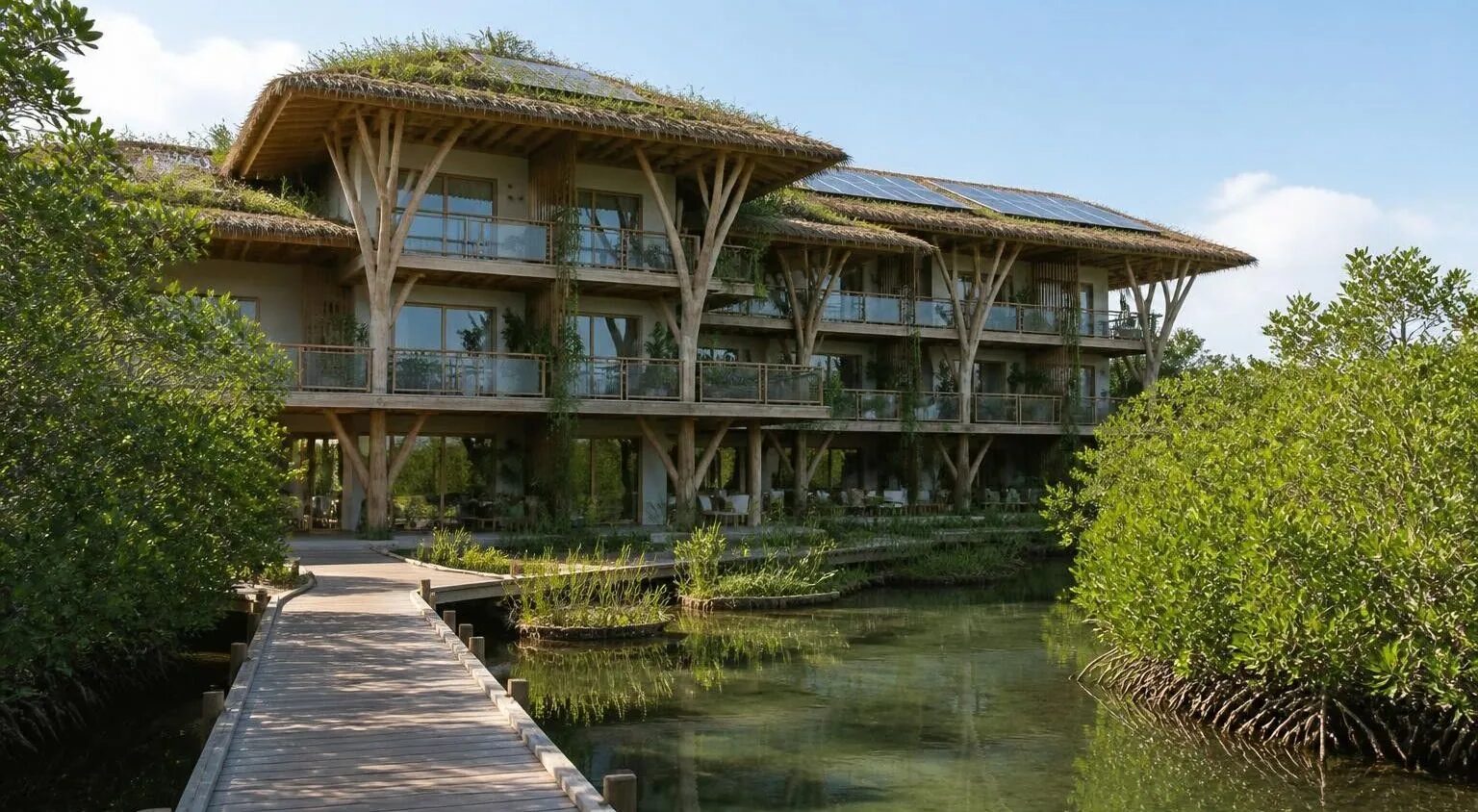
5 hotels of about 150 rooms, up to three floors, each under a different international brand.

US$ 271.5 M
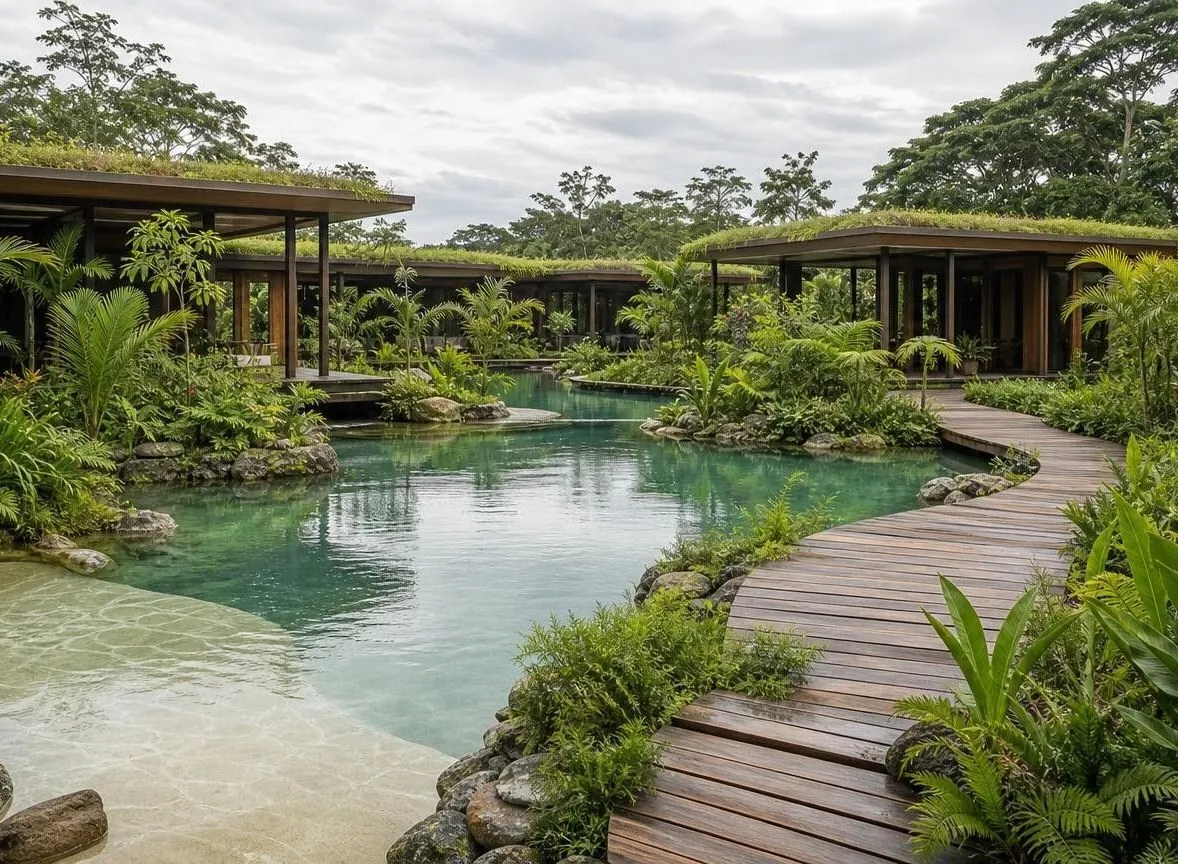
Pools and leisure areas

Pools and leisure areas

Pools, recreational and commercial areas of the hotels. An assumption until quotes are available.

US$ 27.1 M
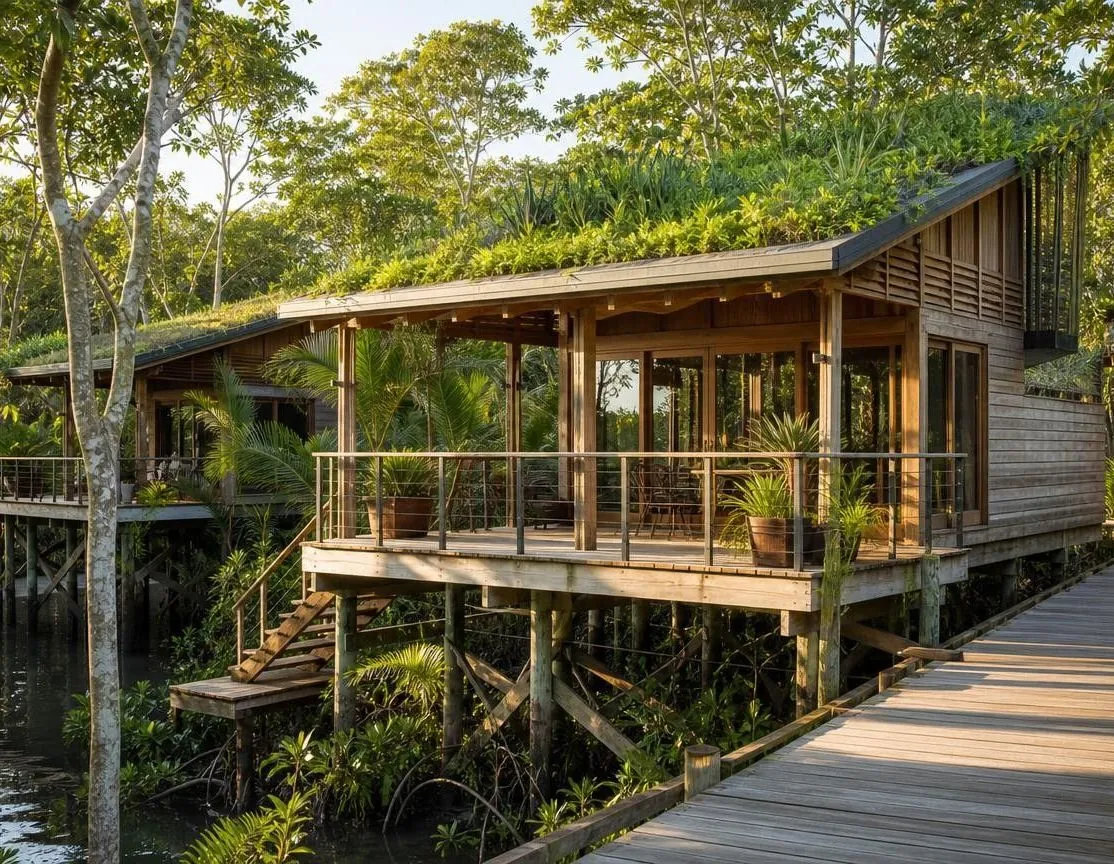
Eco-villas

Eco-villas

300 villas within the hotel grounds, without increasing density.

US$ 135.0 M
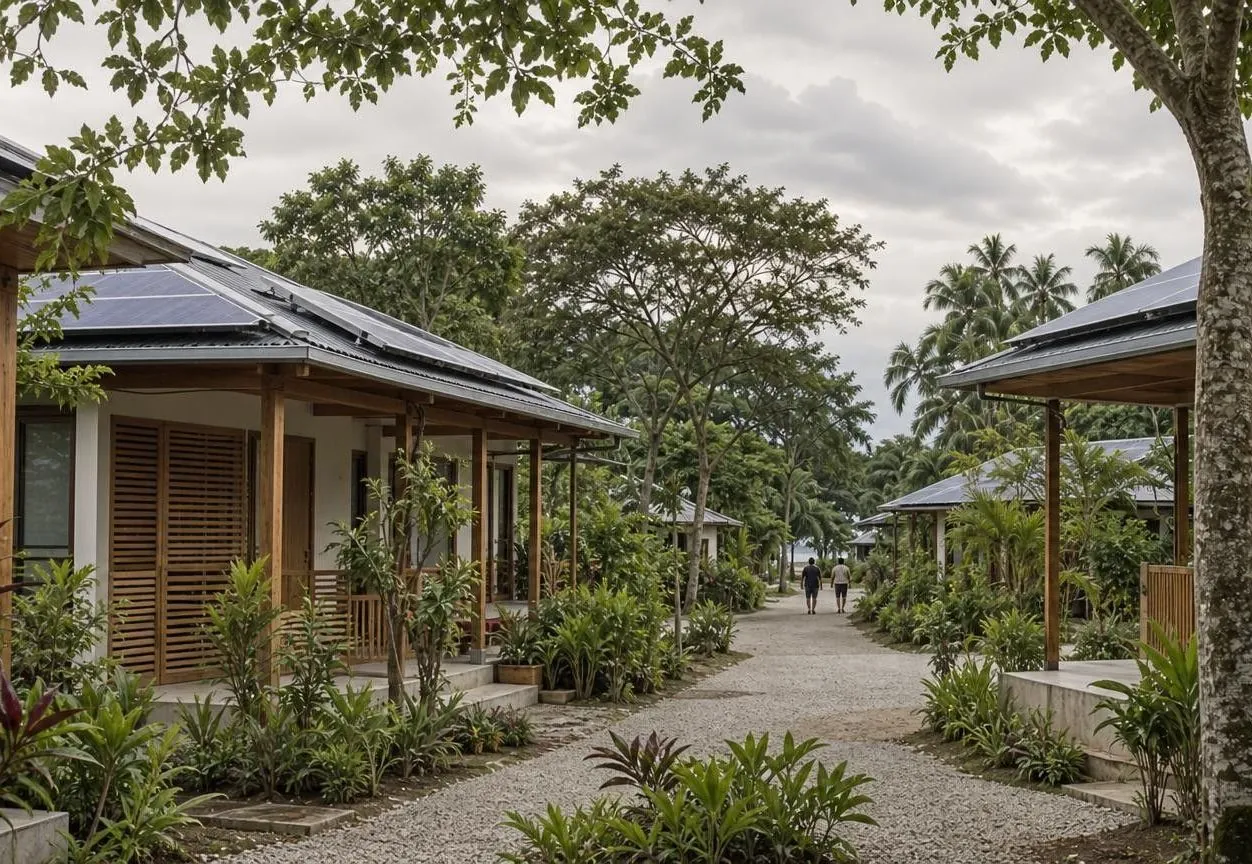
Affordable rental homes

Affordable rental homes

1,500 homes of about 70 m² with solar energy, water and sanitation, at a reference rent of US$350 a month.

US$ 163.8 M
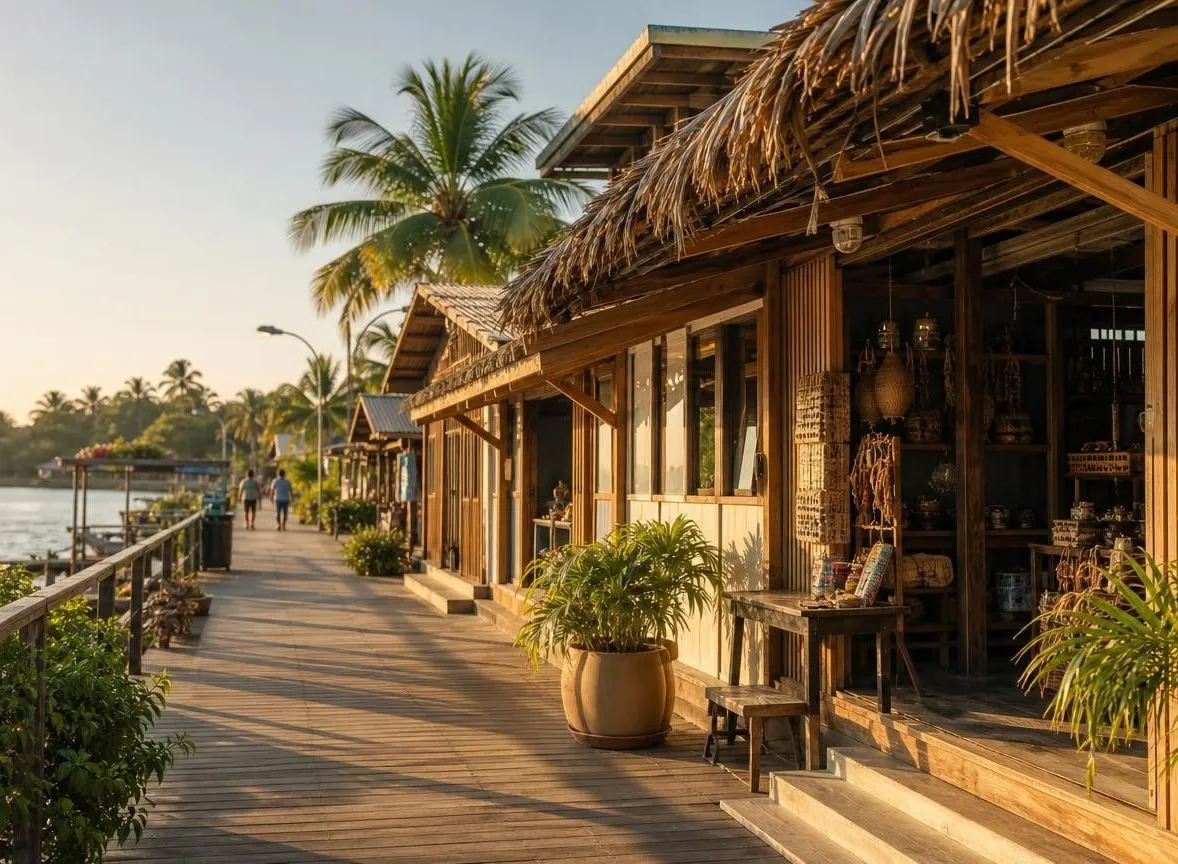
Pueblo Azul

Pueblo Azul

40,000 m² of shops, craft market, food and promenades, rented at social rates to local entrepreneurs.

US$ 80.0 M
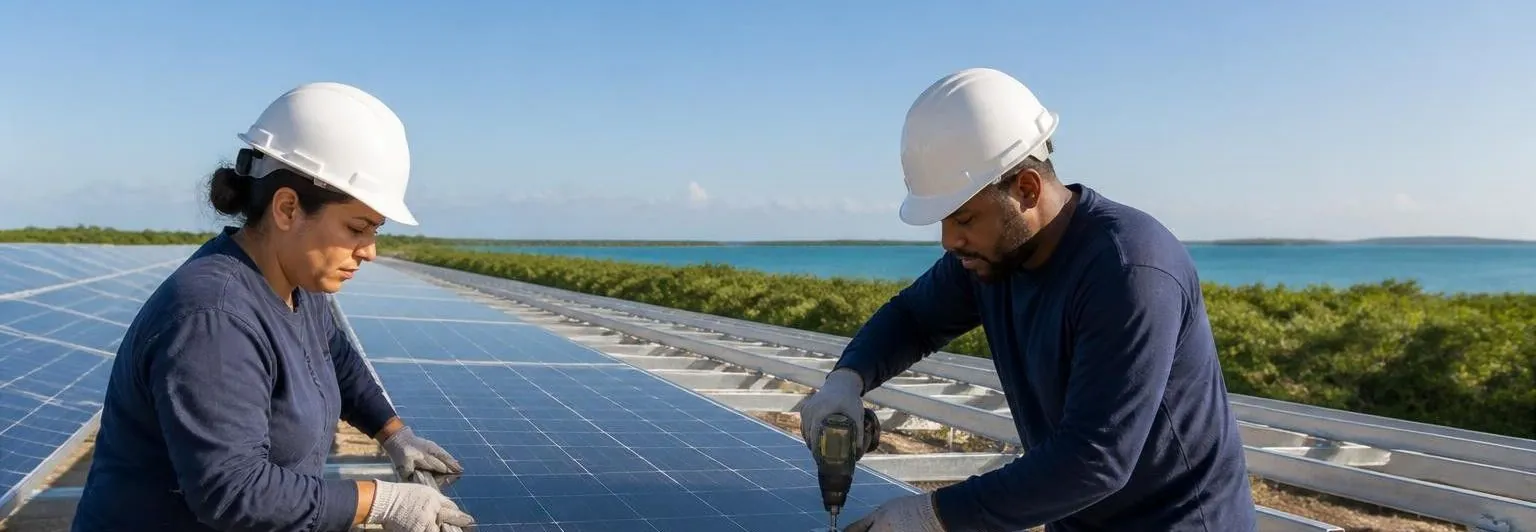
Clean infrastructure

Clean infrastructure

40 MW solar micro-grid with storage, sanitation and drinking water for the project and the community.

US$ 230 M
Total cost

US$ 2,145 million, item by item

Building (hotels, villas, homes, Pueblo Azul)677.5
Contingency reserve323.3
Port, marketing and Blue Territory275.9
Clean infrastructure260.0
University, clinic, incubators, local development166.0
Management, governance and control145.2
Land, studies, consent and design145.0
Sustainability fund120.0
Equipment (institutional and security)18.0
Site preparation14.0

US$ million. Contingency is 19% of the base cost, excluding the fund. A conditional airport module would add US$30 million.

Schedule

Three phases, four gates each

A gate only opens after the formal closure of the previous one. Choose a phase:

Gate A
Institutional activation
Gate B
Technical definition and assets
Gate C
Execution of the works
Gate D
Closure and handover

Operation begins: · Builds: ,

Schedule in months, without calendar dates. Until a benefactor assigns the funds, no milestone moves beyond the preliminary project.
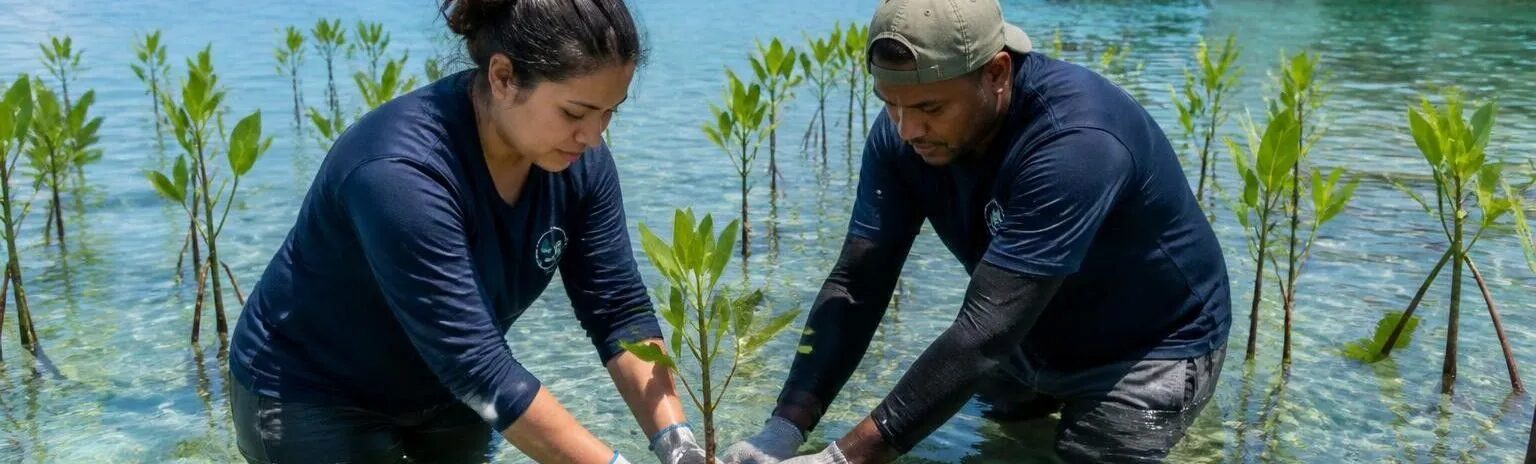
Concept illustration of mangrove restoration
Concept illustration of the mangrove restoration work.
Blue Territory

The mangrove and blue carbon

The mangrove programme, US$7.95 million over 36 months, would be designed and developed by Carbono & Bosques (Grupo 4C) with the project’s own funds: local park rangers, monitoring, reporting and verification, and the production of blue carbon credits. After those 36 months, conservation would cost about US$2.65 million a year. How much could carbon credits cover? Choose a scenario:

US$ 252,000 a year from carbon credits
Share of annual conservation cost covered10%

About 3,000 hectares; 8 t CO₂e per hectare a year; US$15 per tonne; 70% for the project.

Carbon values are assumptions until the technical proposal is ready.

The people of the place

Training and backing local businesses

University

University

School of Hospitality, Trades and Business, plus a mangrove research centre (US$10 M).

US$ 30 M
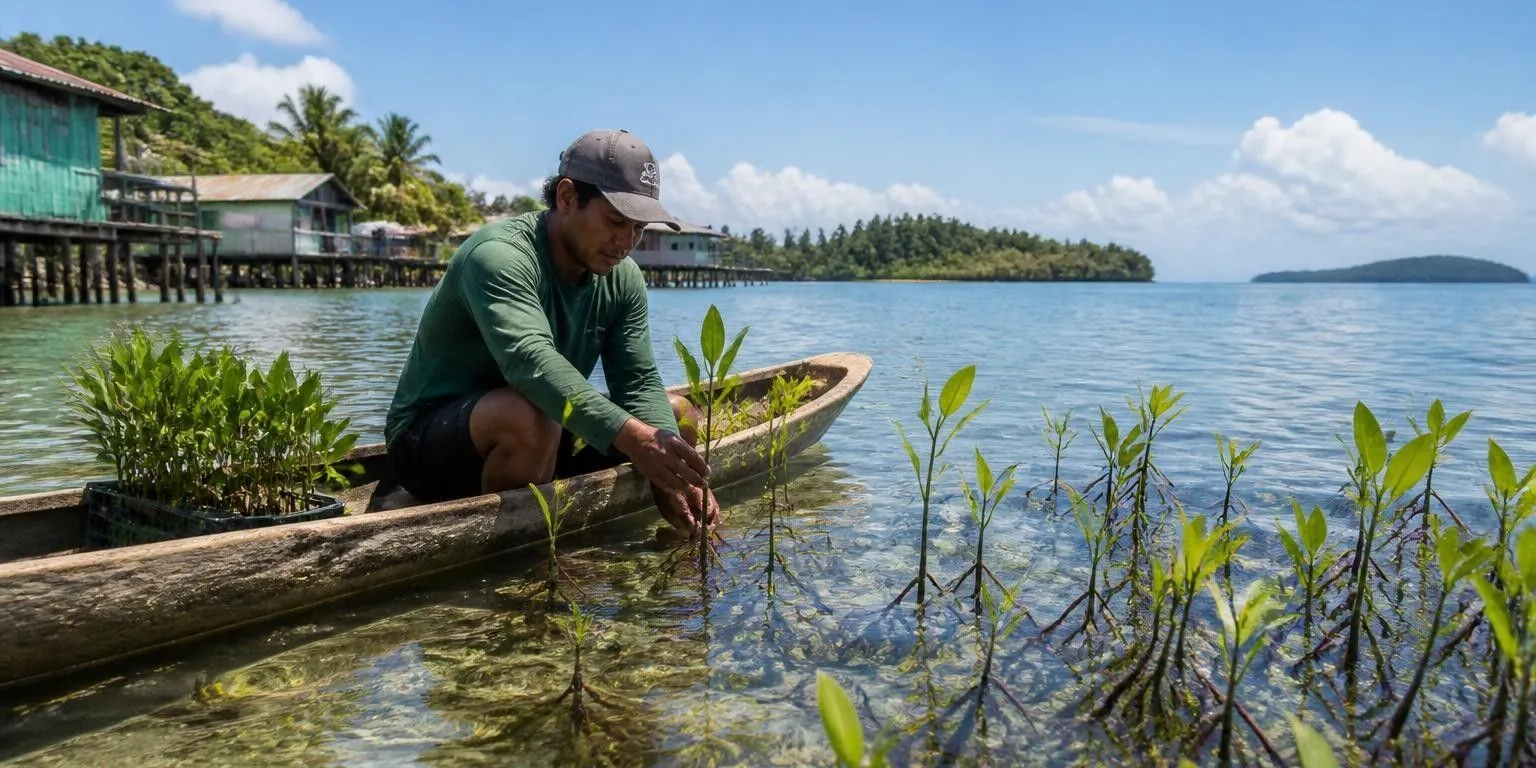
Incubators and fund

Incubators and fund

Three incubation centres and a revolving microcredit fund for about 250 micro-businesses.

US$ 15 M + 100 M
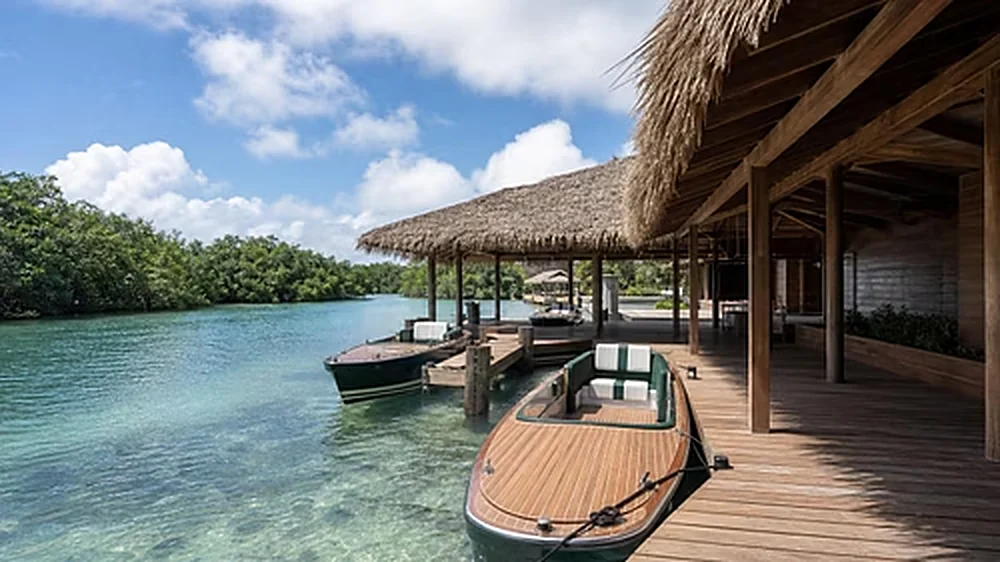
Port and mobility

Port and mobility

Marina, docks, water terminal and 40 electric boats, with local operators.

US$ 65 M

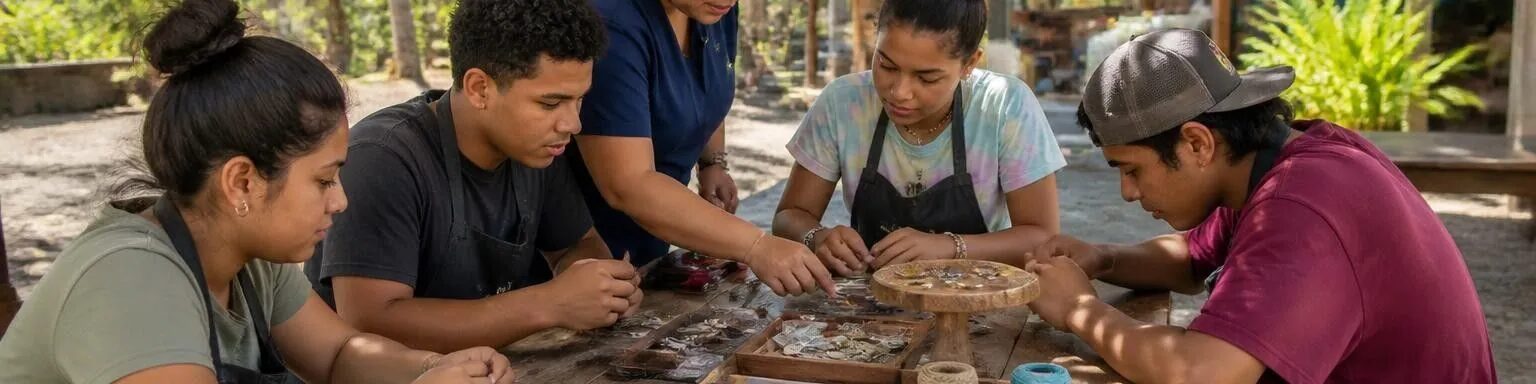
Lodging is run by Mandatum with hotel chains. Everything else, restaurants, shops, spa, tours and transfers, is provided by local entrepreneurs trained in the incubators.

Safeguards

Built with clear limits

Only on unprotected land

75.63% of the district is protected. The project uses only the remaining 24%, on land that belongs to no community, bought with the benefactor’s funds.

Only with consent

Bastimentos, Punta Laurel and Tierra Oscura are consulted from the first gate, with free, prior and informed consent before any works.

No public debt

No debt, guarantee or fiscal cost for the State. A custodian bank pays each supplier directly; funds never pass through the Order’s accounts.

Risks and conditions, stated openly

The main risks
  1. The Government does not appoint a counterpart.
  2. Lack of consensus with the local government or the communities.
  3. Land on protected ground or subject to collective land claims.
  4. Insufficient carrying capacity for 95,000 new visitors.
  5. Lower demand or rates than expected.
  6. Hotel costs close to US$650,000 per room.
  7. Blue carbon credits that are not certified.
  8. Natural hazards, island logistics and regulatory changes.
What must happen for the project to move forward
  1. The Government appoints a counterpart.
  2. Consensus among the Government, the local government and the communities.
  3. Land is acquired on unprotected ground.
  4. The local entity is defined.
  5. A benefactor assigns the funds.
  6. The Government signs agreements with the Order and its benefactors.
  7. The Government approves the airport module.
  8. A carrying-capacity study endorses Phase 2.
  9. Carbono & Bosques delivers its technical proposal.
How it would sustain itself

In the base scenario the project reaches its first positive result in year 4; in the pessimistic scenario, in year 8. A US$120 million sustainability fund is released only against a certified operating deficit. The local entity of Mandatum in Panama owns and permanently manages the complex. The casino of earlier versions has been removed.

Expected impact

Seven Sustainable Development Goals

4 Training6 Wastewater treatment7 Renewable energy8 Sustainable tourism and jobs12 Sustainable tourism monitoring13 Climate action14 Mangroves and coasts

Let’s talk about Bocas del Toro

To review the preliminary project, join or ask a question, write to [email protected] or visit bocas.emandatum.com.

Images are concept illustrations of how the project could look, not the final design or actual works. This note summarises the project’s Descriptive Report for information purposes; the technical documents of the MDT-Anteproyecto PaBoc prevail in case of any difference.

Related reading

This project also has a detailed technical document (investment costs, break-even point, maintenance, financing and ownership) available to members of the Order, who may request it from the Chancellery of the Order in their country.

Protect Your Family Photos: A Simple Backup Plan

Protect Your Family Photos: A Simple Backup Plan

For most families, the photographs on a phone are the only record of births, weddings, trips and ordinary Sundays. They are also surprisingly fragile: a lost phone, a failed drive or a forgotten password can erase years of memories in a moment. Genealogy organizations such as FamilySearch recommend a few simple habits to avoid that.

Keep more than one copy

The core rule is redundancy. Keep your photos in at least two places, ideally in different locations: for example, your phone and an external hard drive, plus one copy with a reputable cloud service. If one fails, the others remain.

Automate it

Backups that depend on remembering never last. Turn on automatic backup in your phone or cloud app so new pictures are copied without effort.

Check your files once a year

Storage devices wear out, and a backup you have never opened may be damaged. Once a year, open a few old photos from each copy to confirm they still work, and move them to new storage when a device gets old.

Add names and dates

A photo of a smiling stranger is worth little to the next generation. Write names, places and dates in the file name or description while you still remember them, and ask older relatives to help you identify faces in the pictures.

Do not forget the paper

Old printed photos can also be scanned. Even a phone scan is better than leaving a unique picture in a drawer, and the original can stay safe in an acid-free box.

Spending an afternoon on this once, and a few minutes each year afterwards, protects something that cannot be replaced.

Guidance based on FamilySearch recommendations for preserving digital photographs. Photo: Hungarian family photo album, Wikimedia Commons (public domain).

How to Spot an AI-Generated Image Before You Share It

How to Spot an AI-Generated Image Before You Share It

Realistic images made by artificial intelligence now circulate every day, and many arrive without any label. Before you share a striking photo, a few checks can help. None of them is perfect, so the best habit is to use several together.

Six checks that help

  • Look for a watermark. Some AI tools embed an invisible mark. Google’s SynthID, for example, can be detected by uploading the image to Gemini and asking whether it was made by AI.
  • Check Content Credentials. A provenance checker based on the C2PA standard can show whether an image carries a record of how it was made, and sometimes which model produced it.
  • Run a reverse image search. A tool such as TinEye can find earlier copies. If a dramatic image has no history anywhere else, that makes AI generation more likely.
  • Check the context. Trust images that come from reputable publications and name their sources. Be careful with reposted images on social media, especially those designed to provoke a reaction.
  • Compare viewpoints. For news events, real photographs usually exist from several angles and times. If you find only one perfect picture, ask why.
  • Look at the details. Faces or hands that look squeezed, stairs that lead nowhere, blurry background details, and text that looks like generic AI-style lettering are all warning signs.

Why no check is enough

Watermarks can be removed, for example by taking a screenshot. Passing a check does not prove an image is real, and a reverse search with no results suggests AI but does not confirm it. Visual mistakes are also less obvious than they used to be. In the end, every result is a judgment call, not a verdict.

A practical rule

If an image is surprising, emotional and has no clear source, wait before sharing it. A photo that is real will almost always be backed by a name, a place, a date and, usually, other people who were there.

Source: Popular Science, “How to really spot AI-generated images, with Google’s help.” Image: Unsplash, via Wikimedia Commons (CC0).

The Academy of Management: Running the Order’s Projects on the Ground

The Academy of Management: Running the Order’s Projects on the Ground

8Core books
3Project annexes
10Role capsules
7/10To pass each exam

Humanitarian projects are won or lost in execution. The Academy of Management is for those who carry out the Order’s projects in the field: directors, engineers, finance officers and the other roles of project management.

Enroll in the course →

After the General Magisterium, the academy consists of eight books of the generic core, three annexes by project type and ten role capsules. Each is studied in sequence with its own exam, and the next one unlocks with at least 7 out of 10.

Eight books of the generic core

I · Project Governance Architecture

Who decides what.

II · Milestone-Based Financial Execution Protocol

Money released by milestones, not by promises.

III · The Critical Execution Milestones (Gates)

The checkpoints a project must pass.

IV · Management of Professional Teams

Leading the people who build.

V · Supplier Selection and Management

Choosing and overseeing providers.

VI · Government Relations and Institutional Support

Working with public authorities.

VII · Technical Management and Quality Control

Making sure it is built as designed.

VIII · Audit, Reconciliation and Closure

Closing a project cleanly.

Three annexes by project type

Annex A

Housing and urban developments.

Annex B

Productive infrastructure.

Annex C

Community infrastructure and basic services.

Ten role capsules cover positions such as the Central Management Director, the Field Management Director, the Technical Validation Engineer and the Financial Controller, so each person studies the part they will actually play.

Take the Management course

Turn vision into projects that work. Start learning today.

Enroll in the course →

Image: AI-generated.

Latin Phrases We Still Use Every Day

Latin Phrases We Still Use Every Day

Latin stopped being anyone’s native language many centuries ago, yet we use it every day, often without noticing. The words and phrases below survived in law, education, business and everyday speech.

Phrases and their original meaning

  • Carpe diem – literally “pluck the day,” meaning “seize the day.” The phrase comes from the Roman poet Horace.
  • Pro bono – short for pro bono publico, “for the public good.” Today it means work done without payment, often by professionals for charitable causes.
  • Alma mater – originally “nourishing mother.” It now names the school or university a person attended.
  • Status quo – the existing state of affairs.
  • Bona fide – “in good faith,” now used to mean genuine or authentic.
  • Per capita – literally “by the head,” meaning per person.
  • E pluribus unum – “out of many, one,” a motto found on United States coins.
  • Ad hoc – “for this,” describing something made for a particular purpose.

Why it matters

Knowing the origin of these expressions makes them easier to remember and to use correctly. It also shows how languages keep a record of the societies that shaped them: law, medicine, science and the Church all kept Latin alive long after Rome fell, and much of today’s vocabulary in English, Spanish, French and Italian comes from it.

The Mandatum Herald’s own motto, Vox Populi, Vox Dei, is a Latin phrase too; you can read the story behind it in our earlier article.

Sources: LanguageTool, “Latin Phrases Used in English.” Image: Grandes Heures of Anne of Brittany, Wikimedia Commons (public domain).