English - Español - Català - Français - Nederlands
Weather

–°

Hollywood, FL

Mandatum HeraldVox Populi, Vox Dei
Barça…
Peñarol…
Inter Miami…


The SIRF Seminar: How Large Infrastructure Projects Are Financed

The SIRF Seminar: How Large Infrastructure Projects Are Financed

7Modules
SPVProject finance structure
7Module exams
ESLanguages

Bridges, highways, ports and housing districts are rarely paid for in one check. The SIRF seminar, the Integrated Financial Resources System, walks through the financial architecture of large infrastructure projects under the model known as Project Finance.

Enroll in the course →

The seminar examines the special purpose vehicle, the capital structure, guarantees, the financial model, solvency indicators, risk management, implementation and control, case studies and the criticisms of the system itself. It is organized in seven modules, each followed by an exam.

Seven modules

I · Foundations and Context of SIRF

What Project Finance is and why it exists.

II · Financial Engineering, Guarantees and Contracts

How a project is structured and secured.

III · Financial Modeling and Viability Analysis

Testing whether a project can pay for itself.

IV · Risk Management in SIRF

Identifying and distributing risk.

V · Implementation, Monitoring and Control

Keeping the financing on track once the work begins.

VI · Case Studies and Trends

Real projects and where the field is heading.

VII · Defects, Failures and Criticisms of SIRF

An honest look at where the model falls short.

Honest by design: the final module is devoted to the flaws and criticisms of the model. A seminar that teaches finance responsibly should also teach its limits.

Format

Interactive modules on ERUDI, each with an exam.

Language

Currently offered in Spanish.

Take the SIRF course

Start the course and see how the Order builds for the long term.

Enroll in the course →

Image: AI-generated.

Panama Minister Backs Blue Territory

Panama Minister Backs Blue Territory

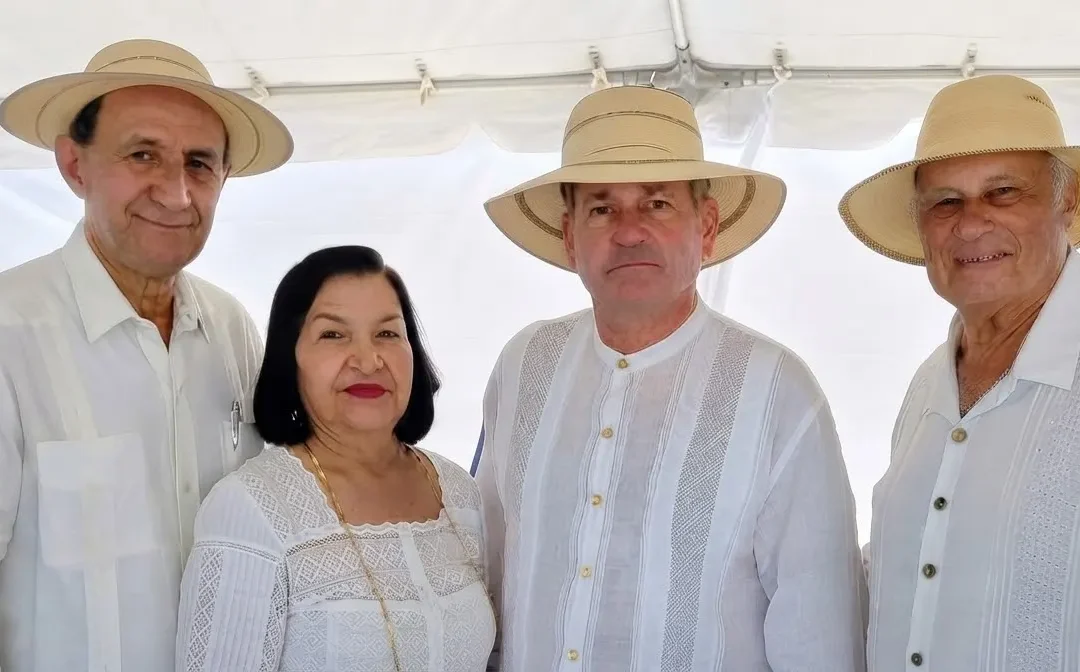
A new door has opened for Mandatum in Panama. In a meeting led by Adelantado1 Hermann Gnaegi, a great friend of the Order who is driving Mandatum’s arrival in the country, the Blue Territory project in Bocas del Toro, structured by Mandatum, was presented to His Excellency Juan Carlos Navarro, Minister of Environment of the Republic of Panama.

A Green Light from the Ministry

Minister Navarro gave the go-ahead for the ministry’s structuring team to begin a technical-table review of the initiative. It is an important first step: the project’s design will now be examined in detail by the ministry’s own specialists, opening the way for the initiative to advance together with the Panamanian government.

Communities Already on Board

The strength of the project rests on the people who live in Bocas del Toro. The Indigenous, Afro-descendant and local communities of the area have already endorsed the initiative, and they have begun sending letters requesting help and support for the project.

Those letters are being channeled through their representative, Mr. Roberto Gutiérrez, another Adelantado of the Order in the Republic of Panama, placing the voice of the communities at the center of the process.

At a glance

  • Project: Blue Territory, Bocas del Toro, Panama
  • Presented to: Minister of Environment Juan Carlos Navarro
  • Outcome: go-ahead for the ministry’s technical-table review
  • Community support: endorsement and letters of request from local communities
  • Next steps: meetings with the Chancellery in Panama and the Order’s project validators

The Road Ahead

While the ministry’s technical team begins its review, the next stage will bring meetings with Mandatum’s Chancellery in Panama, led by Chancellor Juan Diego Herrera Gutiérrez, and with the Order’s project validators. Their purpose is to understand the steps required to carry the initiative to a successful conclusion.

Follow the project at bocas.emandatum.com

1 · Adelantado. In the Spanish tradition, an adelantado (literally, “the one who goes ahead”) was a title given by the Crown to a trusted leader entrusted with advancing into new or frontier lands, opening the way, organizing them and bringing others after him. In Mandatum, an Adelantado is a member who goes ahead of the Order in a country or region: he builds relationships, opens doors and promotes Mandatum’s projects, so that the Chancellery and the Order’s structures can follow.

St. Martin of Tours: The Soldier Who Shared His Cloak

St. Martin of Tours: The Soldier Who Shared His Cloak

On November 11 the Church celebrates St. Martin of Tours, one of the most popular saints of the first Christian centuries.

A soldier from Pannonia

Martin was born around the year 316 in Sabaria, in the Roman province of Pannonia, today Szombathely in Hungary. As a teenager he was enrolled in the Roman army, as the laws of the time required.

The cloak

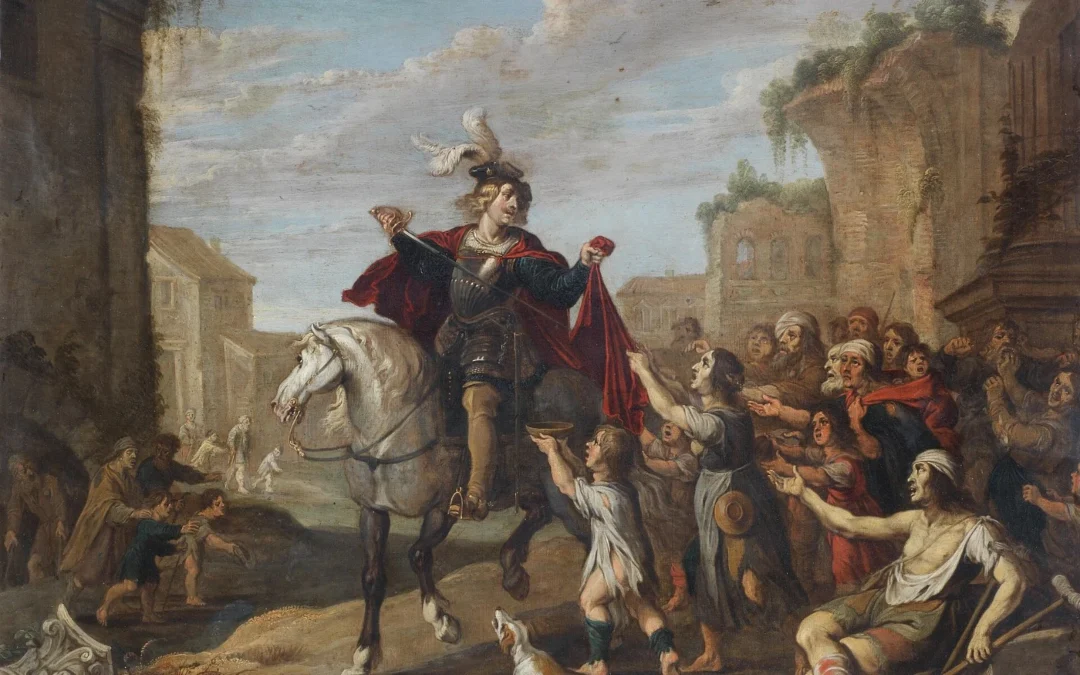
The best-known episode of his life took place at the gates of Amiens, on a bitterly cold day. Martin met a half-naked beggar and, having nothing else to give, cut his military cloak in two and gave half to him. He was baptized soon afterwards, still a catechumen, and later left the army.

Monk and bishop

He lived as a hermit at Ligugé, where a community gathered around him, and later founded the monastery of Marmoutier near Tours. Around 371–372 the people of Tours chose him as their bishop by acclamation. He died at Candes most probably in 397, at about the age of 81, and his body was taken to Tours. His feast day is November 11.

Why he is remembered

Martin is a model of practical charity: he did not wait to have more in order to give. The image of a soldier sharing his cloak has inspired artists for centuries, and his name remains tied to Tours and to the traditions of generosity that mark his day in many European countries.

Source: Catholic Encyclopedia, “St. Martin of Tours.” Painting: Hans Jordaens III, Saint Martin dividing his cloak, Wikimedia Commons (public domain).

Argentina’s Day of Tradition: Honoring the Poet of the Gauchos

Argentina’s Day of Tradition: Honoring the Poet of the Gauchos

Every November 10, Argentina celebrates the Day of Tradition (Día de la Tradición), a date set aside to honor the country’s customs, music, language and way of life.

Why November 10?

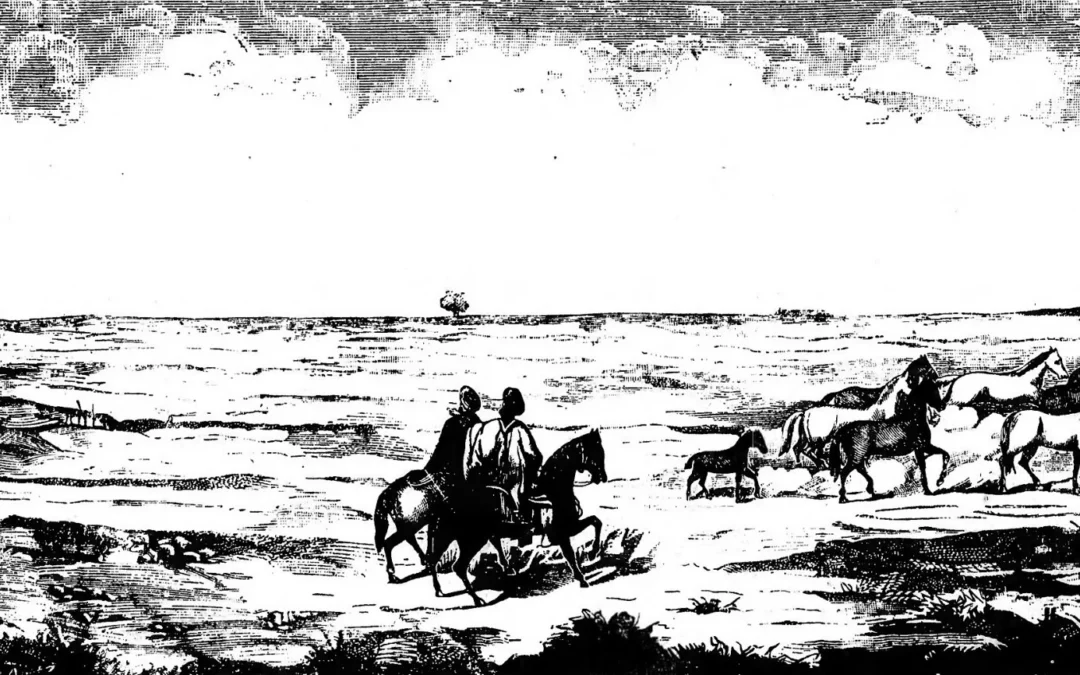
The date is the birthday of the poet José Hernández (1834–1886), author of El gaucho Martín Fierro and its sequel La vuelta de Martín Fierro. These long poems tell the story of the gaucho, the horseman of the pampas, and preserve his language, customs and code of honor. For many Argentines they are a national epic.

How the holiday began

The idea was proposed on December 13, 1937, by Francisco Timpone at a meeting of the Bases association in La Plata. The Buenos Aires provincial legislature approved it unanimously in 1939, under law 4756. In 1975 the National Congress extended the celebration to the whole country through National Law 21154, which also named San Martín, Hernández’s hometown, the “City of Tradition.” In 1984 the province named San Antonio de Areco its permanent headquarters of tradition.

How it is celebrated

La Plata has hosted the event since 1940, and San Antonio de Areco, home of the Ricardo Güiraldes Museum, is the traditional place of pilgrimage. Across the country, communities mark the day with gaucho festivals, music and gatherings that keep rural traditions alive.

We send our greetings to our readers in Argentina on their Day of Tradition.

Source: Wikipedia, “Día de la Tradición.” Image: El gaucho Martín Fierro, Wikimedia Commons (public domain).

Learn to Write Sound: The ERUDI Phonetics Program, From Level 101 to 504

Learn to Write Sound: The ERUDI Phonetics Program, From Level 101 to 504

20Levels
5Series
IPAPhonetic keyboard on ERUDI
ES · ENAnd other languages

Few skills open as many doors as being able to write down how a language sounds. The ERUDI phonetics program takes a learner from the first sounds to full texts in the International Phonetic Alphabet (IPA), across twenty levels and five series.

Enroll in the course →

It is offered in the Academy of Communications catalog and covers Spanish, American English and other languages. ERUDI even includes a phonetic IPA keyboard, so learners can type the symbols directly on the platform.

Five series, twenty levels

Series 100 · Consonants

101 Foundations of phonological awareness and basic sounds · 102 Spanish consonants · 103 American English consonants · 104 Consonants of other languages.

Series 200 · Vowels

201 Introduction to vowels · 202 Spanish vowels in phonetics · 203 American English vowels · 204 Vowels of other languages.

Series 300 · Syllable and word

301 Diphthongs, triphthongs and hiatus · 302 Stress and marks · 303 Syllabification · 304 Rhythm and intonation.

Series 400 · Connected speech

401 Links and synalephas · 402 Varieties of Spanish · 403 Transcription of texts · 404 Other languages in running text.

Series 500 · Fluency

501 Reading IPA fluently · 502 Reading paragraphs · 503 Reading other languages · 504 Final project: long texts.

A clear path: sounds first, then vowels, then syllables and stress, then whole sentences, and finally fluent reading and a final project with long texts.

Start here

Level 101 is the entry point, with the most material of the program.

Three languages and more

Spanish and American English are covered in depth, with levels for other languages.

Learn by doing

Transcription and reading practice that grows from level to level.

Built into ERUDI

A phonetic keyboard lets learners type IPA symbols without leaving the platform.

Start the Phonetics course

Speak with confidence. Start training your ear and your voice today.

Enroll in the course →

Image: AI-generated.

RelatedRead Languages You Don’t Speak — what you can do once you finish the program.