by Andrés Pulido | Oct 29, 2026 | Religion
1580–1654Life
~300,000Baptized (estimate)
1622Lifelong vow
Sept 9Colombia’s Human Rights Day
In the port of Cartagena de Indias, where the slave trade of the Spanish Americas arrived by sea, a Catalan Jesuit spent four decades meeting the ships and treating the people in their holds as persons. Saint Peter Claver did not abolish slavery, but his insistence that every human being has an inviolable dignity is one of the places where the modern idea of human rights took root.
From Catalonia to Cartagena
Peter Claver was born in 1580 in Verdú, in Catalonia, and entered the Society of Jesus at about twenty. In Mallorca he met the Jesuit porter Alphonsus Rodriguez, who encouraged him to take his vocation to the colonies. Claver crossed the Atlantic in the 1610s and settled in Cartagena, one of the main ports of the slave trade, where he studied and worked beside the Jesuit Alonso de Sandoval, an early defender of the enslaved. He was ordained a priest in 1616.
A vow written in his own hand
In 1622, at his final profession as a Jesuit, Claver signed his vows as “Peter Claver, the slave of the Africans forever.” The sentence is the key to his life. In a society that classified people as property, he placed himself beneath them in service.
What he did at the port
When the ships arrivedHe boarded them as they docked, with food, water and medicine, before the people were sold.
With interpretersHe worked with African interpreters and used simple images to explain the faith, speaking to people in a language they could understand.
In the hospitalsHe tended the sick and the dying himself, and kept visiting the enslaved in the city long after they had been sold.
Year after yearHe is estimated to have baptized some 300,000 people and to have heard more than 5,000 confessions a year.
His principle was simple: speak to a person first as a human being, and only afterwards as anything else. Before any doctrine, he offered bread, water and a gentle word.
The last years
In 1650 Claver fell ill with the plague and spent his final four years largely bedridden, often neglected by those around him. He died on September 8, 1654. The city that had barely noticed him in life came to his funeral in crowds.
From saint to symbol
1850 and 1888Beatified by Pius IX in 1850 and canonized by Leo XIII in 1888.
1896Leo XIII named him patron of missionary work among African peoples.
ColombiaHis feast, September 9, is observed in Colombia as the National Day of Human Rights.
CartagenaHe is venerated in the church that bears his name in the old city, where his remains rest.
Why he matters today
Claver lived inside a system he could not dismantle, and it is right to say so. What he did was refuse to look away from it. Faced with a legal, profitable and widely accepted trade in human beings, he answered with presence, care and a lifelong promise of service. That is the seed of a principle we now call human rights: that dignity does not depend on status, origin or law, and that the stronger have a duty toward the weak.
It is also the spirit that inspires the humanitarian work of Mandatum: to serve without condition, to defend dignity where it is overlooked, and not to be neutral before suffering.
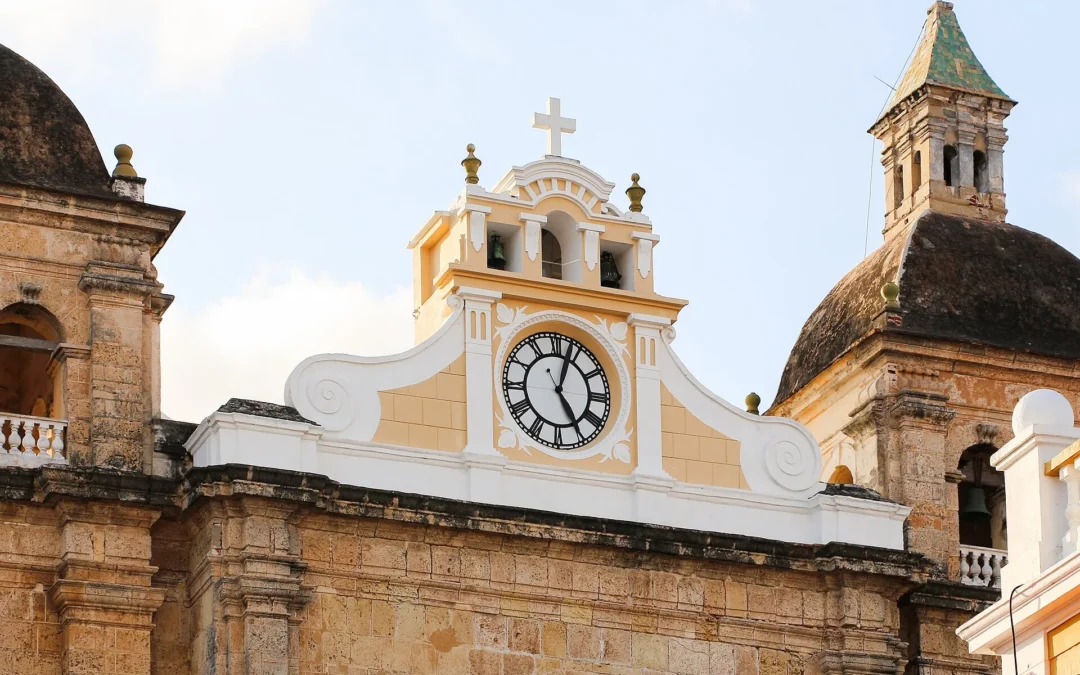
Sources: Vatican News, “St. Peter Claver, Jesuit, Apostle of Slaves”; Wikipedia, “Peter Claver.” Image: Iglesia de San Pedro Claver, Cartagena, photo by Bernard Gagnon, Wikimedia Commons, CC BY-SA 4.0.
by Andrés Pulido | Jul 31, 2026 | Order
If one word defines our internal doctrine at Mandatum, it is transparency. And sometimes the law and our own principles line up so closely that the law ends up proving us right. That is what happened in the Republic of Suriname.
May 1, 2025new Civil Code and Trade Register Act in force
Apr 8, 2026Stichting Mandatum Suriname is born
100%humanitarian, educational and social purpose
0pay for directors
A new rulebook for every organization
On May 1, 2025, Suriname pressed the “update” button on its legal system. The new Civil Code (Book 2) and the Trade Register Act came into force and set very strict rules for any organization operating in the country. For many institutions, that modernization meant an administrative headache.
For us it was something else: it was like seeing our own internal policy written into national law.
Born ready
When STICHTING MANDATUM SURINAME was officially established on April 8, 2026, there was nothing to rush or adapt. The new laws asked for exactly the institutional framework that Mandatum had already chosen in order to operate with total clarity. The facts show how closely our statutes match what the country now requires.
Pure and clear altruismArticle 51 of the new Civil Code forbids using a foundation to enrich its founders or directors. That is our philosophy: our statutes set a 100% humanitarian, educational and social purpose in Suriname and exclude any for-profit activity.
Clear accountsThe law now requires annual accounts and management reports within six months. Our notarized statutes (Article 6) already oblige the board to keep an accurate record of all assets, income and expenses, and our directors do not earn a cent for their work.
Nothing to hideThe Trade Register Act ended “ghost foundations” by requiring public registration. We are registered with the Chamber of Commerce and Industry (KKF) under file number 170293, so anyone can verify who we are and where we are.
The ideal scenario
The legal reforms in Suriname set the bar very high, but we were already flying at that altitude. The alignment between the new transparency law and the vision of Mandatum is no coincidence: it is proof that when an organization is built on solid values, no regulation is too big for it.
Let us keep working with open doors and clear accounts, because in Suriname transparency is a law, and for us it is a way of life.
by Andrés Pulido | Apr 13, 2026 | Projects
Stichting Mandatum Suriname, the foundation led by the Procurator for Government Liaison, Honorable Knight Alfred Michael Glenn Williams, has been officially registered in Paramaribo. It will focus on humanitarian projects, sustainable housing and the protection of local biodiversity.
KKF 170293Chamber of Commerce file
Paramariboheadquarters
April 2026notarial deed
4action pillars
Formalization and purpose
In a milestone for the civil sector in Paramaribo, the registration of Stichting Mandatum Suriname has been recorded with the Chamber of Commerce and Industry (KKF) under file number 170293. The foundation legally begins operations after being established by a notarial deed on April 8, 2026, before Notary Chayenne Chevelle Johanna Dollart.
Its operational headquarters are at Marcusstraat 13, Paramaribo.
Leadership
The foundation is led by Honorable Knight Alfred Michael Glenn Williams, a prominent member of the Order of Mandatum and a fundamental pillar of its establishment in Suriname, who serves as Chairman and Director.
His profile as Procurator for Government Liaison is key to aligning the foundation’s objectives with public policy and the legal framework of the Republic of Suriname, and his liaison work will be decisive for the viability of the large-scale projects the foundation intends to carry out.
Action pillars
Stichting Mandatum has defined a roadmap that runs from improving health infrastructure to technical and academic training. Its objectives are:
Decent housingProjects for decent and sustainable housing for vulnerable sectors.
BiodiversityProtection of local biodiversity and sustainable management of natural resources.
Assets and rightsManagement and administration of assets and rights, as agent or owner, to finance humanitarian goals.
Emergency responseCommunity strengthening and immediate assistance in emergency situations.
Resources
To carry out these initiatives, the foundation has a fund from UNASDG dedicated exclusively to social impact projects. The fund is not yet operational: it awaits the appointment, by the Minister of Finance, of the person in charge of coordinating the banking systems so that its management can begin.
A future of social commitment
The formalization of Stichting Mandatum Suriname is a decisive step toward professionalizing humanitarian aid in the region. With the backing of UNASDG and the strategic leadership of Honorable Knight Alfred Michael Glenn Williams, the foundation is preparing to transform the country’s socio-economic landscape.
Its success will depend not only on the work of its directors, but also on smooth coordination with national financial authorities, so that these resources become tangible results for the people of Suriname.
by Andrés Pulido | Mar 23, 2026 | Education
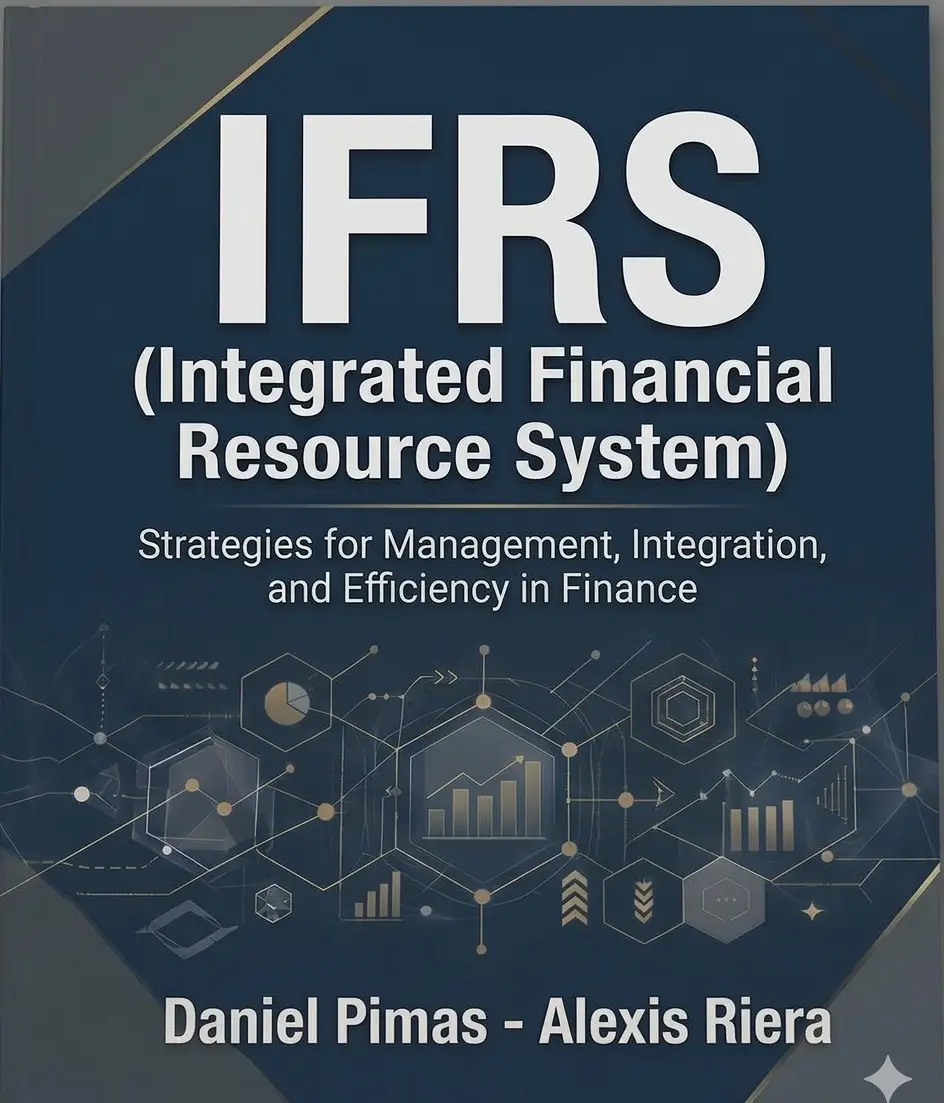
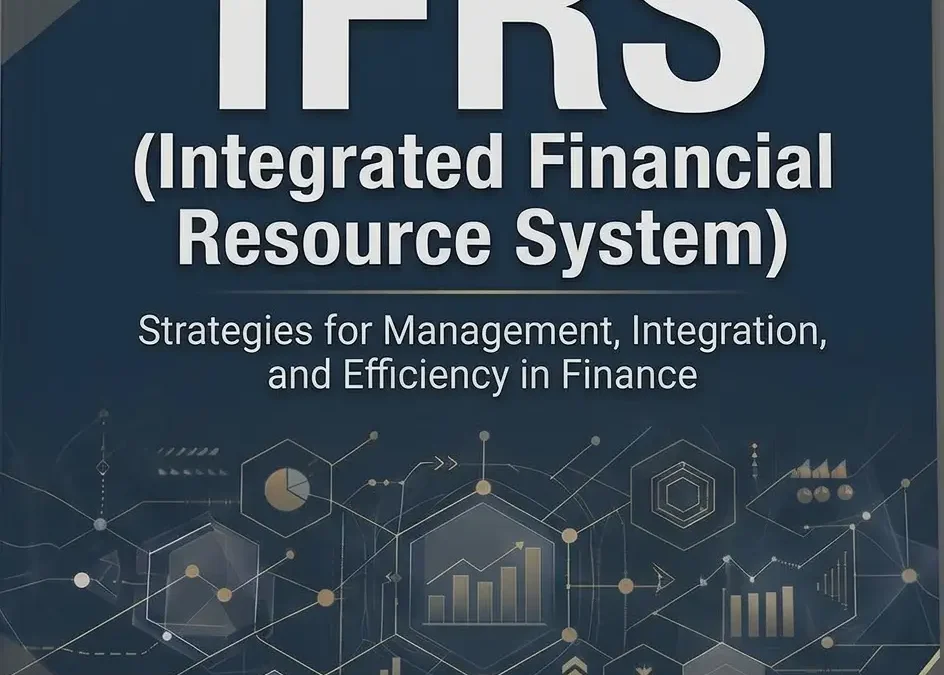
The world of corporate finance and large-scale infrastructure management has a new roadmap. Experts Daniel Pimas and Alexis Riera have officially announced the launch of their book, “IFRS (Integrated Financial Resource System): Strategies for Management, Integration, and Efficiency in Finance.”
The work dives deep into the SIRF (Integrated Financial Resource System), a framework specifically designed to ensure the viability, liquidity and solvency of projects operated under Project Finance and Special Purpose Vehicles (SPV).
The book is now available to the general public on Amazon in both English and Spanish. Spanish edition on Amazon.
Free for members of the Order. There is a course on this subject on
ERUDI, the academic platform of the Order, and members can access it directly on the platform. The course comes with a free digital copy of the book, at no cost.
2Languages
3Course resources
FreeFor Mandatum members
What the book is about
Unlike traditional accounting, which relies on the accrual principle, the SIRF approach focuses on the relentless management of actual and projected cash flow.
The book serves as a comprehensive guide covering four areas:
Financial architectureFrom pre-investment to project decommissioning.
Risk managementIdentification and mitigation of financial, operational and regulatory risks.
Mathematical engineeringKey formulas for calculating profitability (NPV/IRR), coverage ratios (DSCR) and capital structures (WACC).
Emerging technologiesThe impact of blockchain, smart contracts and ESG financing on payment transparency and automation.
Exclusive training on ERUDI
The most significant news for industry professionals is the partnership with the ERUDI platform. ERUDI has secured the exclusive rights to transform the book’s insights into a dynamic learning experience, featuring:
Specialized video courseExpert-led lessons on implementing the SIRF system.
Detailed infographicsVisual resources to simplify complex structures such as “cash waterfalls” and “ring-fencing.”
Direct book accessCourse enrollment includes a digital copy of the book for permanent reference.
Exclusive benefit for Mandatum members
As part of a commitment to continuous education, access to this premium course on the ERUDI platform, including the digital copy of the book, is completely free for all Mandatum members.
Take the course. The SIRF course is available now on ERUDI. Members of the Order can sign in and enrol directly at
erudi.emandatum.com.
This launch marks a milestone in the professionalization of financial resource management, providing developers, financiers and managers with the tools needed to create real value and ensure the long-term sustainability of their assets.

by Andrés Pulido | Mar 10, 2026 | Culture
4,000 m+Altitude
1990Class of
35Years later
1Crest placed
Some milestones are measured in meters above sea level, while others are measured by the profound mark an institution leaves on its students. A group of alumni from the Class of 1990 of the San Bonifacio Technological Institute, a leader in Argentine technical education, has managed to merge both in an epic expedition.
At an altitude of over 4,000 meters, where the air is thin but mental clarity sharpens, these graduates did more than challenge geography; they sealed a commitment to their personal and academic history.
A tribute in the clouds
Upon reaching the summit, the group placed the school’s crest, leaving a permanent testimony of their journey at those heights. The most emotional moment came when, facing the vastness of the landscape, they recorded a message full of affection and respect for a central figure in their lives: Professor Mario Oscar Tusiani.
As the founder and first Rector of San Bonifacio, Prof. Tusiani is a figure of international prestige, distinguished by Pope John Paul II as a Knight Commander of the Order of Saint Sylvester, one of the highest honors granted by the Holy See to laypeople, which reflects a life dedicated to education and Christian values.
The legacy of an educational family
The tribute was not only for the Commander. The alumni placed special emphasis on his wife, María Palmira Ciattino, a graduate in Philosophy and Letters and former Director of the school, who has been a fundamental pillar in building the “SanBo” spirit.
“It is a display of affection that transcends decades.” Seeing these men, now professionals and fathers, remembering their teachers with such devotion speaks of an education that went far beyond technical textbooks, said those close to the group.
Strength as a trademark
Beyond the sentimental, the technical achievement of the expedition is undeniable. Surpassing 4,000 meters requires:
Human integrityThe ability to maintain focus under conditions of exhaustion.
Physical strengthMonths of preparation to endure the lack of oxygen and hostile terrain.
Courage and cohesionThe team spirit inherent to San Bonifacio technicians, where no one is left behind.
The ascent becomes a perfect metaphor for the education received: a solid foundation, constant effort, and eyes always set on excellence.
An unbreakable bond
This gesture unites two generations: the founders, who dreamed of a vanguard school, and the students who, 35 years after graduating, carry the name of their institution and their mentors to the continent’s peaks. The summit was reached, but the true success resides in a gratitude that, like the crest placed on the mountain top, promises to be eternal.
Editor’s note: Knight Commander Prof. Mario Oscar Tusiani is the father of our Supreme Grand Knight.

 Barça
 Peñarol
 Inter Miami