
Agreements and conventions
STEP 4 OF THE MANDATUM METHOD
What is signed?
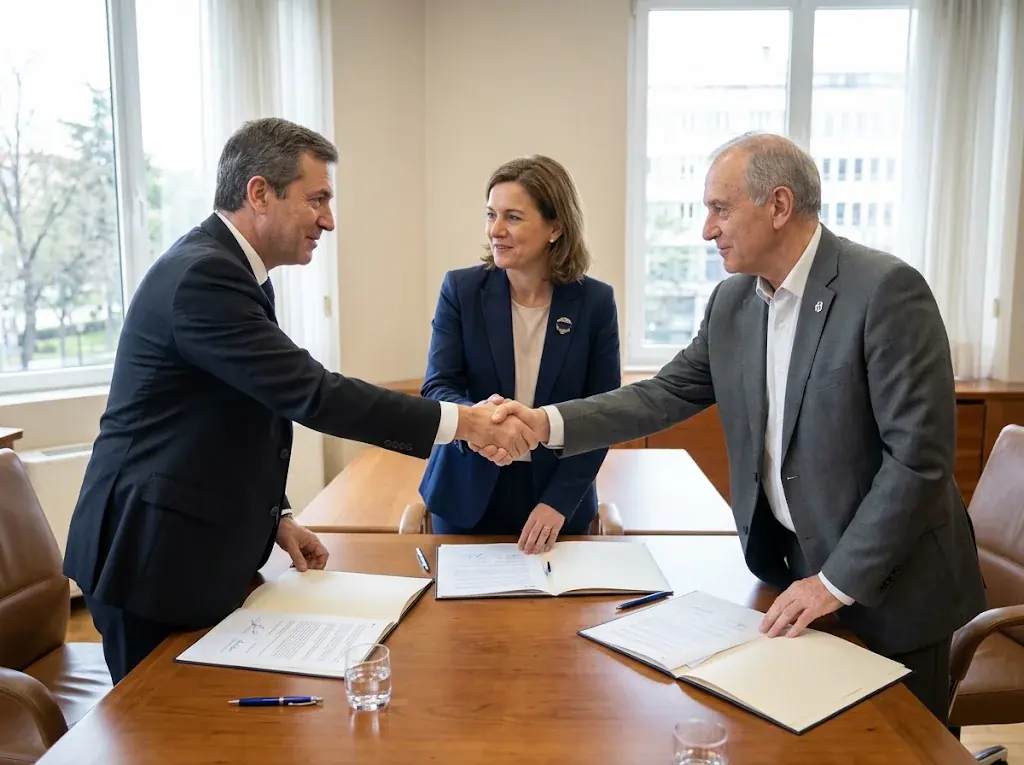
With the funds assigned, the project is formalized in written agreements among all the governments involved (national, regional and local), the intergovernmental organization that provides the funds and Mandatum.
These agreements set the role of each party before any work begins.

1. Who signs? Three parties
Each party has a distinct role, and none replaces the others. Mandatum accompanies the projects that are needed and wanted.

The governments
The national, regional and local governments involved sign and support the project with conventions and agreements. For them there are no costs of any kind and no debt.

The intergovernmental organization
It provides the funds, which it assigns to the project, and verifies that they are used as agreed.

Mandatum
It develops the project, leads it and administers it permanently once built.
2. What agreements are there? One framework and one per project
The framework agreement sets the general rules among the parties. Each specific project also has its own project agreement, which is signed before the physical work.
Some agreements, such as the recognition of the international organization in the country, are signed directly between the national government and that organization.
3. And if there are differences? Dialogue first
Differences are resolved first by direct negotiation and, if that is not enough, by mediation or arbitration, as the agreements set out.