
 Barça
 Peñarol
 Inter Miami
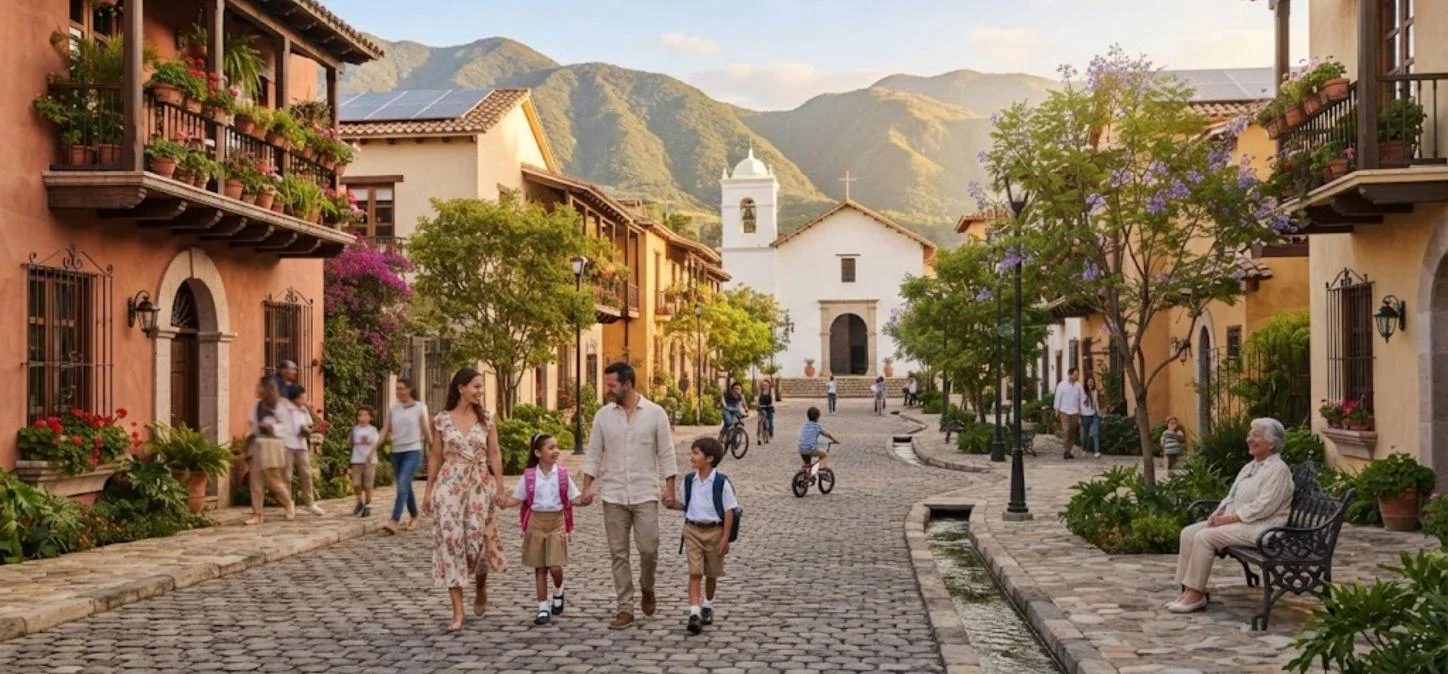
Before the Order commits large resources to a community, it writes a preliminary project, an anteproyecto. It is the document that lets the Council of the Order, its allies and the authorities decide, with enough information, whether a project should go ahead, be adjusted or be set aside.
An anteproyecto describes, with enough detail and evidence, what is being proposed, why, where, for whom, how, how long it will take, how much it will cost and how it will sustain itself over time. Its job is to make an informed decision possible: approve, adjust or reject the proposal before larger resources are committed. This article explains how Mandatum understands it, the principles behind it, the model it uses to design communities and the method it follows.
A project goes through several levels of maturity. Confusing them is one of the most common mistakes.
| Level | What it is | Question it answers | Level of detail |
|---|---|---|---|
| Idea | An intuition or an opportunity | Is it worth a look? | One page |
| Profile or idea sheet | A short description of the problem and a possible response | Is it worth studying? | 2 to 4 pages |
| Preliminary project | A comprehensive proposal with diagnosis, design, costs, sustainability and risks | Should we do it this way? | 25 to 60 pages plus annexes |
| Detailed design | Drawings, specifications, contracts, works schedule | How exactly do we build it? | Hundreds of pages |
The anteproyecto sits at the right point: deep enough for a serious decision, but far less costly than a detailed design. That is why it is said to save money. It spots unviable projects in time and corrects viable ones before anything is spent on drawings and contracts.
Within Mandatum, the anteproyecto is prepared by the Office of Preliminary Projects of the Procuratorate of Projects, with support from the other procuratorates (Finance, Diplomacy, Communications and Systems) and, above all, with the participation of the community. It is approved by the Council of the Order.
The Mandatum Method is more than a technique. It rests on principles that set apart the way the Order acts. A preliminary project that does not respect them may be well written and still not be a Mandatum anteproyecto.
“We do not build houses: we form a community that sustains itself.”Institutional principle
- Does it form a community, or does it only build?
- Does it require shared responsibility?
- Does it put education at the centre?
- Does it have a ten-year plan?
- Does it respect the right relationship with the State?
So that no essential element is left out, Mandatum organizes every community around a model that is easy to remember: three pillars that hold up material life and two layers that surround it and give it cohesion.
| Pillar | What it solves | Example components |
|---|---|---|
| Housing | A decent, safe home with services | Expandable homes, water, sanitation, energy, streets |
| Education | Training to grow | Primary and secondary school, trades centre, adult education |
| Work | Steady income of one's own | Small businesses, cooperatives, microcredit, jobs on the building site |
The three pillars reinforce each other. A home gives the stability needed to study; education prepares people for work; work makes it possible to pay the housing fee. If one pillar is missing, the other two weaken.
| Layer | What it brings | Examples |
|---|---|---|
| Values | Identity, coexistence and a sense of belonging | Community centre, chapel, code of conduct, civic and family formation |
| Security and the Rule of Law | Protection and respect for the law | Private and electronic security, a community coexistence committee, coordination with the police |
The layers are not built like a wall: they are cultivated. But they also have physical components, costs and people responsible for them, so they appear in the anteproyecto with the same rigour as the pillars.
It is only a sketch. Later stages test whether each component is justified by the diagnosis and whether it can be paid for and sustained.
The Mandatum Method organizes the work into six stages. Each one produces concrete results that feed the next and, in the end, come together in the anteproyecto document.
| Stage | Central question | Main outputs |
|---|---|---|
| I. Understand the mandate | What are we being asked, and under which principles? | Idea sheet, alignment test |
| II. Listen to the community | What is the reality, and what do people need? | Diagnosis, baseline, stakeholder map, problem tree |
| III. Design the community | What will we achieve, and with which components? | Objectives, logical framework, 3P+2L components, physical design |
| IV. Cost and sustain | How much does it cost, and how is it sustained for ten years? | Investment budget, sustainability plan, sources of funds |
| V. Govern and protect | Who decides, who are our allies, and what can go wrong? | Governance, agreements, schedule, risk matrix |
| VI. Write and present | How do we communicate it so it is approved? | Final document, executive summary, presentation to the Council |
Every Mandatum anteproyecto follows the same twelve-section structure, so the Council and donors always know where to find each piece of information. The map below shows which stage of the method produces each section.
Stage VI brings everything together, writes sections 2 and 12 and prepares the presentation. The executive summary is written last, even though it appears near the beginning. The stages are followed in order, but they are not sealed compartments: the budget may show that the design is too expensive and force an adjustment, or a risk found in stage V may call for new diagnostic data. A good analyst is not afraid of going back; a good analyst is afraid of presenting an inconsistent document.
In the fictional Nueva Aurora example, all names are invented: the team is led by Commander Tomás Ibarra, director of the Office of Preliminary Projects, with a field coordinator, an engineering adviser, a neighbourhood leader and the town's mayor as the institutional counterpart.
A preliminary project puts the name of the Order and the hopes of many families on the line. Whoever prepares it takes on concrete ethical commitments:
A Mandatum anteproyecto is not written about the community but with it. The community takes part in the diagnosis, gives its opinion on the design, knows the selection criteria and takes on commitments. This participation is not a formality: it is the best guarantee that the project answers real needs and that, after ten years, the community will be able to run itself.
| Term | Meaning |
|---|---|
| Preliminary project | A comprehensive, well-founded proposal used to decide whether a project moves on to detailed design |
| Idea sheet | A short document describing the problem and a possible response, used to decide whether it is worth studying |
| Detailed design | The drawings, specifications and contracts needed to build |
| 3 Pillars and 2 Layers | Mandatum's model: Housing, Education, Work; Values, Security and the Rule of Law |
| Social fee | An affordable monthly contribution from each family, expressing shared responsibility |
| Break-even point | The moment when the community's own income covers its operating costs |
| Self-financing | The community's ability to sustain itself without outside contributions |
| Alignment test | A check that a proposal respects Mandatum's principles |
| Office of Preliminary Projects | The unit of the Procuratorate of Projects that prepares the anteproyectos |