 Barça
 Peñarol
 Inter Miami
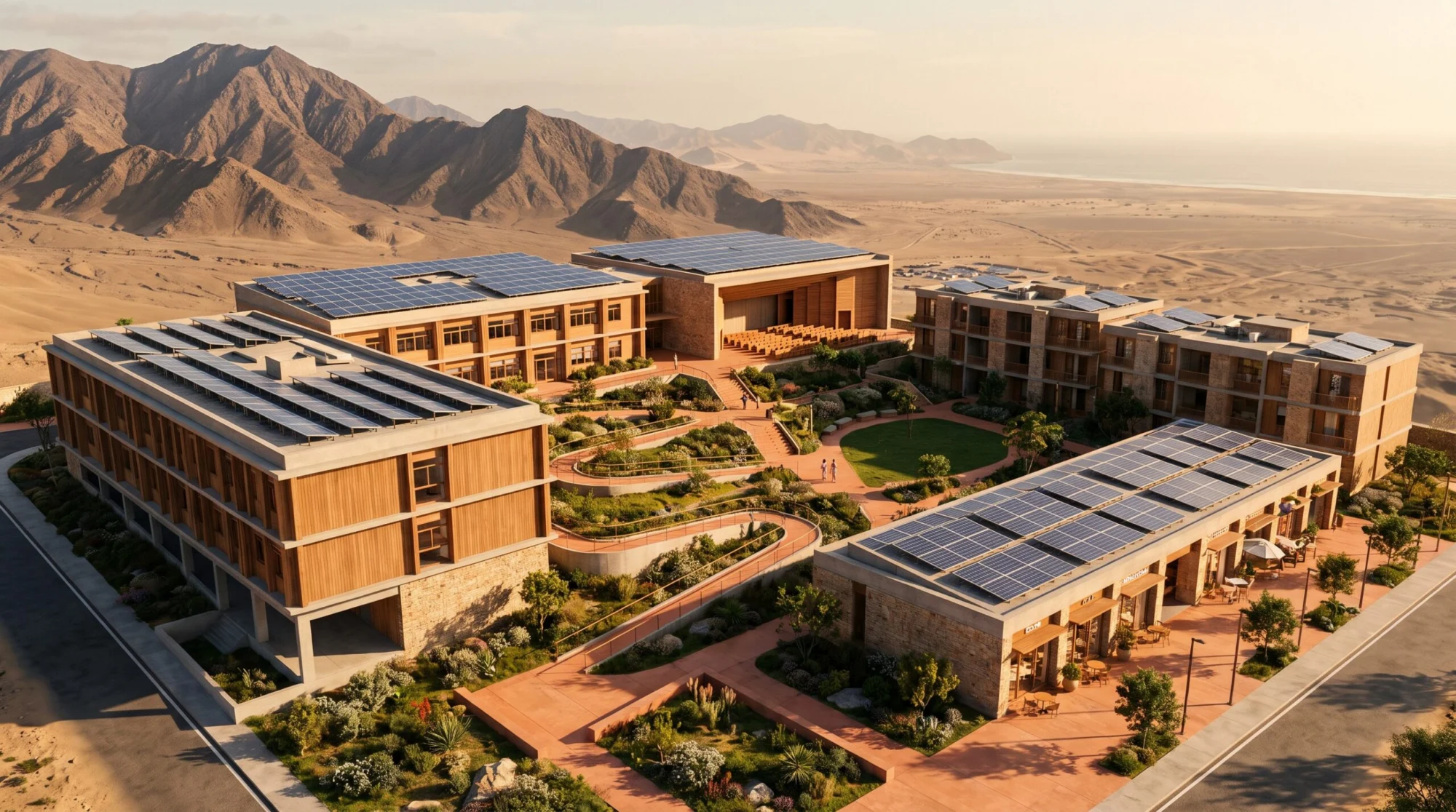
Cover image: illustrative AI-generated render of the City of Health and Knowledge. It is a concept image, not a final design.
Mandatum has drawn up a preliminary concept for a comprehensive rehabilitation, medical training and technology complex in the Republic of Peru. Called the City of Health and Knowledge, it would bring care, teaching and research together on a single 20,000 m² site.
The concept rests on four dimensions at once: high-complexity clinical care in four anchor specialties, a specialized medical school, housing and workspace for key staff, and a technology and communications platform of international standard. It is a working draft, not a commitment, and it is built around Mandatum's four humanitarian pillars: health, education, housing and ecology.
A gap that affects millions
According to Peru's 2017 National Census, about 3.2 million people live with some form of disability, around 10.3% of the population. Of them, 81.5% have a single disability and 18.5% live with two or more, which makes rehabilitation more complex and more frequent. The national statistics institute (INEI) reports that 88.6% receive no treatment or therapy at all.
Only 7% of people with a disability hold an official certificate recognizing their condition, which points to structural under-registration and limited access to the formal system itself. INEI also records that 29.3% report difficulty entering or moving around health facilities, and 18.9% in rehabilitation centers. Any reference center, the concept argues, has to be designed from the start for full universal accessibility.
The shortage is also one of training. Peru lacks enough technical and postgraduate programs in advanced physiotherapy, neuro-rehabilitation, applied medical technology and clinical gerontology, which limits the capacity of the whole system and keeps it dependent on professionals trained abroad. And specialized services are concentrated in Lima and a few regional capitals, so patients elsewhere travel long distances for care.
What the complex would offer
The clinical core covers four anchor specialties, chosen because they match the epidemiology above. The design is modular, so new specialties can be added in stages without stopping the operation of the initial core.
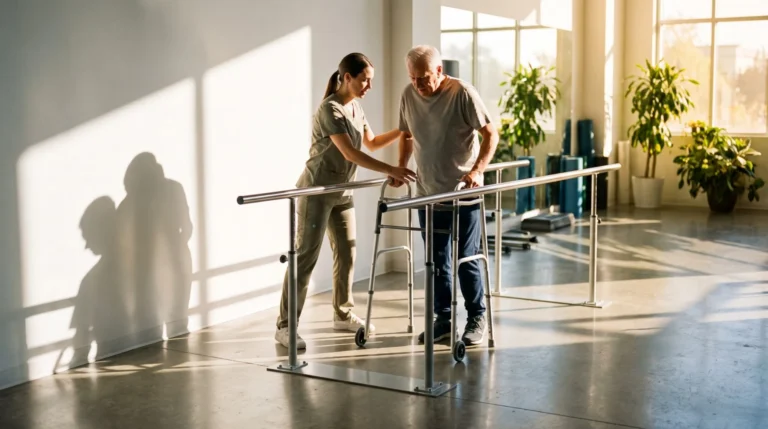 Rehabilitation and physiotherapyThe core of the complex, with high-technology equipment and international protocols.
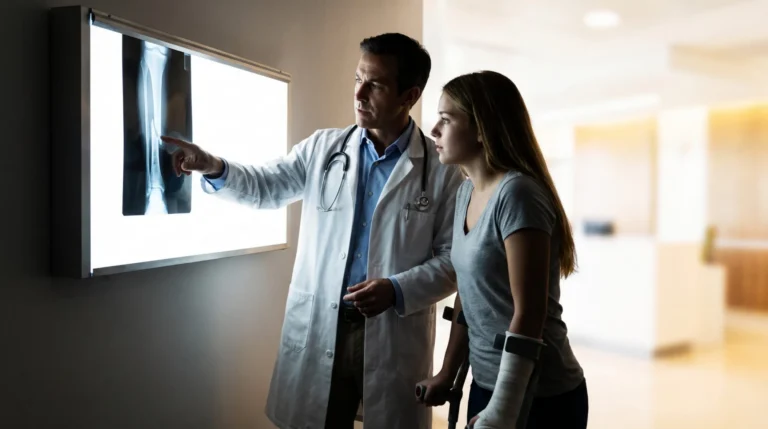 Trauma and orthopedicsCare after fractures and accidents, including falls in older adults.
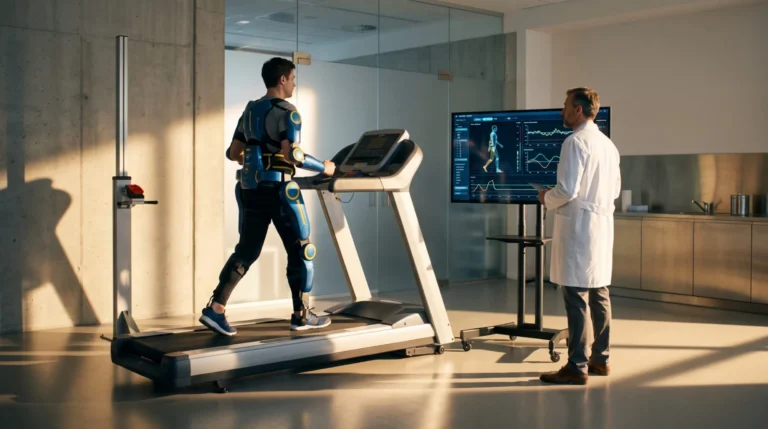 NeurologyNeuro-rehabilitation after stroke and neurological injury, including robotic rehabilitation.
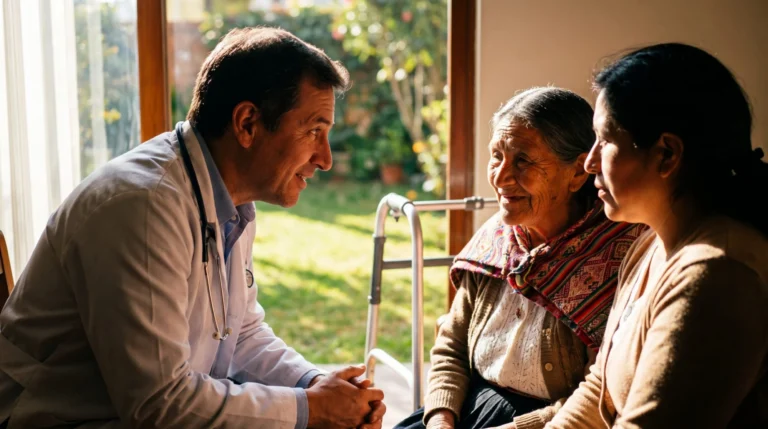 GeriatricsCare for an aging population: osteoarthritis, stroke sequelae and cognitive decline.
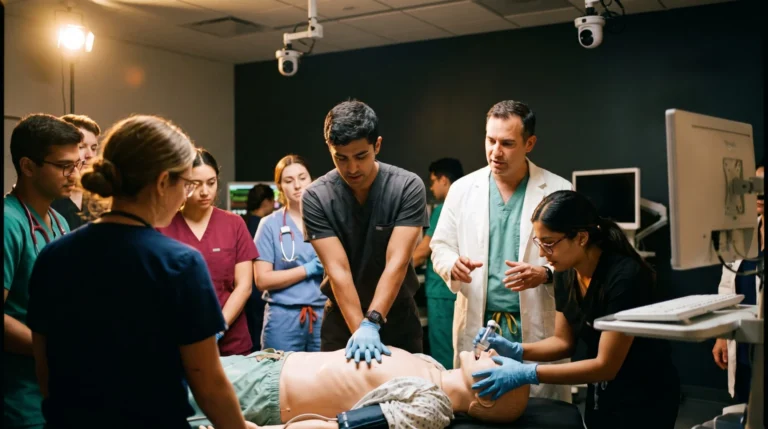 A school that trains the people the system lacksTechnical careers in medical technology and physiotherapy, postgraduate programs in neuro-rehabilitation and clinical gerontology, and continuing education for working professionals. Classrooms, biomechanics and motion-analysis labs, a high-fidelity clinical simulation room, a specialized library and an auditorium for international scientific events.
Open to everyone
To keep the project from becoming, or being seen as, an elite facility, an equitable-access program is built into the design from the start.
Impact, projected
The concept also expects wider effects: each graduate of the school becomes a multiplier, working in other regions of the country, and the in-house channel and digital content would carry rehabilitation protocols and health education to places that cannot reach the campus.
Self-sustaining by design
The complex is designed to run on its own income: clinical care, school fees, rents from the commercial zone and licensing of the channel's content, without depending on donors. A permanent technology renewal fund, capitalized with 10% of gross operating income, would pay for replacing clinical equipment, updating information systems and cybersecurity, and major maintenance. Sustainability criteria include rooftop solar panels, rainwater and gray-water reuse, full LED lighting, smart climate control and bioclimatic architecture, aiming at green-building certification in later design stages.
What comes next
This is a preliminary working idea. It is not a commitment, a firm offer or an obligation for Mandatum, for the Government of Peru or for any financing body. Its next steps depend on whether the Government of Peru expresses interest.
This project has a detailed technical document covering the investment costs, the break-even point, maintenance and operating costs, financing, and ownership structure. To access it, you must subscribe to the Herald (free) and sign in with your organization email address.