 Barça
 Peñarol
 Inter Miami
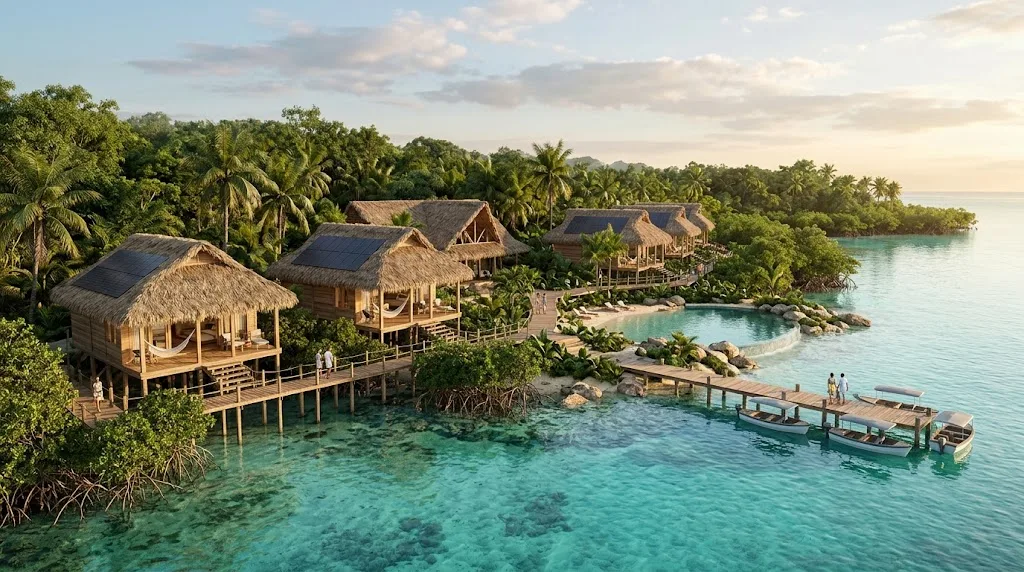
More than three quarters of the district of Bocas del Toro, on Panama’s Caribbean coast, is protected land. It includes the Isla Bastimentos Marine National Park, mangroves, reefs and rainforest. Roughly 100,000 visitors come every year, yet around half of the homes in the island and rural communities still lack a stable connection to the electric grid, which pushes families to cut mangrove for firewood.
Mandatum is studying an idea for this territory, and it begins with a condition: nothing moves forward without consensus. Any project would need the agreement of the national government, the local government and the Indigenous peoples of the area, with prior, free and informed consent before any work begins. If that agreement is not reached, Mandatum withdraws.
The starting point: a territory that is mostly protected
According to the local land-use plan and the strategic environmental assessment, 21,125.94 hectares, 75.63% of the district, are classified as environmental protection land, including the Isla Bastimentos Marine National Park (13,226 hectares). Anything built would be limited to the remaining 24%. The protected land would not be touched.
The area and its surroundings are also home to Indigenous peoples with recognised territories, the Ngäbe-Buglé and Naso Tjër Di comarcas, besides the Afro-Caribbean and Creole population of the archipelago. About half of the homes in island and rural communities have no stable electricity, which drives the extraction of mangrove for firewood.
Consensus as a condition
The purpose is to support the people of Bocas del Toro so that they have an ecologically and economically sustainable project. Mandatum works with governments and with the population, not above them. The concept can be adapted or changed as many times as needed to arrive at a version that supports the people, and consensus has to exist from the start. Once agreed, the plan adapts to what was agreed, not the other way around.
What the concept would include
A low-rise ecological complex that brings together tourism, housing and local enterprise, all owned and operated by Mandatum and designed so that the income stays in the community.

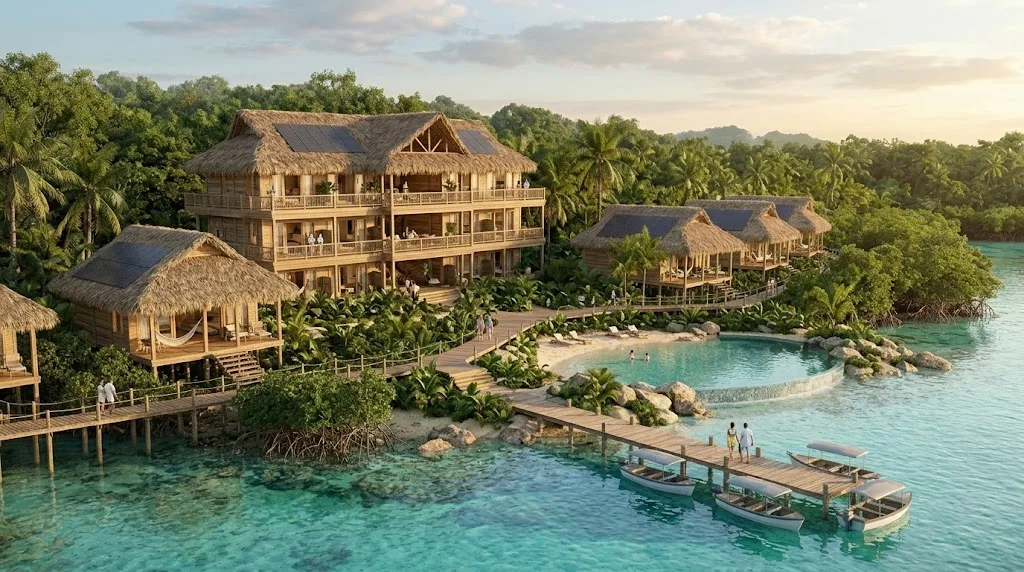 Eco-resortsFive hotels of about 150 rooms each, in bungalows and buildings of up to three floors, under ecological hotel brands operated by Mandatum.
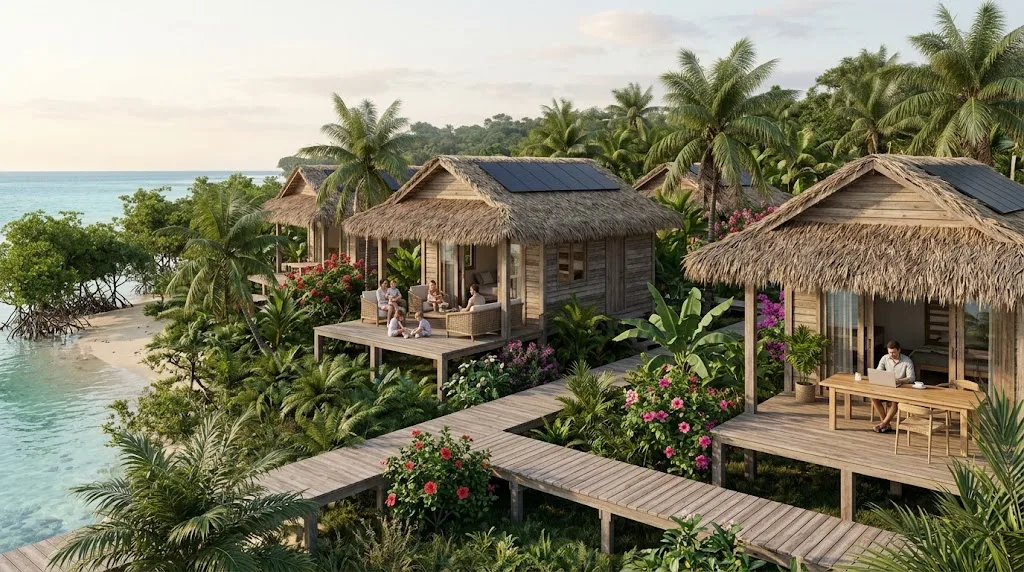 Eco-villasAbout 300 villas inside the hotel grounds, for families, long stays and remote workers, without adding density.
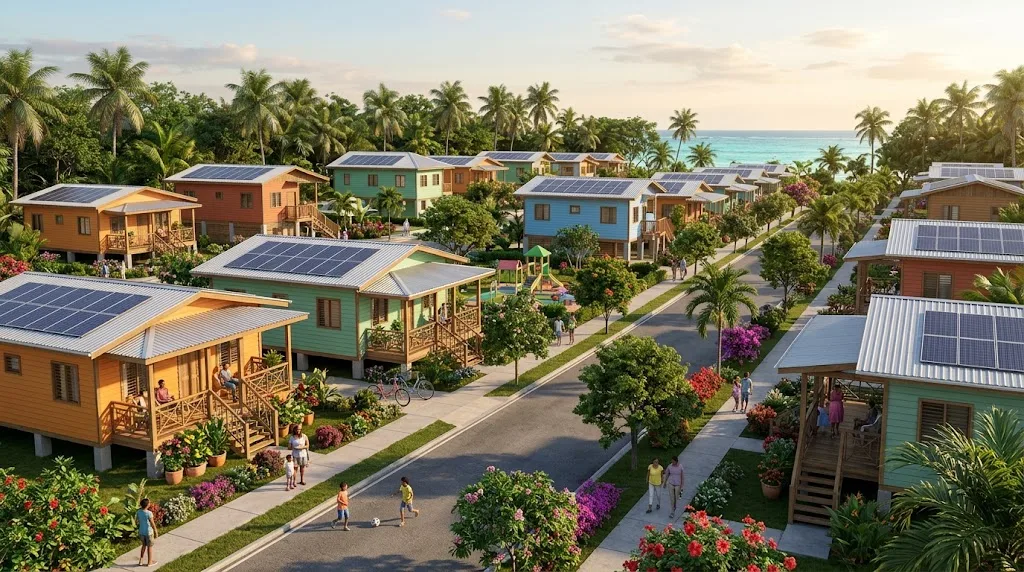 Community housingAbout 1,500 homes for workers and families of the district, with solar energy, water and sanitation, at affordable rents.
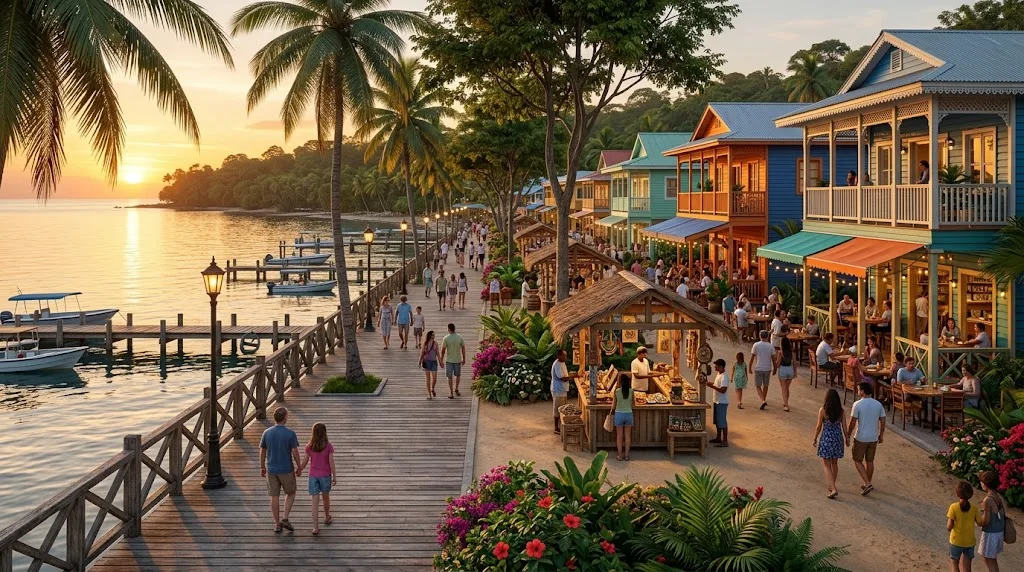 Pueblo AzulA commercial district and waterfront promenade with a craft market, gastronomy and public space, with shops let at social rates to local entrepreneurs.
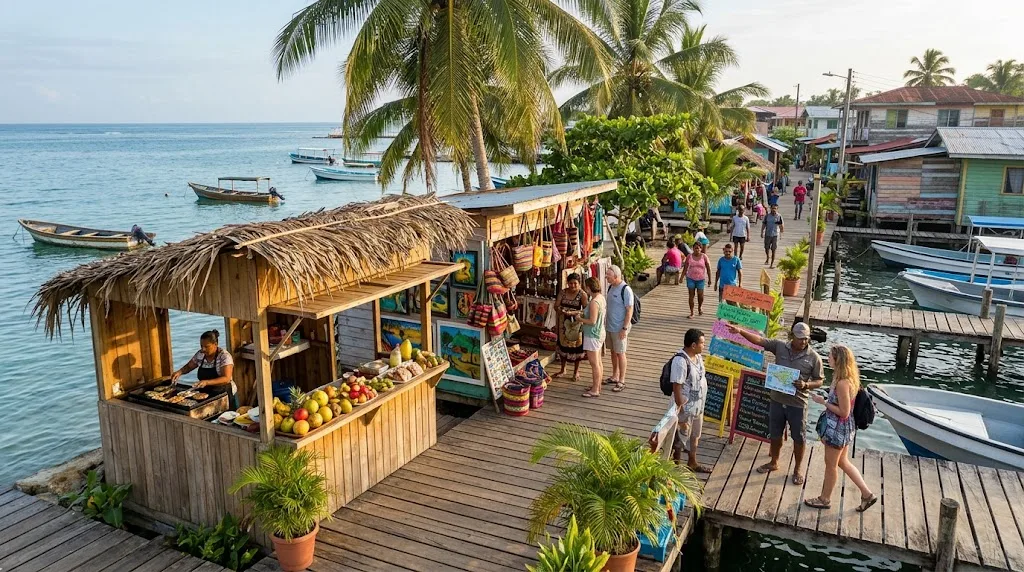 Local micro-businessesAbout 250 restaurants, shops, tours and services run by local entrepreneurs under concession.
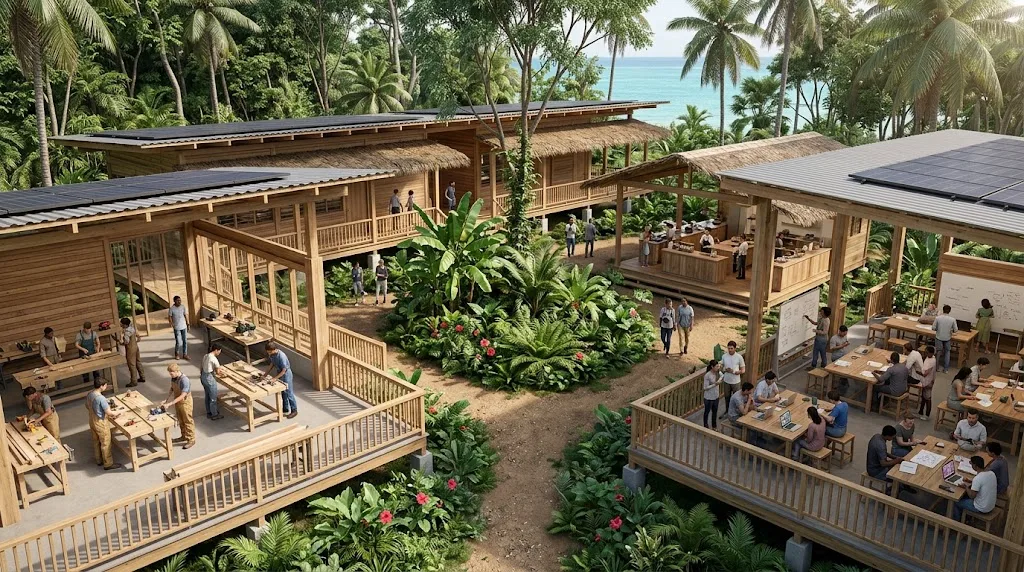 Schools and incubatorsA School of Hospitality, Trades and Business, three business incubation centres and a revolving fund for small commerce.
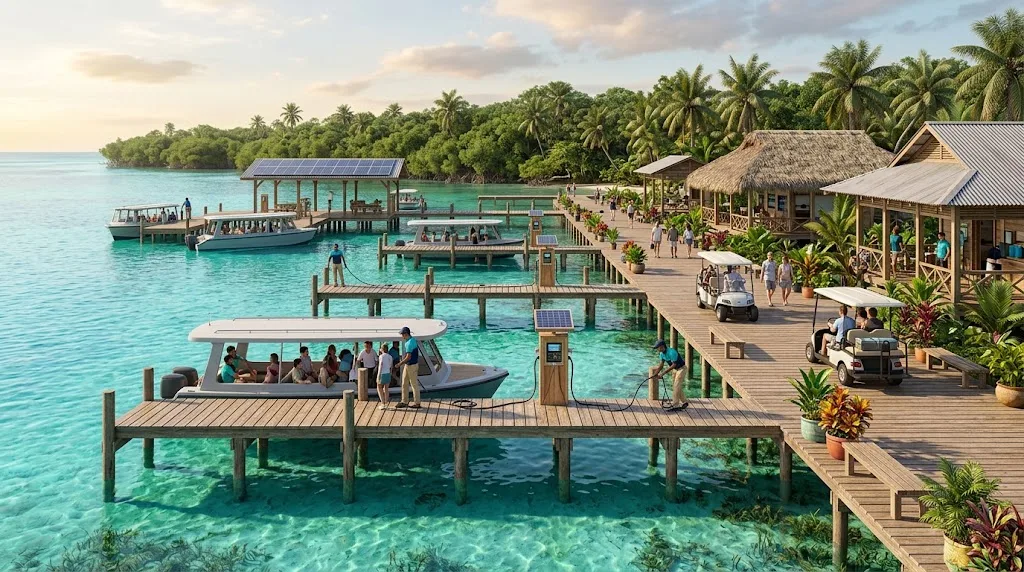 Electric mobilityA marina, piers and electric boats and land vehicles, with local operators as concession holders.
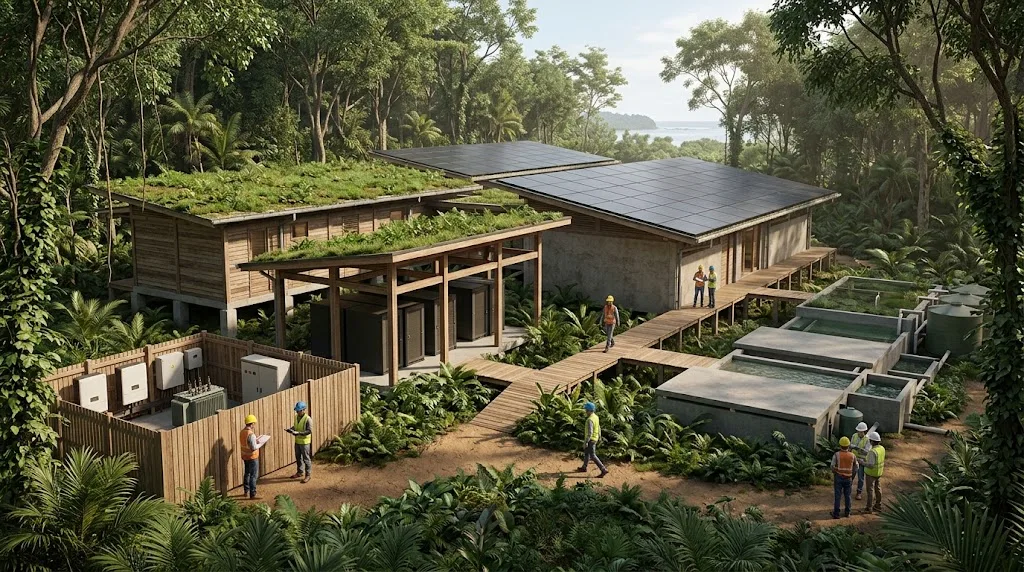 Clean infrastructureA solar micro-grid with storage, drinking water, sanitation and waste management for the project and the community.
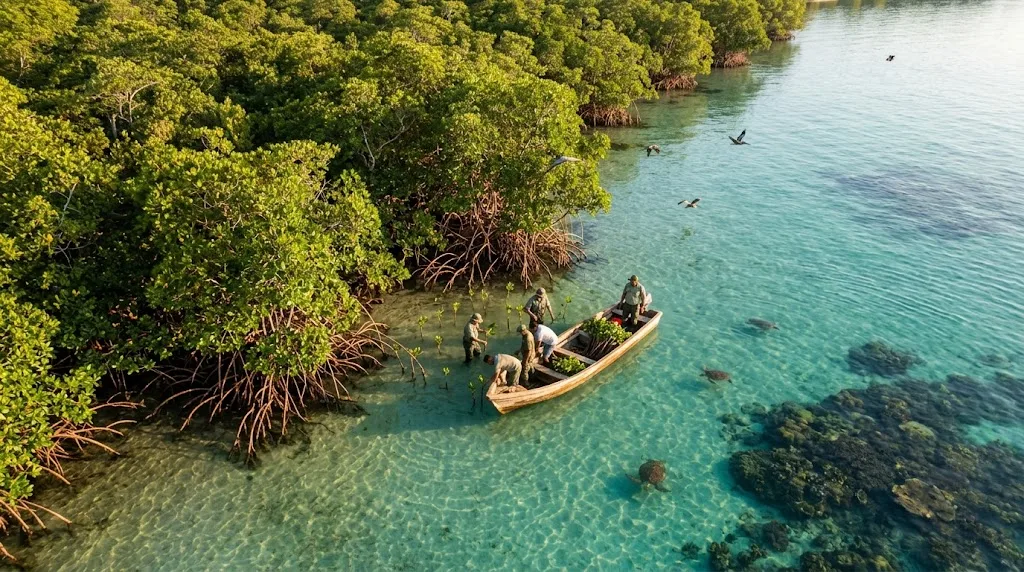 Blue TerritoryAn environmental programme of conservation, mangrove restoration and blue carbon, with local rangers and independent monitoring.
Local people first
Hiring from the community would come first. Restaurants, shops, spa, tours and transfers would be given in concession to local micro-entrepreneurs, trained and incubated by the project itself. Each entrepreneur would be accompanied until reaching break-even, and the capital that comes back would return to the fund.
Ecological in practice
Buildings would stay at three floors or fewer, with low density, local and low-carbon materials, 100% renewable energy, full management of water and waste, and independent, verifiable certification under tourism and sustainable-building standards. The concept would also advance the State’s environmental agenda: mangrove restoration, park rangers and monitoring, leaving public institutions with better control capacity.
How it would sustain itself
The capital would be managed by Mandatum and would not be reimbursable: no dividends and no return of the investment. Mandatum would own 100% of the assets through a local non-profit entity, operate them in perpetuity and sustain them with the income that the operation itself generates. Ecological hotel brands would provide their name, standards and distribution under franchise contract, while ownership and operation remain with Mandatum. Any surplus would go to a development reserve managed according to the Order’s institutional purposes.
Phases
Open questions
Land has not been identified within the part of the district where building could be considered. The visitors the project would receive, about 95,000 per year, would be added to the roughly 100,000 who come today, so a carrying-capacity study validated by the environmental authority, the new airport and more flights would be needed. The market assumptions describe a tourism segment that barely exists in the destination today, ecological hotel brands are fewer than conventional ones and may have different franchise terms, and no carbon revenue is counted because it is not guaranteed.
Next steps
The next steps are to prepare a defining preliminary project to reach consensus; to hold a first approach to the Presidency, the Municipality, the traditional authorities of the Indigenous peoples and the environment and tourism authorities; to integrate the environmental programme with its technical partner; and to pre-select ecological hotel brands with franchise programmes.
Alignment with the Sustainable Development Goals
The master plan for this concept, with its structure and preliminary financial model, is an internal working draft available to members of the Order. To access it, you must subscribe to the Herald (free) and sign in with your organization email address.
Photo: Bocas del Toro, Panama. Unsplash, CC0 (public domain), via Wikimedia Commons.