
 Barça
 Peñarol
 Inter Miami
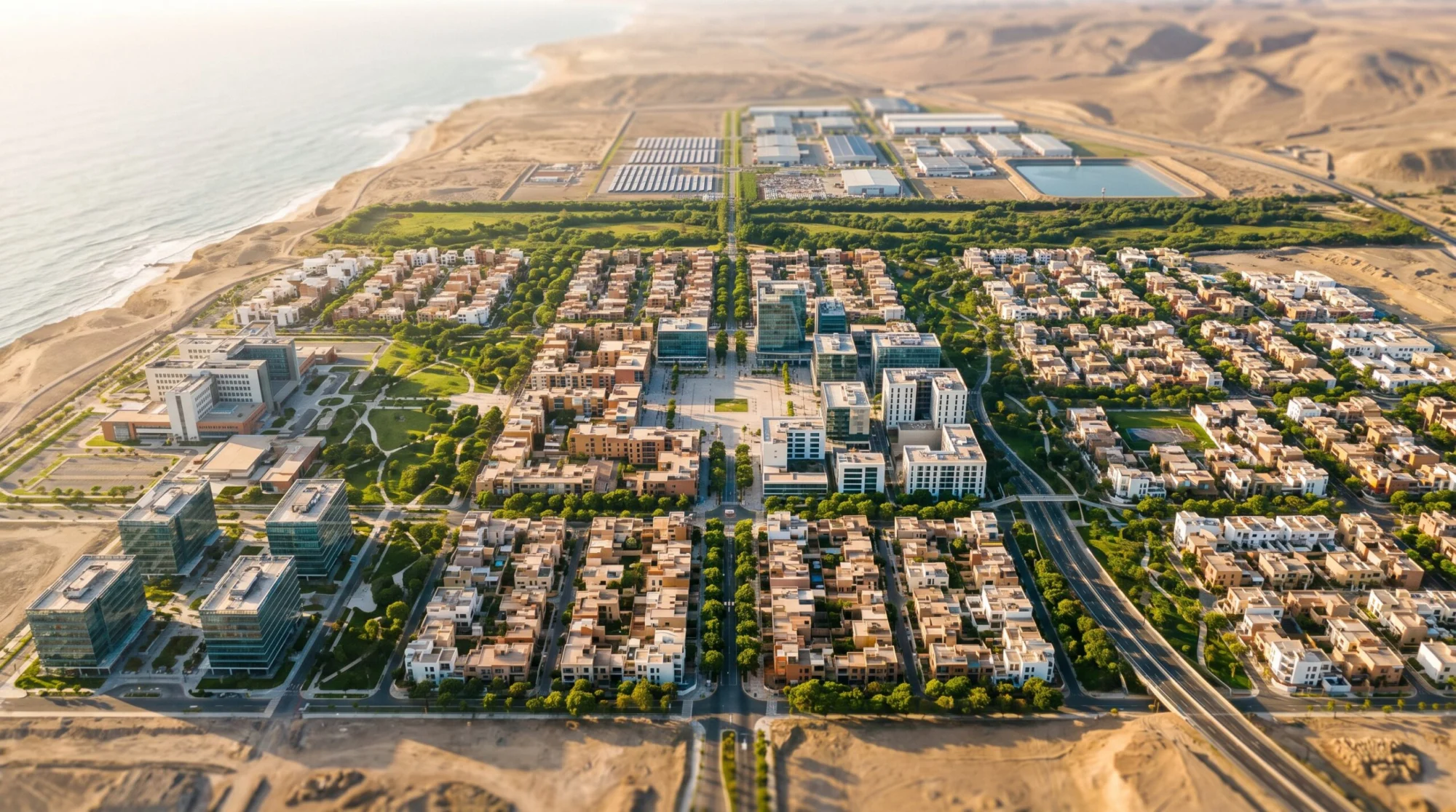
Cover image: illustrative AI-generated render of Ciudad Lumen. It is a concept image, not a final design.
On Peru's northern coast, between the districts of Reque and Eten in the Lambayeque region, Mandatum has drawn up a preliminary proposal for something larger than a housing development: a complete city. Its name is Ciudad Lumen.
The plan covers 1,120 hectares and 10,000 homes for a population of 45,000 to 50,000 people. But the homes are only the starting point. Around them the proposal places everything a city needs to sustain itself: jobs, schools, health care, commerce, public services and civic life. The proposal has been presented to the Peruvian government; the next step is a meeting with the Presidency.
Why Lambayeque, and why now
The region faces three structural problems at the same time, and the project is designed to answer all three together.
A housing gap that starts with credit
Many families in Lambayeque cannot get a formal home because they cannot get a loan. Banks ask for a credit history, documented income and savings for a down payment, and most working families earn in the informal economy, without payslips or a continuous paper trail. Without credit there is no formal home, and without a formal address it is even harder to formalize one's work. Families respond by building by themselves, slowly, without structural design or permits, often on land they do not legally own and in risk zones such as ravines and riverbanks. The result is a home that is unsafe in an earthquake or a flood and that cannot be sold, inherited with a clean title or used as collateral.
Earthquakes and El Niño
The north coast sits in one of the most seismic regions of the country, and Lambayeque is also among the areas hit hardest by El Niño, when the coastal desert can turn into a system of floods and mudslides. A city built from zero here has to be designed for both from the first drawing.
Too few formal jobs
Work is the missing piece. Talented young people in the region often leave for Lima or abroad because the local market has no place for what they studied. Jobs also hold the rest of the plan together: they let families pay for their homes and keep the hospital and schools running.
Dignity, not charity
The project's guiding idea is that people should not be treated as recipients of aid but as residents who build a life through work. Housing is not social housing in the traditional sense: every home meets the same quality and seismic standard, and what changes between families is the term and the monthly payment, never the construction. Residents also develop their own community life and, through the Order's formation path, can join the Order that governs the project, so that those who run the city and those who live in it can become the same body.
The master plan
The land sits on the Autopista del Sol, which links the city with Chiclayo, Trujillo and the rest of the north, and close to the Port of Eten, which gives the industrial zone a way to export. All 1,120 hectares are to be bought by the project on the open market, at market value, through private negotiation with current owners. The Peruvian State is asked to contribute no land and no public money. Nothing is built on any plot until its legal and physical status is fully cleared.
- Productive hubs (technology + industrial): 750 ha, 67.0%
- Homes: 120 ha, 10.7%
- Roads and infrastructure: 90 ha, 8.0%
- Parks, farming and buffer: 85 ha, 7.6%
- Downtown, health and education: 50 ha, 4.5%
- Expansion reserve: 25 ha, 2.2%
Visitors arriving from the highway meet the Downtown commercial district and the Civic Center first. Behind them come the residential neighborhoods, linked by parks to the health and education campus. Toward the port-facing side sit the Technology Hub and, beyond a buffer strip that protects the residential areas, the large Industrial Hub and Free Zone.
Living in Ciudad Lumen
The city is meant to be walkable and human in scale, not a set of isolated towers or a sprawl that depends on cars. Each neighborhood unit puts a satellite clinic, a school, a park, local shops and a square within walking distance. Green corridors tie the neighborhoods together, cool the coastal heat and feed an urban farming belt. Downtown concentrates commerce and street life, while neighborhood squares keep every district from becoming a dormitory. The aim is a place where an engineer from the Technology Hub, a factory operator, a young family and a retiree share the same streets and parks.
Homes without a bank
The housing program starts from credit, not from the house. The project finances homes directly, so families do not need a bank account or a credit history, and it ties repayment to the jobs the city itself creates. Relocation places are also reserved for families now living in seismic or flood-risk areas, in coordination with the authorities.
 Credit from the projectThe city's own financing vehicle lends directly. No bank, no credit history required.
 Pay your wayMonthly payments by mobile transfer or cash at the project office in the city.
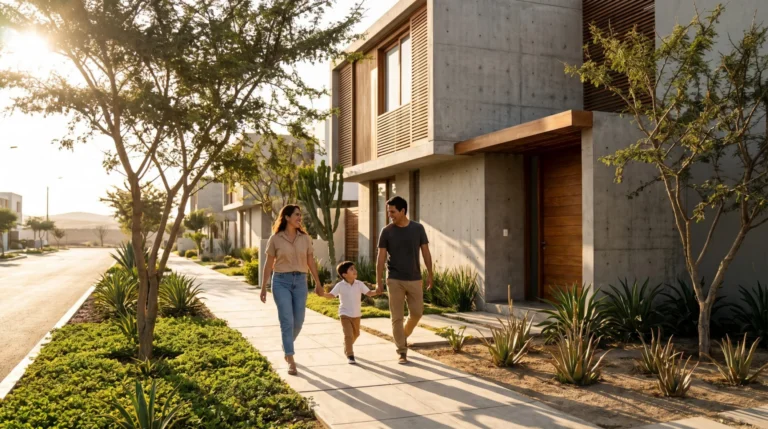 Live in it from day oneSecurity is the right of habitation, not a mortgage registered in the banking system.
 Title on final paymentFull ownership passes to the family when the loan is repaid: a clean title it can inherit or sell.
Two engines of employment
Technology Hub: 250 hectares
Corporate space, laboratories, a startup incubator and shared services, focused on software, business-process and knowledge services, agritech and the digital economy. Its purpose is not real-estate income but qualified, formal, well-paid white-collar jobs for a region that today loses those workers. It grows in phases as demand arrives, including build-to-suit buildings for anchor companies, and the incubator is meant to grow local startups rather than only host outside operations.
Industrial Hub and Free Zone: 500 hectares
The largest part of the city is dedicated to blue-collar and logistics work, built around agro-industry: processing, packing and cold storage for Lambayeque's farm output. Light manufacturing and port-linked logistics complete the mix. The project will ask the Peruvian government for a Special Economic Zone regime under current law. That is a customs and tax framework that makes the zone competitive, not a transfer of public funds, and a State one-stop office in the Civic Center would handle the paperwork on site.
Health and education
Health care is planned as a general referral hospital plus satellite clinics across the neighborhoods, so everyday care is close to home. Education would run from early childhood through technical and university-level training, designed with the real needs of the two hubs so that a child could be born, study and work in the city without having to migrate. Both services are to be operated under agreements with specialized religious orders, under Mandatum's supervision, following the model used in the Order's New Concordia project in Suriname. No agreement has been signed yet; the operating orders will be chosen during development.
A civic center, and a national humanitarian hub
The Civic Center houses the seat of Mandatum in Peru next to the offices through which the Peruvian State is present in the city, such as police, fire service and a procedures desk. The two sharing one civic space is deliberate: it expresses cooperation, not replacement.
The city also includes a national disaster-response hub, placed in the region with the highest combined seismic and El Niño exposure on the coast. It brings together a deployable field hospital, an emergency logistics center, mass shelter capacity and an aid distribution center that uses the Industrial Hub's links to the Port of Eten. In a major disaster anywhere in Peru it would be activated in coordination with the national risk-management system, giving the country a response base prepared in advance.
Infrastructure that keeps working
 Deep wellsPrimary supply.
 Regional canalsComplementary supply from the existing canal system.
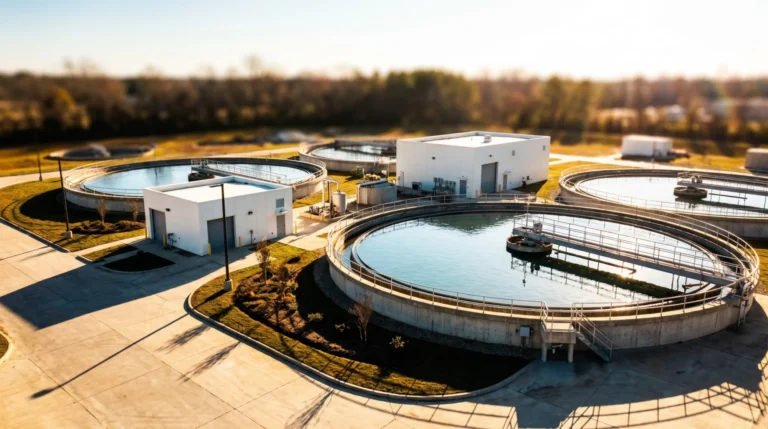 Backup plantGuarantees supply in an extreme drought.
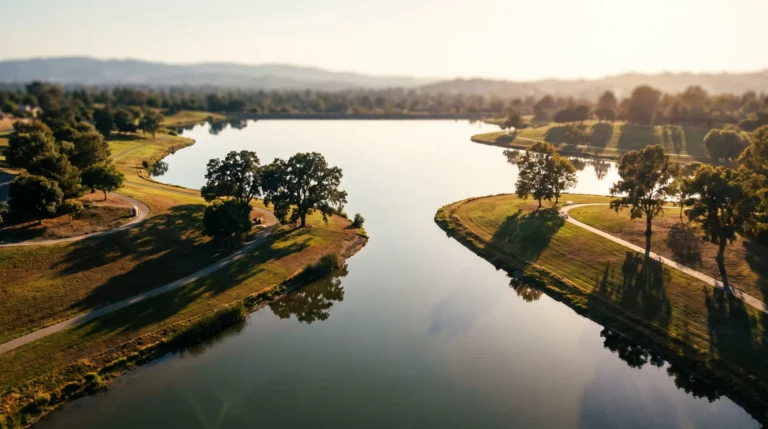 Flood-control reservoirHolds El Niño peak flows and doubles as a dry-season reserve.
Energy combines on-site solar generation with battery storage for critical public services and grid supply under clean-energy contracts for homes, technology and industry. Generators serve only as backup for the hospital, the humanitarian hub and the data center. Fiber optic reaches every home, and a central data and command center joins urban services, video surveillance, the earthquake and tsunami early-warning system, and water and power telemetry. Security is a strict, zero-tolerance model, and a team of sociologists and psychologists supports social harmony in the city.
Built for a magnitude 9.0 earthquake
The most distinctive technical feature is the structural standard. The design target is to withstand a magnitude 9.0 earthquake, meeting and exceeding Peru's E.030 seismic design code. It applies to the entire built stock, including every single home, for two reasons: safety cannot be a privilege of important buildings, and a city that hosts a national humanitarian hub must stay standing after the design quake.
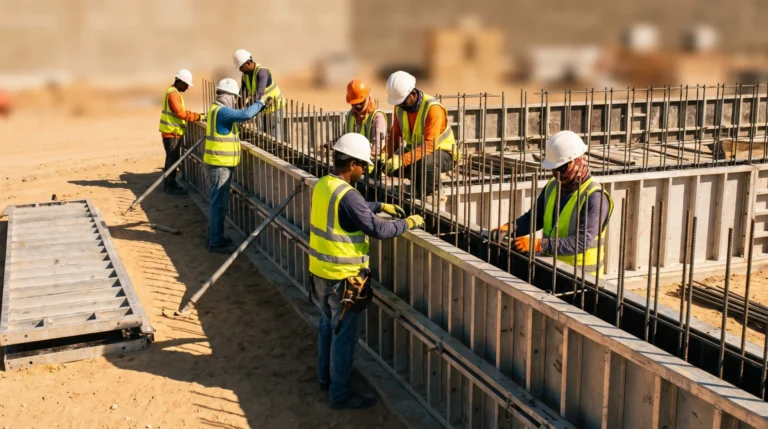 Industrialized buildAluminum-formwork monolithic reinforced concrete walls and slabs.
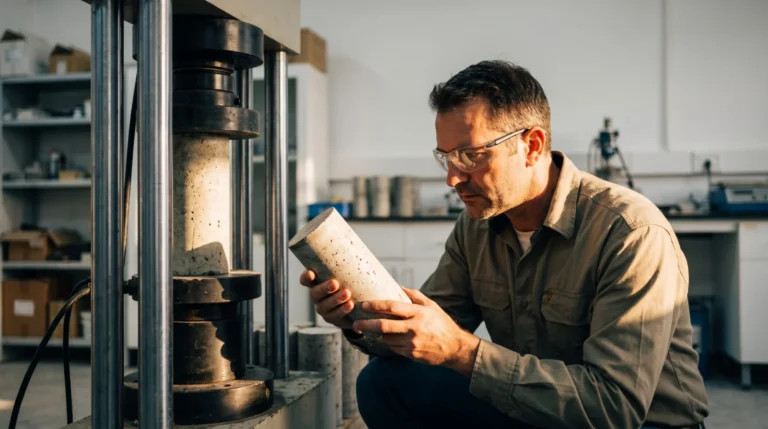 Controlled concreteHigh-strength mix with batch testing and full traceability.
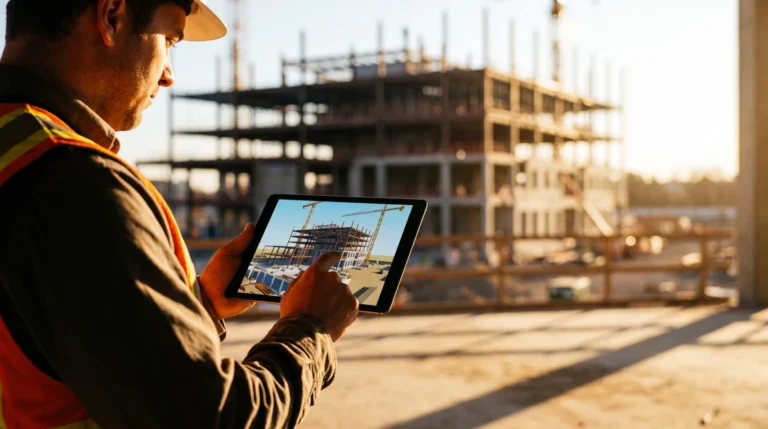 BIM and digital twinNo concrete is poured before the structural plans are approved digitally.
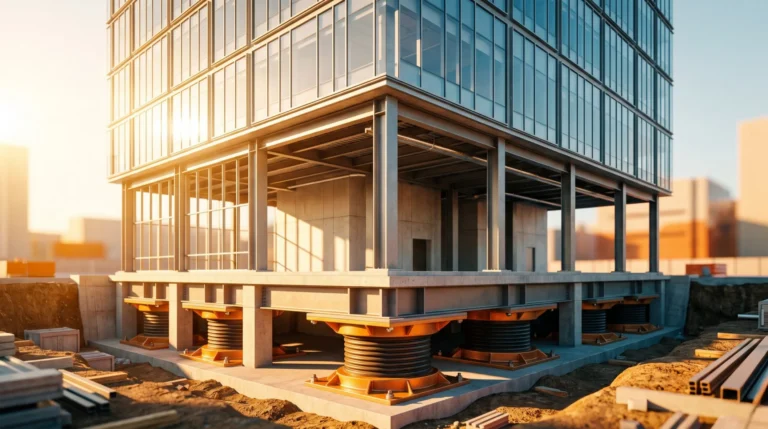 Base isolatorsOn critical buildings: hospitals, emergency center, data center, shelter.
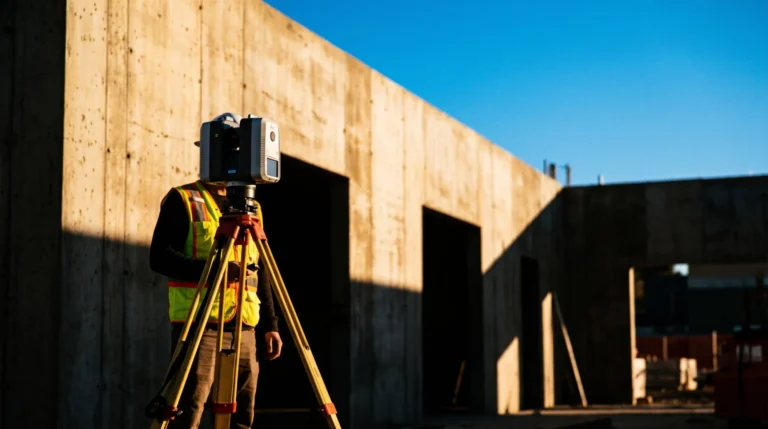 Verified on siteLIDAR scans, photogrammetry and strength tests document each milestone.
How the plan serves the Sustainable Development Goals
What the project asks of Peru, and what it does not
The proposal asks the Peruvian government for regulatory facilitation: a declaration of national interest, a Special Economic Zone regime and the State's presence inside the city. It does not ask for public funds, public debt, State guarantees or land. Construction is to be financed by a foreign financing partner, and the city is designed to sustain itself financially from around year 10 of operation.
Ciudad Lumen is still a proposal, not an approved project. Its supporters say it could become a replicable model for the cities that come next: integrated rather than segregated, productive, safe and owned by the people who live in it.
This project has a detailed technical document covering the investment costs, the break-even point, maintenance and operating costs, financing, and ownership structure. The document is available to the members of the Order. Interested members may contact the Chancellery of the Order in their country to request the information.
The full preliminary proposal (Document I, in Spanish, the language in which it was presented) is available to members of the Order. To access it, you must subscribe to the Herald (free) and sign in with your organization email address.