
 Barça
 Peñarol
 Inter Miami
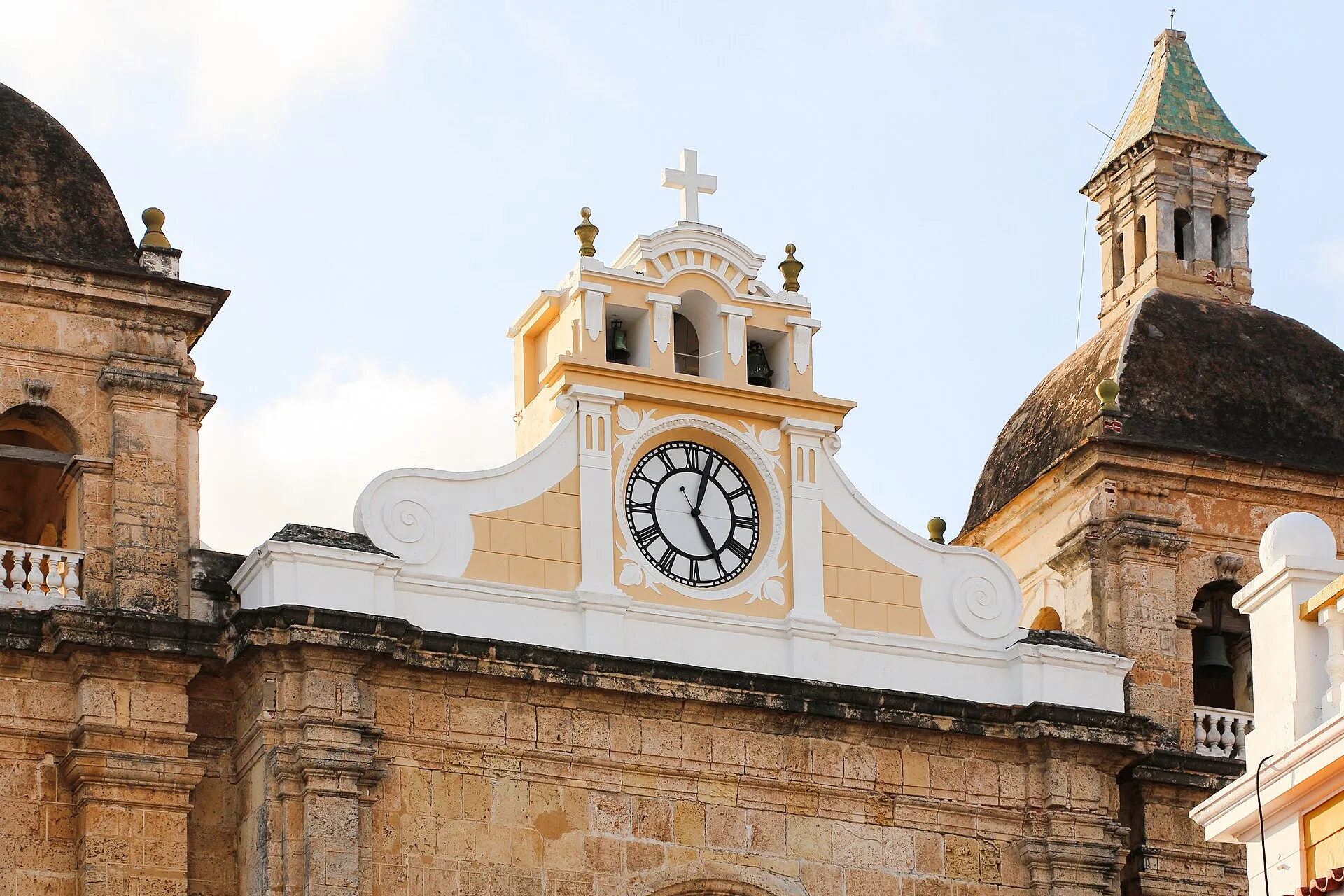
In the port of Cartagena de Indias, where the slave trade of the Spanish Americas arrived by sea, a Catalan Jesuit spent four decades meeting the ships and treating the people in their holds as persons. Saint Peter Claver did not abolish slavery, but his insistence that every human being has an inviolable dignity is one of the places where the modern idea of human rights took root.
From Catalonia to Cartagena
Peter Claver was born in 1580 in Verdú, in Catalonia, and entered the Society of Jesus at about twenty. In Mallorca he met the Jesuit porter Alphonsus Rodriguez, who encouraged him to take his vocation to the colonies. Claver crossed the Atlantic in the 1610s and settled in Cartagena, one of the main ports of the slave trade, where he studied and worked beside the Jesuit Alonso de Sandoval, an early defender of the enslaved. He was ordained a priest in 1616.
A vow written in his own hand
In 1622, at his final profession as a Jesuit, Claver signed his vows as “Peter Claver, the slave of the Africans forever.” The sentence is the key to his life. In a society that classified people as property, he placed himself beneath them in service.
What he did at the port
He boarded them as they docked, with food, water and medicine, before the people were sold.
He worked with African interpreters and used simple images to explain the faith, speaking to people in a language they could understand.
He tended the sick and the dying himself, and kept visiting the enslaved in the city long after they had been sold.
He is estimated to have baptized some 300,000 people and to have heard more than 5,000 confessions a year.
His principle was simple: speak to a person first as a human being, and only afterwards as anything else. Before any doctrine, he offered bread, water and a gentle word.
The last years
In 1650 Claver fell ill with the plague and spent his final four years largely bedridden, often neglected by those around him. He died on September 8, 1654. The city that had barely noticed him in life came to his funeral in crowds.
From saint to symbol
Beatified by Pius IX in 1850 and canonized by Leo XIII in 1888.
Leo XIII named him patron of missionary work among African peoples.
His feast, September 9, is observed in Colombia as the National Day of Human Rights.
He is venerated in the church that bears his name in the old city, where his remains rest.
Why he matters today
Claver lived inside a system he could not dismantle, and it is right to say so. What he did was refuse to look away from it. Faced with a legal, profitable and widely accepted trade in human beings, he answered with presence, care and a lifelong promise of service. That is the seed of a principle we now call human rights: that dignity does not depend on status, origin or law, and that the stronger have a duty toward the weak.
It is also the spirit that inspires the humanitarian work of Mandatum: to serve without condition, to defend dignity where it is overlooked, and not to be neutral before suffering.
Sources: Vatican News, “St. Peter Claver, Jesuit, Apostle of Slaves”; Wikipedia, “Peter Claver.” Image: Iglesia de San Pedro Claver, Cartagena, photo by Bernard Gagnon, Wikimedia Commons, CC BY-SA 4.0.